
Table of Contents
Overview: Quito to Cuenca — what to expect
Quito and Cuenca are two of Ecuador’s most beloved cities: Quito, the historic capital perched high in the northern Andes, and Cuenca, the quieter, colonial jewel in the south. The distance between them can be covered by plane, long-distance bus, or private car — and each option offers a different balance of time, cost, comfort and scenery. This guide breaks down the practical details and gives local tips to help you pick the right mode of transport for your trip.
Quick comparison: time, cost and comfort at a glance
Before diving into details, here’s a snapshot of what to expect for each option:
- Flight — Fastest: about 45–60 minutes flight time, but add airport transfers (Quito airport is 45–60 minutes from downtown). Costs vary; book early for best fares.
- Bus — Budget-friendly: 8–10 hours by road on comfortable coaches, with overnight options. Prices are often the cheapest but journey time is long.
- Car (self-drive) — Most flexible: roughly 7–10 hours depending on route and stops. Ideal if you want to explore towns, ruins and parks along the way.
By plane: fastest, with some trade-offs
Flying is the quickest way to go between Quito and Cuenca. Flight time in the air is usually under an hour, which makes it a good option when you’re short on time or want more days in Cuenca. Both cities are served by international airports: Quito’s Mariscal Sucre International Airport (UIO), located in Tababela east of the city, and Cuenca’s Mariscal Lamar International Airport (CUE), a short drive from Cuenca’s historic center.
Practical tips for flying
- Allow extra time — Quito’s airport is about 45–60 minutes from the old town in normal traffic. Add transfer time and security checks when tallying the total travel time.
- Book early — Domestic fares fluctuate. Booking a few weeks ahead often yields the best prices, especially during holidays or long weekends.
- Baggage and connections — Check baggage policies; domestic carriers sometimes have tight weight limits and different rules than international flights.
- Airport transfers — In Quito consider official airport taxis or private shuttles; in Cuenca the airport is close enough that taxis or pre-booked transfers are quick and affordable.
By bus: economical and comfortable overnight options
Buses connect Quito and Cuenca frequently and are the choice for budget travelers or those who prefer not to fly. The trip typically takes 8 to 10 hours depending on the route, traffic and the number of stops. Buses depart from Quito’s main terminal (Quitumbe in the south) and arrive at Cuenca’s bus terminal on the outskirts of the city, with taxis available to reach the historic center.
Types of buses and comfort levels
- Regular — Standard seating, frequent departures, lowest fare.
- Semi-cama / ejecutivo — More recline, fewer seats, onboard restrooms and sometimes snacks; a good balance of price and comfort.
- Cama / cama-suite — Fully reclining seats like a plane business class, ideal for overnight travel if you want to arrive rested.
Booking and timing tips
- Buy at the terminal or online — You can purchase tickets at Quitumbe terminal or via company websites or phone apps. For popular travel dates, reserve ahead.
- Overnight vs daytime — Overnight buses save daytime use and accommodation costs, but if you’re prone to motion sickness, a daytime trip with scenic views might be preferable.
- Bring essentials — Water, snacks, a warm layer, earplugs and a neck pillow can make a long bus ride much more pleasant.
Driving: the scenic and flexible choice
Renting a car or driving gives you the freedom to stop at towns, viewpoint pullouts and cultural sites that buses and planes bypass. Depending on traffic and chosen route, driving from Quito to Cuenca usually takes between 7 and 10 hours, covering roughly 450–500 kilometers along the Pan-American corridor and connecting highways.
Recommended route and scenic stops
The most common route follows the Panamericana (E35) south through the central Sierra, with several worthwhile stops:
- Ambato — A good first stop for coffee, fresh fruit and a stretch after leaving Quito.
- Riobamba — A city with spectacular views of Chimborazo on clear days; consider a short visit or some local cuisine.
- Alausí — Known for its steep train ride to the Devil’s Nose (Nariz del Diablo); the surrounding landscapes are dramatic.
- Ingapirca — Ecuador’s largest Inca archaeological site, located northwest of Cuenca; a perfect cultural detour.
Driving tips and logistics
- Car rental — International agencies and local companies operate in Quito; check drop-off fees if returning the car in Cuenca.
- Documents — Carry your driver’s license, passport and rental agreement. An International Driving Permit is helpful but not always required; check your rental terms.
- Road conditions — Major highways are generally in good condition, but mountain stretches can be narrow and winding. Drive daytime if possible and avoid night driving in the mountains.
- Fuel and tolls — Fuel stations are available along the route and most roads include tolls — keep small change in cash for tolls.
- Altitude and weather — Variable microclimates are common. Bring layers and be prepared for fog, rain or intense sun at high altitude.
Safety and comfort: what every traveler should know
All three transport options are widely used and generally safe, but it’s wise to prepare in advance.
- Altitude awareness — Quito sits around 2,850 meters and Cuenca around 2,560 meters. If you’re sensitive to altitude, hydrate, take it easy on arrival and avoid heavy exercise the first 24 hours.
- Night travel — Avoid mountain roads at night if driving yourself. Visibility, livestock or poorly lit sections can increase risk.
- Secure belongings — Use hotel safes for valuables and keep backpacks and luggage secure on buses and at airports.
- Check schedules — Holiday weekends and national festivities (Semana Santa, Independence celebrations) can affect availability and price of transport.
Selecting the right option for your trip
Your priorities will determine the best choice:
- If you’re short on time — Fly. You’ll reclaim a full day or more in each city.
- If you’re on a budget — Take the bus. It’s inexpensive and comfortable if you pick a reputable operator and the right coach class.
- If you love flexibility — Drive. A rental car lets you build an itinerary, stop at hidden gems and travel at your own pace.
- For scenery and culture — Combine options: fly one way and drive or take a bus the other way, allowing time for stops like Ingapirca or Cajas National Park near Cuenca.
Sample itineraries to inspire your trip
1. Two-day cultural stopover (budget-friendly)
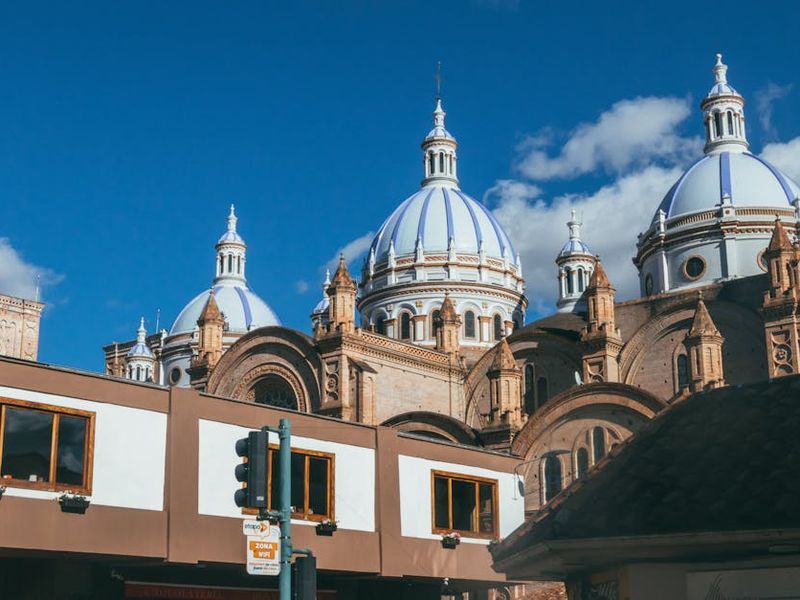
Take an overnight bus from Quito to Cuenca (leave late, arrive in the morning). Spend two days exploring Cuenca’s UNESCO-listed center — Parque Calderón, the blue-domed Cathedral and the riverside markets — then return to Quito by flight for a quick and comfortable journey back.
2. Scenic road trip (flexible, immersive)
Rent a car in Quito and drive to Cuenca over two or three days. Stop in Riobamba for Chimborazo views, visit the Devil’s Nose area around Alausí, and make time for Ingapirca. Arrive in Cuenca with a sense of place and many photo stops.
3. Fast business or weekend trip (time-efficient)
Book a morning flight from Quito and arrive in Cuenca within a couple of hours including transfers. Stay near the historic center to maximize your time. Fly back late the same day or the following evening.
Arriving in Cuenca: quick orientation
Cuenca’s compact historic center is easy to walk, with tiled streets, mercados and a lively café scene. Key things to know on arrival:
- Airport transfer — The airport is only a short taxi ride from the center; agree on a fare or use an official taxi desk when possible.
- Where to stay — El Centro and San Sebastián neighborhoods put you close to attractions. If you prefer quieter nights, consider staying a bit outside the core and take a short taxi in.
- Must-see spots — Parque Calderón, Cuenca Cathedral (the blue domes), the Pumapungo Museum, and the local flower and food markets.
Packing essentials and final reminders
Whether you fly, bus, or drive, a few items will make your journey smoother:
- Layers for variable mountain weather — mornings can be crisp, afternoons warm, nights cool.
- Sunscreen and a hat — UV is strong at altitude.
- Water bottle and snacks — especially for bus and driving trips.
- Small cash for tolls, local vendors and tips — not all places accept cards.
- Chargers and portable battery — buses and some cars won’t have power outlets.
Final thoughts
The Quito-to-Cuenca journey is as much a part of the Ecuadorian experience as the destinations themselves. Choose a plane for speed, a bus for economy and convenience, or a car for exploration and flexibility. Whichever you pick, plan ahead for transfers and weather, and leave time to absorb the landscapes and towns that link these two remarkable Andean cities. With a little preparation, the trip between Quito and Cuenca can be comfortable, scenic and deeply rewarding.
Safe travels — and welcome to Cuenca, where colonial charm and mountain calm await.