
Table of Contents
Why choosing the right route between Quito and Cuenca matters
Quito and Cuenca are two of Ecuador’s most visited cities—each with its own highland charm and colonial heart. The 450–500 km that separate them cross some of the most dramatic Andean landscapes in the country. How you travel affects cost, comfort, time, and the kind of memories you take home: a quick hop by plane, a relaxed overnight bus, or a scenic but winding self-drive. This guide compares the three main options, offers step-by-step advice, and highlights on-the-ground tips that local expats and frequent travelers swear by.
Quick comparison: flight vs bus vs car
- Plane: Fastest (about 45–60 minutes in the air), best for time-pressed travelers, slightly higher cost when booked last minute, airports add transfer time.
- Bus: Budget-friendly and social, takes longer (8–12+ hours), many overnight services let you save a night’s accommodation, comfortable modern coaches available.
- Car: Most flexible and scenic, 8–11 hours depending on route and stops, requires confidence driving mountain roads and planning for fuel, parking, and potential weather delays.
Flying: fastest and most convenient option
Flights between Quito’s Mariscal Sucre International Airport (UIO) and Cuenca’s Mariscal Lamar Airport (CUE) typically take under an hour. Major carriers operating domestic routes in Ecuador include LATAM and Avianca, and there are usually multiple daily flights. This makes flying the fastest way to cover the distance without losing a full day of sightseeing.
What to expect at the airports
Mariscal Sucre sits outside Quito in Tababela, roughly 40–60 minutes from the city center depending on traffic. Allow at least 90–120 minutes extra for transfer, check-in, and security when flying domestically from Quito. In Cuenca, the Mariscal Lamar airport is much closer to the city center—often a 20–30 minute drive. Taxis and shared shuttles are available at the arrivals area.
Booking tips and cost-saving moves
- Book flights several weeks in advance for the best fares, and search flights on weekdays for lower prices.
- Compare airlines on Google Flights or airline websites directly. Ecuador’s domestic market can have fare sales—watch for those.
- Factor in transport time to/from Quito’s airport when comparing to bus or car travel; a morning flight still often saves time overall.
Taking the bus: budget-friendly and sociable
Long-distance buses are a popular way to travel between Quito and Cuenca. They depart from Quito’s southern terminal (Terminal Terrestre Quitumbe) and pick up in a few other city locations. The main bus terminal in Cuenca—Terminal Terrestre de Cuenca—is a short taxi ride from the historic center.
Types of buses and comfort levels
Interprovincial buses vary from basic “económico” coaches to more comfortable “semi-cama” and full “cama” or “cama-suite” buses with reclining seats, leg rests, and onboard restrooms. Night buses commonly offer reclining seats that make sleeping possible. If you’re sensitive to motion or need better rest, opt for the more comfortable classes and bring a small neck pillow, earplugs, and an eye mask.
Timing, duration, and scenic stops
Expect journey times from about 8 to 12 hours depending on whether you take a direct express or a route making stops. Overnight buses are popular because they let you maximize daytime in both cities. If you have extra time, consider breaking the journey in Riobamba or Alausí to ride the famous Devil’s Nose train or explore local markets—these are rewarding detours for slower-paced travelers.
Practical bus-travel tips
- Arrive at the terminal at least 30–45 minutes before departure for ticket validation and to load luggage.
- Keep valuables on you in a small daypack; checked luggage is generally safe but avoid leaving important items in the cargo hold without a tag.
- Buy snacks and water at the terminal or bring your own—some routes provide small meal services, others do not.
- Check luggage policies when buying your ticket; most companies include one checked bag in the cost but have size/weight limits.
Driving: the most flexible and scenic choice
If you love road trips, renting a car or driving your own vehicle allows you to move at your own pace and stop wherever you like. The classic route follows the Pan-American highway through central highland towns such as Latacunga, Ambato, Riobamba, and Alausí before descending toward Cuenca. Distance is roughly 450–500 km and driving time typically ranges from 8 to 11 hours depending on traffic, weather, and the number of stops you make.
Road conditions and driving challenges
Roads between Quito and Cuenca are generally paved and maintained, but you’ll encounter steep grades, hairpin turns, narrow lanes in mountain passes, and occasional roadwork. Rain and fog can reduce visibility. Watch for livestock and slow-moving trucks on rural stretches. Use lower gears on steep descents and respect local speed limits—there are police checkpoints in some areas.
Planning your stops and sights along the way
Driving lets you visit highland highlights: Riobamba (a gateway to Chimborazo), Alausí (for the Devil’s Nose railway), and small markets where you can sample roasted corn and fresh empanadas. Plan fuel stops in larger towns—while there are gas stations along the route, remote stretches can be long. If you want to make an adventure of it, split the drive into two days and spend a night in a highland town to experience local hospitality.
Renting a car: what to know
- Book with reputable rental agencies and confirm they allow long intercity travel. Ask about one-way drop-off fees if you plan to leave the car in Cuenca.
- Ensure the vehicle has good brakes, working defoggers, and a spare tire. A small SUV is handy for visibility and comfort on mountain roads.
- Carry your driver’s license, passport, rental contract, and proof of insurance. If you’re an expat, bring your local residency ID if applicable.
Safety, health, and practical considerations
Both Quito and Cuenca sit above 2,400 meters in elevation (Quito ~2,850m; Cuenca ~2,560m). Although most people handle these altitudes fine, plan for mild altitude effects—stay hydrated, avoid heavy exertion on your first day, and bring any medication you need. Mountain driving can be tiring: rotate drivers, take breaks every 1.5–2 hours, and factor in a conservative travel schedule.
Safety tips for all modes
- Use official taxis or airport taxi booths when arriving at an unfamiliar terminal; many airports have regulated booths with fixed rates.
- Keep small bills for bus vendors, taxi fares, and tips—many places don’t accept card for small transactions.
- Protect yourself from petty theft: keep a money belt for passports and essentials, and avoid displaying expensive electronics in crowded markets or terminals.
Cost & carbon: how your choice impacts wallet and environment
Budget-wise, buses are usually the cheapest choice—often a fraction of the price of last-minute flights. Driving costs depend on fuel prices and car rental rates. Flights are faster but have a higher carbon footprint; if sustainability is a concern, look into offset programs or consider the bus which produces much less CO2 per passenger kilometer.
Arriving in Cuenca: getting from terminals to the historic center
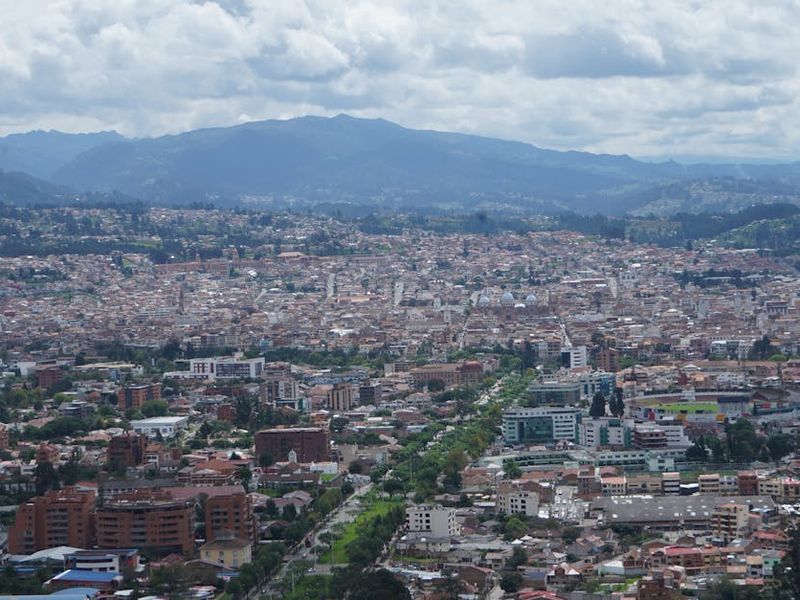
Whether you land at Mariscal Lamar or arrive at Cuenca’s bus terminal, the city center is easy to reach. Taxis queue at both the airport and the bus station. Confirm rates at official stands and get a receipt if possible. Many hotels in Cuenca offer airport pickup for a small fee—ask ahead to simplify arrival after a long journey. The historic center is compact and walkable, so once you’re checked in, you can explore plazas, the cathedral, and the brimful artisan markets on foot.
Which option should you choose?
Pick the plane if you value speed and convenience or if your time is limited. Choose the bus if you want to save money and don’t mind a longer ride—overnight routes let you sleep while the kilometers pass. Opt for driving if you crave flexibility, scenic stops, and the freedom to explore lesser-known towns along the way. Many travelers mix modes: fly one way and take a bus or drive the return for a different perspective.
Final practical checklist before departure
- Check current flight and bus schedules online—seasonal changes and holidays can affect frequency.
- Carry medication and layers: Andean weather can shift quickly between sun, wind, and rain.
- Have small US dollar bills for local purchases and transport (Ecuador’s official currency).
- Confirm luggage allowances and arrival pickup options if you’ll be tired after travel.
- If driving, download offline maps and mark gas stations and emergency numbers along your route.
Parting thoughts
The Quito-to-Cuenca corridor is more than a transfer between two cities—it’s a chance to experience the highland temperament of Ecuador. Whether you slice the trip into a short flight, let an overnight coach carry you as you sleep, or take the wheel and chart your own route, the road between Quito and Cuenca delivers mountain vistas, cultural detours, and a sense of adventure. Plan with the tips above and you’ll arrive ready to savor Cuenca’s cobbled alleys, craft markets, and mellow pace.