
Table of Contents
Why Cuenca’s Historic Center Earned UNESCO Recognition
Cuenca, nestled in the southern highlands of Ecuador, earned UNESCO World Heritage status in 1999 for its remarkably intact and layered urban fabric. The city’s historic center is a living illustration of colonial planning, 19th-century civic development and indigenous craftsmanship woven together across centuries. Walkable streets, tile roofs, ornate balconies and public plazas create an environment where architecture and daily life interact—exactly the kind of cultural landscape UNESCO aims to protect.
What Makes the Architecture Special?
The appeal of Cuenca’s built heritage lies in contrasts and continuity: Spanish colonial grids sit alongside baroque churches, while artisans’ stonework and local tile traditions add texture to facades. Unlike a museum, the city’s buildings are occupied and used: markets operate below carved wooden balconies, parishioners attend Mass in centuries-old churches, and families live in courtyard houses that retain traditional layouts. This ongoing use has preserved authentic details that make Cuenca unique among Latin American historic centers.
Must-See Architectural Highlights
Start in Parque Calderón, the heart of the city, surrounded by key monuments and lively cafés. From there a short walk unveils layers of history:
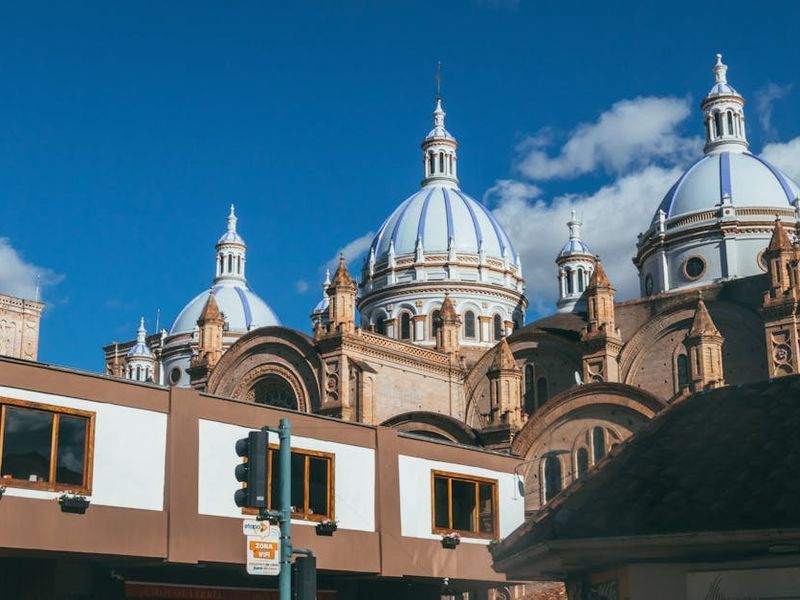
- Catedral Nueva (The New Cathedral) – Famous for its striking blue-tiled domes, the New Cathedral dominates the skyline. Its combination of Gothic and Renaissance motifs, and the dramatic interior nave, make it a photographic icon of Cuenca.
- Catedral Vieja (Old Cathedral / El Sagrario) – Adjacent to the New Cathedral, the old cathedral now hosts cultural displays at times and reveals older construction techniques and baroque details worth comparing side-by-side with its newer neighbor.
- Pumapungo Archaeological Park and Museum – South of the center, this site includes Inca ruins, water channels and ethnographic exhibits that explain pre-Hispanic and colonial urban relationships. The park’s gardens and reconstructed spaces illuminate native building traditions.
- Colonial Churches and Convents – Churches such as San Francisco, El Carmen de la Asunción, and smaller convent chapels showcase carved altars, gilded woodwork and tile work. Many convents now house museums or cultural centers where you can see cloisters, patios and religious art.
- Stone Bridges and the Tomebamba River – The river bisects the historic core. Riverside promenades and restored bridges frame views of rows of tiled roofs and the cathedral domes reflected in the water.
- Streets and Balconies – Calle Larga, Calle Mariscal, and the lanes radiating from Plaza Calderón feature continuous cornices, wooden balconies, and shopfronts that preserve the city’s pedestrian scale.
A Practical Walking Route (Half-Day)
If you have just a few hours, this compact route hits the essentials and keeps energy for photos and café stops:
- Begin at Parque Calderón to orient yourself and admire the cathedral facades.
- Walk down Calle Larga, stopping at rooftop terraces for that classic view of the blue domes.
- Follow the Tomebamba riverside promenades, cross a stone bridge and photograph the reflection of the city in the water.
- Visit El Museo de las Conceptas or another nearby convent museum to see cloisters and religious art (these small museums often provide insight into local conservation work).
- Finish at Pumapungo if time allows, where the archaeological park offers shade, nature and deeper historical context.
Full-Day Itinerary and Neighborhoods to Explore
With a full day, you can slow down and dive into layers most visitors miss. Morning light is ideal for exteriors and plazas, while afternoons are great for museums and viewpoints.
- Morning: Start at Parque Calderón and enjoy a café on Calle Larga. Visit the New Cathedral and step inside the Old Cathedral to compare altars and construction styles.
- Midday: Head to Pumapungo for the museum and a walk through the archaeological gardens. Lunch in the nearby Mercado 10 de Agosto for hearty local dishes.
- Afternoon: Explore the neighborhoods of San Sebastián and El Vado—the latter is closer to artisan workshops where you can see contemporary uses of traditional building materials and techniques.
- Sunset: Take a taxi up to Mirador de Turi for panoramic views of the whole valley and the blue-domed skyline below.
Best Times to Visit & Photography Tips
Cuenca’s climate is mild year-round, with two main seasons: a drier period (roughly June–September) and a wetter period (October–May). Early morning and late afternoon offer the most flattering light and fewer crowds. For capturing the cathedral domes, try rooftops along Calle Larga or the riverbanks after crossing one of the bridges. Bring a zoom lens for details—carvings, gutters, tile patterns—and a wide-angle for plazas and facades. Pay attention to shadows: narrow streets show strong contrasts midday, so that time can be great for intimate architectural details.
Museums, Tickets and Opening Hours
Many of the small convent museums and municipal museums charge modest admission (often a few dollars) and have limited hours—usually mornings and early afternoons. The larger Pumapungo complex and central museums often have more flexible schedules but check locally for temporary closures and festivals. Catholic churches are generally open for visitors outside Mass times, though donations are appreciated. If you plan to enter several museums, ask at the tourism office about combined tickets or discounts.
Guided vs. Self-Guided Visits
Both approaches work well. Guided tours—especially those led by local historians or certified guides—offer contextual stories about construction techniques, notable residents and restoration projects you’d likely miss on your own. Self-guided exploration excels when you want to linger in markets, discover artisan workshops, or photograph at your own pace. Consider downloading an offline map and a local walking-tour app, and look for small-group walking tours that limit participants for a more personal experience.
Accessibility, Safety and Local Customs
Cuenca’s historic streets are mostly walkable but can include cobblestones, steps and narrow alleys—bring comfortable shoes and allow extra time if mobility is a concern. Many central sidewalks have ramps at intersections, but older buildings may not be wheelchair-accessible. Safety-wise, Cuenca is one of Ecuador’s safer cities for visitors, though normal urban precautions apply: keep valuables discreet, use metered taxis or rideshare apps after dark, and avoid poorly lit side streets late at night. When visiting churches and convents, dress respectfully—no hat removal or loud behavior during services—and always ask permission before photographing people in religious ceremonies.
Sustainability and How to Be a Respectful Visitor
UNESCO designation brings both attention and responsibility. You can support conservation by choosing locally owned restaurants and artisans, paying museum entrance fees that fund restoration, and staying on designated paths in archaeological parks. Avoid touching delicate facades and frescoes; flash photography is often prohibited inside museums and churches. If you’re inspired to contribute more, inquire about local heritage organizations—many welcome voluntary work or donations targeted at preservation projects.
Where to Eat, Rest and Recharge Nearby
The area around Plaza Calderón has a good mix of coffee shops, bakeries and restaurants. Try Ecuadorian specialties like mote pillo (hominy with eggs) for breakfast and cuy (guinea pig) at traditional restaurants if you’re adventurous. For lighter fare, rooftop cafés along Calle Larga offer great views and salads, sandwiches, and local pastries. Budget travelers can find guesthouses and hostels within a few blocks of the historic center, while several boutique hotels occupy restored colonial houses for a more atmospheric stay.
Festivals, Events and Seasonal Opportunities
Cuenca’s religious calendar and civic festivals animate the architecture. Holy Week (Semana Santa), Corpus Christi and local saints’ days fill plazas and churches with processions that reveal historic liturgical routes and ephemeral altars. During these events you’ll see temporary stages and decorations that accentuate the city’s architectural backdrops—arrive early and be prepared for crowds. The city also hosts cultural festivals that activate public spaces and often include guided heritage walks, exhibitions and talks about preservation.
Further Learning and Resources
To deepen your appreciation, visit small museums that focus on conservation and local history; museum staff and volunteer guides are often very knowledgeable. The municipal tourism office in the historic center can provide printed maps, schedules and information about ongoing restoration projects. If you’re interested in architectural details, look for publications from the Universidad de Cuenca and local historical societies—many studies discuss traditional construction materials and the city’s urban evolution.
Final Practical Tips for an Enjoyable Visit
Plan at least half a day for a focused introduction and a full day if you want to include museums and viewpoints. Carry local currency (USD) for small admissions and tips. Wear layered clothing—highland weather can shift quickly—and pick comfortable footwear for uneven sidewalks. Be curious: ask shopkeepers and artisans about the history of their building; many families have lived in the same house for generations and are generous storytellers. Finally, leave time to simply sit in a plaza with a coffee and watch Cuenca’s architecture come alive in daily life.
Quick Checklist Before You Go
- Comfortable shoes and layered clothing
- Small bills in USD for entrances and tips
- Camera with wide-angle and zoom options
- Offline map or printed walking route
- Respectful clothing for church visits
Cuenca’s UNESCO historic center is not just a set of preserved buildings—it’s a neighborhood where history is woven into everyday rhythm. Take your time, look up at balconies and cornices, and let the city’s stone, tile and timber tell their layered stories.