
Table of Contents
Why Cuenca’s Historic Center Matters
Cuenca, officially the “Historic Centre of Santa Ana de los Ríos de Cuenca,” earned UNESCO recognition in 1999 for its exceptional preservation of a colonial Andean cityscape. Unlike some South American cities where old neighborhoods give way to glass towers, Cuenca’s heart retains an elegantly layered past — colonial grids, narrow cobbled streets, ornate churches, rivers that shape the city, and lively neighborhoods that maintain living traditions.
This guide helps first-time visitors and repeat explorers appreciate the architecture, plan efficient walking routes, and understand the care and etiquette needed when visiting living heritage sites.
Getting Oriented: Key Neighborhoods and Landmarks
Start your orientation at Parque Calderón, Cuenca’s central square. From here the city fans out into compact, walkable districts: the Main Historic Center with its cathedrals and plazas; El Barranco, the riverside area of terraces and oxidized-red rooftops; and San Sebastián, a bohemian quarter of narrow lanes and artisan studios. Not far away is the Museo Pumapungo, where pre-Hispanic and colonial layers meet modern exhibition spaces.
Must-see architectural highlights include:
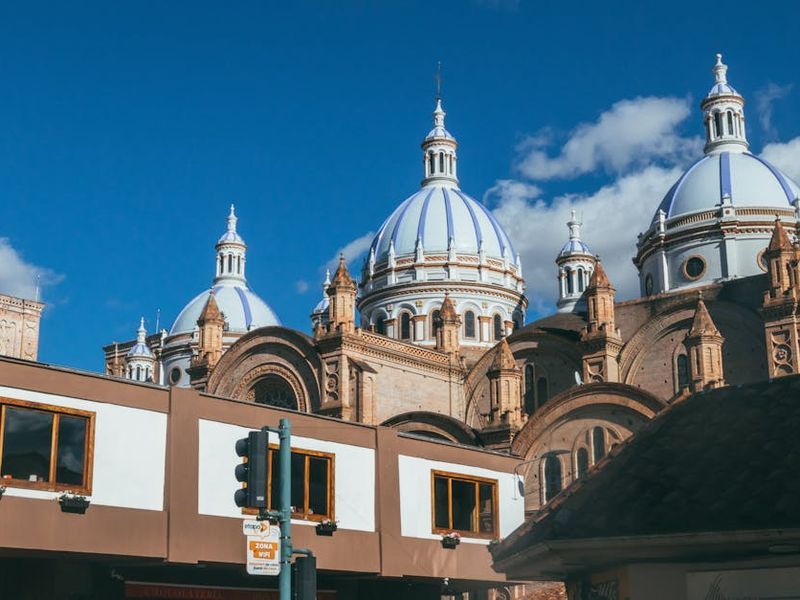
- The New Cathedral (Catedral de la Inmaculada Concepción) with its striking blue-tiled domes and climbable towers.
- The Old Cathedral (Catedral Vieja), now repurposed as a cultural space and a reminder of earlier church forms.
- Iglesia del Sagrario and Iglesia de Santo Domingo, each offering distinct baroque and neoclassical facades and richly adorned interiors.
- The riverside terraces and bridges that trace the Tomebamba River and frame photogenic urban vistas.
- Museo Pumapungo and the surrounding archaeological gardens that reveal the city’s deeper past.
Architecture to Look For: Styles, Materials, and Details
Cuenca is a textbook for architectural punctuation marks. You’ll notice a harmonious mix of Spanish colonial planning (tight, orthogonal blocks), local adaptation (courtyards, stair-stepped roofs), and stylistic layers added across centuries. Look carefully for:
- Blue-glazed dome tiles on the New Cathedral — a visual signature of the city visible from many vantage points.
- Carved wooden balconies and wrought-iron grilles, often painted or decorated by generations of families.
- Intricate altarpieces inside churches — gilded, lacquered and often blending indigenous motifs with European religious themes.
- Stone masonry and plastered facades, with later neoclassical porticoes and baroque flourishes on facades and towers.
Pay attention to how local craftsmen repair and repaint facades; ongoing conservation keeps the historic center vibrant and intact.
Practical Walking Route: Half-Day Highlight Loop
If you only have a morning or afternoon, this compact loop covers the essentials and gives you plenty of time for photo stops and coffee breaks.
- Begin at Parque Calderón, photograph the Cathedral’s domes, and take in the surrounding colonial facades.
- Walk west along Calle Larga, a pedestrian cultural corridor of shops and galleries — ideal for artisan finds and street photography.
- Cut down toward the Tomebamba River to explore the terraces on El Barranco. Pause for a riverside view of the cathedral mirrored in the water.
- Cross one of the historic bridges and head for the Museo Pumapungo to see archaeological remains and a pleasant garden courtyard.
- Return to the center and climb the New Cathedral towers (small fee) near sunset for sweeping city panoramas.
This loop is roughly 2–3 kilometers of easy walking; allow 3–4 hours if you plan museum visits and tower climbs.
Full-Day Immersion: Museums, Neighborhoods, and a Viewpoint
For a full day, expand your route to include neighborhood-level exploration and thematic museums.
- Morning: Start at Museo Pumapungo to learn pre-Columbian and colonial history. The on-site archaeological gardens contain restored Inca terraces and ruins.
- Late morning: Visit the Old Cathedral’s cultural exhibits and nearby convent museums to see religious art and historic domestic spaces.
- Afternoon: Lunch on Calle Larga or in a plaza-side cafe, then meander through artisan shops and small galleries in San Sebastián and El Centro.
- Late afternoon: Head to El Turi viewpoint for sunset; it’s a short drive uphill but worth it for a full panorama of Cuenca and the surrounding Andes.
Reserve tickets where possible and double-check museum opening days — many small museums close on Mondays.
Tower Climb Tips and Best Photo Spots
Climbing the New Cathedral towers is one of the most popular activities. There’s a small entrance fee and security checks; the stairs are narrow, so bring water and go slowly if you’re not used to the altitude. For photographers, early morning light softens the blue domes while late afternoon gives golden warmth to the stone facades.
Top photo vantage points:
- From Parque Calderón for classic cathedral shots framed by colonial balconies.
- Across the Tomebamba River for reflective symmetry between water and domes.
- From El Turi or the cathedral towers for wide-angle panoramas that show the city’s layered rooftops and the Andean horizon.
Respectful Visiting: Churches, Services, and Cultural Etiquette
Many historic churches are active religious sites. When visiting, dress modestly — shoulders covered and no short shorts — and keep voices low during services. Photography policies vary: flash and tripods are often prohibited inside sanctuaries, so ask staff before taking interior shots.
Support conservation by buying local crafts and paying modest entrance fees. Many restoration projects are funded by municipal programs and community-driven workshops; a small purchase at an artisan stall helps maintain living traditions.
Accessibility, Weather, and Practical Tips
Cuenca sits at about 2,560 meters (8,400 feet) above sea level. If you’ve just arrived from sea level, take the first day easy: hydrate, avoid heavy exertion, and acclimate. The climate is spring-like year-round but changeable; pack layers and a lightweight rain jacket. The city’s cobblestone streets and historic stairways present mobility challenges — bring comfortable walking shoes and, if you have mobility concerns, plan routes that avoid steep streets and prefer plazas and main thoroughfares.
Money: Ecuador uses the US dollar. Credit cards are widely accepted in tourist areas, but small vendors and markets may prefer cash. Taxis are inexpensive and safe for short hops; agree a fare or ensure the meter is used.
Guided Tours vs. Independent Exploring
Guided walking tours provide context that transforms façades into stories — learn about the cathedral’s construction, who lived in the carved wooden balconies, and how rivers shaped urban life. Many guides also point out hidden chapels and local workshops you might miss alone. However, independent exploration allows time to linger in plazas, pop into artisan shops, and follow your curiosity.
If you opt for a guide, choose a licensed, local guide who supports community conservation and can offer bilingual narration if needed. For independent visitors, pick up an official map at the tourist office and consider a themed route: religious art, colonial residences, or riverfront photography.
Where to Eat and Pause During Your Walk
Cuenca’s historic center has cafés and restaurants that cater to a variety of tastes. Look for small patios and rooftop terraces that offer architectural views as you rest. Try local specialties like mote (hominy soup), llapingachos (potato patties) and seasonal fruit juices. Avoid rushing meals — eating is part of the cultural experience here, and plazas are perfect places to watch daily life.
If you want a quiet break, pick a cafe that faces a plaza or a restaurant with an upper-level balcony. These spots provide a restful vantage point to observe architectural details and plan your next stop.
Conservation and Community: How Cuenca Preserves Its Heritage
Cuenca’s living historic center thrives because of a combination of municipal policies, UNESCO recognition, and community stewardship. Restoration workshops train local artisans in traditional techniques — lime plastering, wood restoration, and tile work — ensuring repairs match historic materials. You may notice scaffolding and work crews in different areas; rather than detracting, these are signs of active care.
When possible, visit social enterprises and artisan cooperatives. Buying handmade textiles, silverwork, or ceramics directly from makers supports both economic sustainability and heritage conservation.
Safety and Responsible Photography
Cuenca is widely regarded as safe for travelers, but like any city, petty theft can occur. Keep valuables secure, use a money belt in crowded markets, and keep an eye on your camera gear at popular viewpoints. When photographing people, especially in religious or private settings, ask permission first — a friendly approach often yields better portraits and connections.
Sample Two-Day Itinerary
Day 1: Morning visit to Museo Pumapungo; late morning coffee on Calle Larga; afternoon walking tour of Parque Calderón and church interiors; sunset from the cathedral towers.
Day 2: Explore El Barranco and river terraces, visit small artisan studios in San Sebastián, take the short ride up to El Turi for sunrise or sunset views, and finish with a leisurely meal in a plaza-side restaurant.
Final Thoughts: Seeing Beyond the Façades
Cuenca’s UNESCO historic center is more than a collection of pretty buildings; it’s a living urban organism shaped by centuries of cultural exchange, religious devotion, and local ingenuity. Stroll slowly, listen for church bells, peek into courtyards when doors are open, and let the city’s layered stories unfold. With thoughtful preparation and respect for local traditions, your visit will be rewarding, restorative, and full of architectural discoveries.
Ready to explore? Lace up comfortable shoes, charge your camera, and let Cuenca’s blue domes guide you through a memorable journey into the past — one beautifully preserved street at a time.
Adam Elliot Altholtz serves as the Administrator & Patient Coordinator of the “Smilehealth Ecuador Dental Clinic“, along with his fellow Expats’ beloved ‘Dr. No Pain‘, right here in Cuenca, Ecuador, and for purposes of discussing all your Dental needs and questions, is available virtually 24/7 on all 365 days of the year, including holidays. Adam proudly responds to ALL Expat patients from at least 7:00am to 9:00pm Ecuador time, again every single day of the year (and once more even on holidays), when you write to him by email at info@smilehealthecuador.com and also by inquiry submitted on the Dental Clinic’s fully detailed website of www.smilehealthecuador.com for you to visit any time, by day or night. Plus, you can reach Adam directly by WhatsApp at +593 98 392 9606 -or by his US phone number of 1‐(941)‐227‐0114, and the Dental Clinic’s Ecuador phone number for local Expats residing in Cuenca is 07‐410‐8745. ALWAYS, you will receive your full Dental Service in English (NEVER in Spanish), per you as an Expat either living in or desiring to visit Cuenca by your Dental Vacation, plus also to enjoy all of Ecuador’s wonders that are just waiting for you to come arouse and delight your senses.