
Table of Contents
Why Cuenca’s Historic Center Deserves UNESCO Status
Cuenca, known formally as Santa Ana de los Ríos de Cuenca, was inscribed on the UNESCO World Heritage List for the exceptional preservation of its colonial-era town plan and architecture layered on top of pre-Hispanic foundations. Strolling its historic center reveals wide plazas, red-tiled roofs, iron balconies and narrow alleys that tell stories of Spanish urban design blended with Andean building traditions. For visitors, understanding that mix will deepen any architectural visit.
Quick orientation: The heart of the city
The historic center is compact and highly walkable. Start at Parque Calderón — the spacious plaza that acts as Cuenca’s living room — and use it as your compass. From there the grid fans out toward the Tomebamba River, the elevated barrio of El Turi, and the archaeological terraces and museum complex at Pumapungo. Most key monuments and viewpoints are within a 20–30 minute walk of the plaza, making self-guided exploration practical.
Must-see architectural highlights
Cuenca’s skyline is punctuated by several defining landmarks. Here are the places you should prioritize:
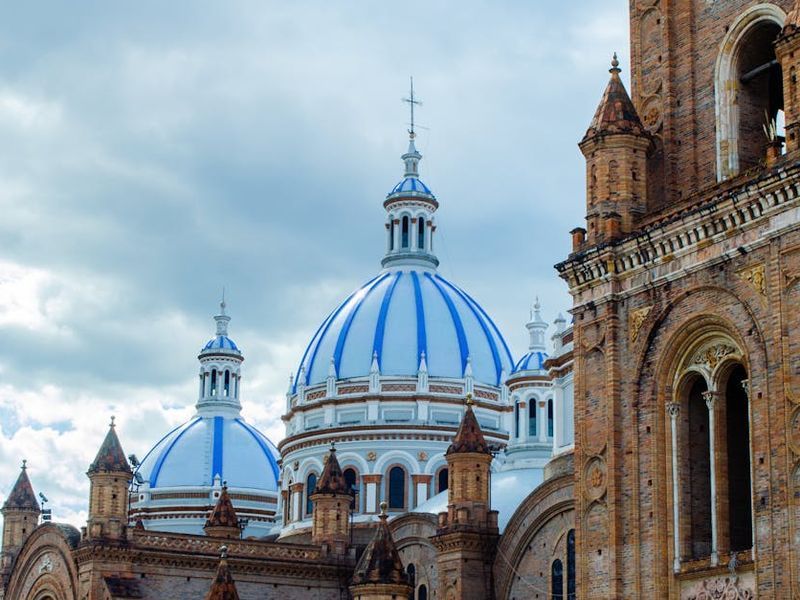
- New Cathedral (Catedral de la Inmaculada Concepción) — Famous for its striking blue-and-white domes, this cathedral dominates the plaza. Walk around to photograph the domes from different angles and peek inside to see the main nave and altar works (observe quiet hours during services).
- Catedral Vieja (Old Cathedral) — Adjacent to the main square, the older cathedral and its façade show earlier colonial ornamentation. Today parts of the complex are used for cultural exhibits and occasional concerts.
- Pumapungo Museum and archaeological park — A short walk south along the Tomebamba reveals Inca terraces, colonial-era foundations and an ethnographic museum. The site connects Cuenca’s pre-Hispanic past with its colonial present.
- El Barranco and San Sebastián — The cliffside neighborhoods below the central hills contain narrow streets, restored colonial houses and artisan workshops with dramatic river views.
- Las Conceptas Convent — This monastery complex offers a rare glimpse into cloistered architecture: delicate courtyards, cloisters and religious art preserved behind convent walls.
Architectural features to look for
When you’re exploring, keep your eye out for details that reveal Cuenca’s architectural story:
- Wrought-iron balconies — Many colonial houses still display ornate ironwork that frames bedrooms and overlooks the street below.
- Clay tile roofs — The red-tiled roofs form a textured patchwork that contrasts with the whitewashed façades and the blue cathedral domes.
- Inner patios — Traditional homes and some public buildings arrange rooms around a central, often lush, patio — a legacy of Iberian design adapted to Andean life.
- Stone foundations — Look for heavy stonework at building bases, often recycled from pre-Columbian constructions, a physical marker of cultural layering.
Best times to visit and photograph
Cuenca sits at about 2,500 meters (8,200 ft), which gives it a stable, spring-like climate year-round. For architecture and photography:
- Mornings (sunrise to 10:00) are excellent for soft light and empty streets. The cooler air creates crisp, clear views of the domes and plazas.
- Late afternoon and golden hour highlight colors — the blue domes glow and the red roofs warm up. This is prime time for panorama shots from viewpoints like El Turi.
- Midday can be busy with tour groups. If you prefer calmer conditions, plan to be inside museums or sitting in a café then.
Self-guided walking route: Half-day primer
This compact route introduces you to the essentials in about three hours with stops and time to linger:
- Start at Parque Calderón: absorb the plaza, the equestrian statue (if on display) and the surrounding arcades.
- Visit the New Cathedral: circle the exterior for photo angles, then enter if there’s no service.
- Wander Calle Larga and surrounding shopping streets to experience restored colonial façades and artisan shops.
- Descend to the Tomebamba River banks: the riverside walk reveals terraces and views of houses clinging to the slope.
- Finish at Pumapungo: explore the museum, the reconstructed Inca terraces and the ethnographic exhibits to tie historical layers together.
Full-day architectural deep dive
For a fuller immersion, add these elements and allow time for cafés and contemplation:
- Morning visit to Las Conceptas or another convent museum to see cloistered architecture and religious art.
- Lunch in the historic center — try an outdoor terrace to watch daily life and see streetscapes from above street level.
- Afternoon guided tour focused on conservation: many local guides emphasize restoration practices, seismic reinforcement and how heritage laws work in Ecuador.
- Dusk at El Turi or Mirador de Turi: panoramic views over the city and the Andean ring dramatic at sunset.
Guided vs. self-guided: which to choose?
Self-guided walking is flexible and free, ideal if you enjoy discovering at your own pace. However, a licensed local guide adds context: anecdotes about original owners, restoration stories, and how Spanish urban planning was adapted to local topography. Look for guides certified by the municipal tourism office or reputable agencies, and expect the best tours to include entrance to a museum or two.
Practical tips for respectful visiting
Cuenca’s historic center is a living neighborhood with residents, churches, businesses and conservation efforts. Keep these courtesy tips in mind:
- Respect worship: churches are active religious spaces. Observe signs about photography and silence during services.
- Stay on pathways and avoid climbing on historic walls or railings to protect fragile masonry.
- Support local artisans: if you buy a Panama hat, handwoven textiles, leather goods or ceramics, ask about its origin and care.
- Dispose of waste properly — the city works hard to maintain cleanliness in the heritage core.
Conservation challenges and community efforts
Preserving Cuenca’s historic center is an ongoing endeavor. Building owners must balance modern needs (plumbing, electrical work, earthquake reinforcement) with preservation rules that safeguard façades, balconies and rooflines. Social challenges include rising property values and tourism pressure. Many NGOs, municipal programs and crafts cooperatives work with residents to fund restorations and promote sustainable tourism. Visitors who ask about these projects and contribute to museum or guided tour fees help support preservation.
Accessibility and mobility notes
Many of Cuenca’s streets are cobblestone and include steep inclines near the river and older barrios. If mobility is a concern, plan a route that keeps to the flatter grid around Parque Calderón and Calle Larga. Taxis are inexpensive and efficient for hopping between viewpoints and museums; ensure the driver knows the name of your destination or show a map.
Where to learn more on-site
Pumapungo Museum is an excellent starting point for historical context: the exhibits connect pre-Hispanic urbanism and colonial transformations. Local cultural centers and the municipal tourism office offer maps, walking-tour listings and occasional themed trails — such as a balcony tour or a religious-architecture walk — that highlight smaller details you might otherwise miss.
Eating and resting between sites
Take breaks in historic cafés and family-run restaurants tucked into colonial buildings. Seek out spots with terraces for good people-watching and views. Traditional dishes to try include cuy (guinea pig, offered in many restaurants), mote pillo, locro soups and fresh trout from nearby highland lakes. For a quick snack while touring, artisanal bakeries near the central square sell pan de yuca, empanadas and local pastries.
Safety, climate and logistics
Cuenca is broadly considered safe for tourists, especially in the daytime in the historic center. Keep usual precautions for urban travel: watch personal belongings and use official taxis at night. Weather is temperate but changeable — mornings can be cool and afternoons mild; always carry a light jacket and sunscreen because UV at altitude is stronger. The city’s airport (Mariscal Lamar) sits close to the western side of the city; taxis and shuttles make transfers simple.
Timing your visit: festivals and quieter months
Visiting during a local festival can be a highlight: processions, music and religious celebrations animate the plazas and churches. If you prefer quieter experiences, avoid peak holiday weeks and long weekends, when locals travel and some attractions may be busier. Shoulder seasons often provide the best balance of good weather, fewer crowds and active cultural programming.
Photography and drone use
Ph otography of public façades and streets is generally welcomed — just be mindful of privacy at house entrances or when photographing people. Drones are subject to municipal and national aviation rules; if you plan aerial photography, check current regulations and seek permits where required to avoid fines and to protect heritage structures and residents’ privacy.
Sample two-day itinerary for architecture lovers
Day 1: Morning at Parque Calderón and the New Cathedral, mid-morning stroll along Calle Larga and artisan shops, lunch near the river, afternoon at Pumapungo and the ethnographic displays, sunset at El Turi.
Day 2: Visit Las Conceptas and a convent museum, guided walking tour focused on restoration and urban history, relaxed lunch in a colonial courtyard restaurant, late afternoon exploring El Barranco and small galleries, evening concert in a restored church if available.
Final thoughts: how to get more from your visit
To move beyond sightseeing and truly appreciate Cuenca’s UNESCO-listed architecture, slow down: enter courtyards, talk with artisans, sit in a plaza and watch daily routines. Ask questions about materials, past restorations and how modern life is woven into old walls. Cuenca’s charm lies not only in headline monuments but in the lived-in details — the faded murals on a side street, a family sitting on a balcony, or a carefully repaired balcony bracket that has kept a façade standing for centuries. Those are the moments that make a heritage visit memorable.
Whether you have a few hours or several days, let the city’s rhythm guide you. With respect, curiosity and a comfortable pair of shoes, Cuenca’s colonial core opens up as a layered and surprisingly contemporary place to experience the tangible past.