
Table of Contents
Why Cuenca’s Historic Center Is a UNESCO Treasure
Cuenca, Ecuador’s highland jewel, earned UNESCO World Heritage status in 1999 for its remarkably intact historic center. The accolade recognizes not only individual landmarks but the city’s overall urban fabric: cobbled streets, red-tiled roofs, church towers, stone bridges and the elegant mix of Spanish colonial planning with local Andean craft and materials. Walking the center feels like turning the pages of living history—every plaza and corner shows a continuity of life stretching from the colonial era to the present.
Start at Parque Calderón: The Heart of the Historic Center
Begin your architectural tour at Parque Calderón (Plaza Mayor), the city’s central square. The square is dominated by the New Cathedral—Catedral de la Inmaculada Concepción—whose blue-tiled domes are Cuenca’s most iconic image. Around the plaza you’ll find municipal buildings, cafes and shaded benches where locals meet. This compact space is a superb orientation point: from here many of the most important streets and monuments are an easy stroll away.
What to Look For
- The cathedral’s steel frame and blue-and-white domes juxtapose 19th-century European influence with local workmanship.
- Wrought-iron balconies and carved wooden doors on the surrounding colonial facades show the city’s craftsmanship.
- Observe how the three rivers—the Tomebamba, Yanuncay and Machángara—shape the urban layout and create linear green spaces that run through the historic center.
Key Architectural Highlights
Cuenca is full of standout buildings. As you stroll, make time for the following sites—each offers a different glimpse into the city’s architectural evolution.
Catedral Nueva (New Cathedral)
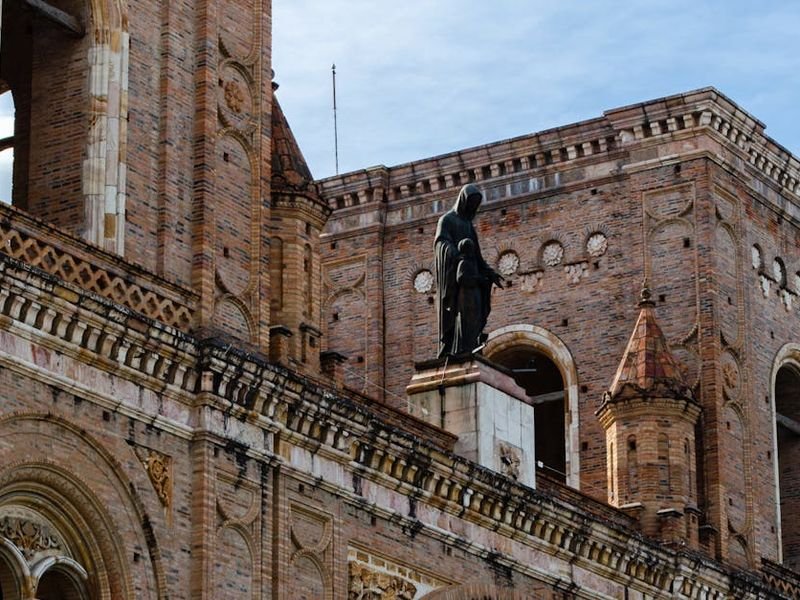
Most visitors are drawn to the New Cathedral because of its striking blue domes tiled with glazed ceramics. The cathedral’s exterior draws many photos, but stepping inside reveals vaulted ceilings, stained glass and ornate altars. If you enjoy skyline views, check whether guided climbs or tower access are available during your visit—these provide an elevated perspective over the red roofs of the historic center.
El Sagrario (Old Cathedral)
Adjacent to the New Cathedral, the older cathedral—often referred to as El Sagrario or the Old Cathedral—offers a quieter, earlier example of colonial ecclesiastical architecture. Many former religious buildings in Cuenca have been repurposed into museums or cultural venues, complementing the city’s layered narrative.
Museo Pumapungo
Short walk from the central plaza, Museo Pumapungo is a must for visitors who want context. The museum combines ethnographic exhibits with archaeological remains and a recreated indigenous house. Surrounding gardens step down to the Tomebamba River and reveal vestiges of pre-Hispanic terraces and colonial-era constructions. Plan 1–2 hours to explore.
Small Churches and Convents
Beyond the two cathedrals, Cuenca’s smaller churches and former convents are excellent examples of local baroque and mestizo ornamentation: carved wooden choirs, gilded altarpieces and sober cloisters. Consider visiting the Museo de las Conceptas (housed in an old convent) for a closer look at cloistered architecture and religious art—museums often require modest entrance fees and operate regular hours in the morning and early afternoon.
Walking Routes: How to See the Best in a Day or a Weekend
Cuenca’s historic center is compact and very walkable. Here are two suggested routes—one for a focused half-day, the other for a more leisurely full day.
Half-Day Route: Essentials (2–4 hours)
- Start at Parque Calderón and photograph the New Cathedral from different angles.
- Walk south to Museo Pumapungo and take a quick tour of the exhibits and gardens.
- Return along the Tomebamba riverwalk to enjoy the reflections of colonial facades and cross one of the stone bridges for classic views.
- Finish with a coffee on Calle Larga or a small plate at a nearby café.
Full Day Route: Deep Dive (6–8 hours)
- Begin at Parque Calderón and pop inside both the New and Old Cathedrals.
- Visit Museo Pumapungo; spend extra time in the archaeological terraces.
- Explore nearby convent museums and artisan shops—look for local silver and textiles.
- Walk across several bridges to experience different riverfront neighborhoods; stop for lunch near the river.
- Late afternoon, head uphill to El Turi (Mirador del Turi) for golden-hour photos of the skyline and domes.
Practical Visitor Tips
To make the most of your architectural exploration, keep these practical points in mind.
When to Visit
The dry season (roughly June–September) offers crisp skies and ideal conditions for rooftop and vista photography. However, Cuenca’s mild climate means you can enjoy the city year-round—just pack a light rain jacket for the occasional shower.
Hours and Admission
Most museums and many churches in Cuenca open mid-morning (around 9–10am) and close mid-to-late afternoon (4–6pm). Entrance fees are usually modest—many museums charge a small admission (often a few U.S. dollars). Some religious sites accept donations rather than set prices. Check current hours ahead of time, especially for small museums and guided tours.
Getting Around
The historic center is best explored on foot. Streets are cobbled and sometimes narrow, so comfortable shoes are a must. For destinations outside the center—such as El Turi viewpoint, Museo Nacional (if you plan further afield), or Cajas National Park—taxis are affordable and plentiful. Use official taxi ranks or ask your hotel to call a reputable driver; many hotels can also arrange guided tours with licensed guides.
Money, Language and Safety
Cuenca is generally safe for tourists, but usual urban caution—watch your belongings in crowded areas and avoid poorly lit streets at night—applies. Ecuador uses the U.S. dollar, so small bills make purchases easier. Many businesses accept cards, but carry cash for small admissions, artisan stalls, and tips. Basic Spanish phrases go a long way; locals appreciate even a few words of greeting.
Photography and Respectful Visiting
For memorable photos, aim for morning or late afternoon light when the light softens the façades and the domes glow. The rivers create lovely reflective scenes—look for vantage points from the stone bridges. When photographing inside churches, be discreet: flash is often discouraged, and respectful dress (shoulders covered, no shorts) is recommended in active places of worship.
Off-the-Beaten-Path Architectural Gems
While the main sights are popular for good reason, take time to wander away from the busiest streets. Narrow lanes reveal quieter courtyards, artisan workshops, and residential balconies with intricate ironwork. Many 19th-century civic buildings hide unexpected neoclassical and academic style details—plasterwork, pilasters, and carved stone window surrounds that tell the story of Cuenca’s economic and cultural development during the republican era.
Conservation and Responsible Tourism
Cuenca’s UNESCO designation brings both benefits and responsibilities. Preservation efforts keep facades and public spaces restored, but the city also faces pressures from traffic, modern development and the need for seismic retrofitting in an earthquake-prone region. Responsible visitors support local conservation by following signage, staying on designated paths in archaeological areas, and hiring licensed guides. Purchasing from local artisans is another meaningful way to contribute to the city’s cultural economy.
Nearby Architectural and Natural Day Trips
If you have extra time, pair your historic center strolls with one or two day trips:
- Cajas National Park: About a 40–60 minute drive from Cuenca, Cajas offers high-altitude moorland and glacial lakes—great for contrasting natural scenery with the city’s built heritage.
- El Turi viewpoint: For sweeping panoramas of Cuenca’s rooftops and domes, particularly at sunset.
- Local villages and markets: Many nearby towns maintain craft traditions—textiles, silver, and hatmakers—giving insight into regional building styles and domestic architecture.
Sample One-Day Itinerary Focused on Architecture
Here’s a compact day plan if architecture is your primary interest:
- 8:30–9:30am: Coffee and start at Parque Calderón; photograph the New Cathedral in morning light.
- 9:30–11:00am: Visit the Old Cathedral and a local convent museum for an intimate view of colonial religious spaces.
- 11:00am–1:00pm: Walk to Museo Pumapungo and explore the archaeological gardens.
- 1:00–2:00pm: Lunch near the river; try a local plate like mote or encebollado for an energizing midday meal.
- 2:00–4:30pm: Stroll the riverside, cross the stone bridges, and visit lesser-known plazas and private courtyards open to the public.
- 5:00pm: Head to El Turi or another viewpoint for sunset views over the historic center.
Final Thoughts: Seeing Cuenca with Fresh Eyes
Cuenca’s UNESCO-listed historic center is more than a collection of pretty buildings—it’s a living neighborhood where families, artisans and markets continue centuries-old urban patterns. Move slowly through its streets, allow time to enter a church or small museum, and pause in a plaza to observe daily life. Whether your interest is photography, architecture, or cultural history, Cuenca rewards patience and curiosity. Take your time, ask a local for a story or two, and you’ll leave with memories of a city that preserves the past without freezing in time.
Enjoy your strolls, bring comfortable shoes, and don’t forget a compact umbrella—Cuenca’s weather may be gentle, but it keeps you guessing.