
Table of Contents
Why Cuenca’s Historic Center Deserves Your Time
Designated a UNESCO World Heritage Site in 1999, Cuenca’s historic center (the Historic Centre of Santa Ana de los Ríos de Cuenca) is one of the best-preserved colonial ensembles in South America. The reason is simple: a compact downtown of plazas, stone churches, wooden balconies and orderly grid streets that still functions as the social and commercial heart of the city. For architecture lovers and curious travelers alike, Cuenca offers a walkable, layered experience where colonial planning, local craftsmanship, and later civic additions coexist visibly on every corner.
Getting There and Getting Oriented
Cuenca sits at about 2,560 meters (roughly 8,400 feet) above sea level on the southern Andean plateau. Flights from Quito or Guayaquil take under an hour; buses from Guayaquil are about 3–4 hours, from Quito closer to 8–10 hours depending on the route. The city’s historic center is compact — centered on Parque Calderón — so plan to arrive with comfortable walking shoes and a light layer for the mountain climate (often described as “eternal spring”).
Main Architectural Highlights
The historic center’s character comes from a few elements used again and again: stone façades, clay-tile roofs, colonial balconies carved from dark wood, and churches with ornate altars. While exploring, be sure to prioritize:
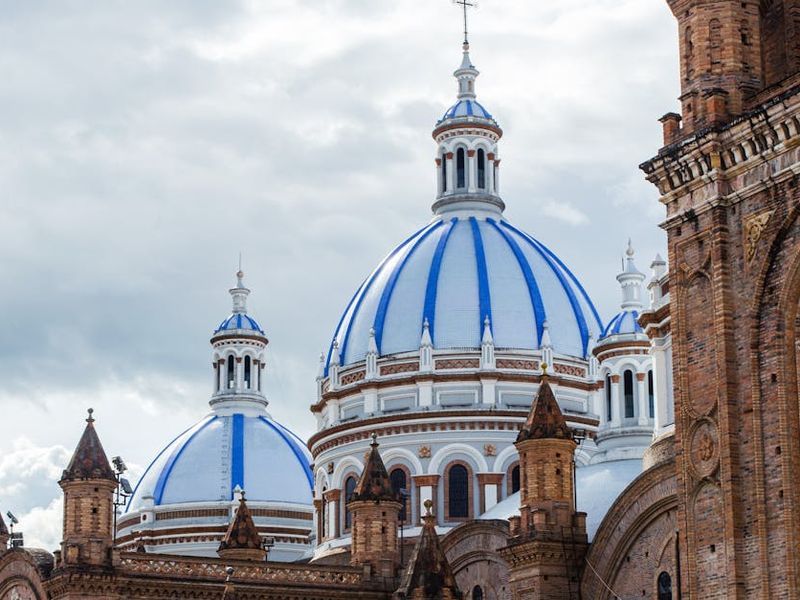
- The New Cathedral (Catedral de la Inmaculada Concepción): Famous for its striking blue domes — covered in glazed tiles imported from Europe — and twin towers, this cathedral anchors the visual identity of Cuenca. If tower access is open, climb for panoramic views of the plazas and the river ravine.
- El Sagrario (Old Cathedral): Adjacent to the New Cathedral, this older church shows Baroque detailing and offers a direct contrast in scale and ornamentation.
- Wooden balconies: Walk the streets around Parque Calderón and Calle Larga to admire the carved balconies on private homes and former colonial buildings. These balconied façades are emblematic of elite domestic architecture from the 17th–19th centuries.
- Bridges and the Tomebamba riverbanks: The river that slices through the city creates dramatic ravines and lined promenades. Historic bridges—and restored riverfront paths—offer viewpoints to see the city’s layered rooftops and church spires.
- Museo Pumapungo: Located a short walk south of the central plazas, this museum complex includes ethnographic exhibits, archaeological remains, and a well-maintained ethnobotanical garden—providing context for pre-Columbian and colonial eras that shaped Cuenca’s urban fabric.
Sample Walking Itinerary (Half-Day)
Cuenca’s historic center rewards slow travel. Here’s a compact route that highlights architecture and atmosphere without rushing.
- Begin at Parque Calderón — take in the cathedral domes and the flower stalls on the plaza’s edge.
- Wander Calle Larga and adjacent streets to see carved balconies and small courtyards; stop in a café for a coffee and people-watching.
- Visit the New Cathedral; if towers are open, climb them for city views (small fee may apply).
- Cross to the riverside and walk along the Tomebamba riverbanks toward the Barranco neighborhood, noting bridges and masonry walls.
- Finish with a short climb or taxi ride to Mirador de Turi for sunset views over the red tile roofs and the imposing Andes beyond.
Practical Tips for Appreciating the Architecture
To get the most from your visit, consider these practical tips that combine respect for heritage with comfortable travel:
- Start early: Morning light brings out the texture of stone façades and reduces crowds in churches and museums.
- Dress respectfully inside religious sites: Many churches ask for modest clothing. Avoid loud behavior and minimize flash photography near altars.
- Hire a local guide for deeper context: A certified guide from the municipal tourism office or a recommended agency can explain stylistic details — Baroque flourishes, colonial urban regulations, and later renovations — that are easy to miss on your own.
- Watch your step: Cobblestones and steep alleys are beautiful but uneven. Wear sturdy shoes and expect some stairs.
- Bring cash: Small entrance fees to towers, museums, and private courtyards often require cash (US dollars are official currency in Ecuador).
Where to Learn More: Museums and Sites
Museo Pumapungo is the top choice for contextualizing what you see in the streets; its exhibits explain indigenous occupation, the Inca influence, and Spanish colonial urbanization. Smaller municipal museums and restored colonial houses sometimes offer temporary exhibits on local artisans, architecture, or church treasures. Check hours before you go; mid-week mornings tend to be quieter and more relaxed.
Food Stops and Breaks in Historic Buildings
Cuenca’s historic center is full of cafés and small restaurants housed in vintage buildings — a pastry on a balcony or a hearty bowl of locro (potato and cheese soup) makes for a perfect architectural interlude. Look for traditional ice-cream shops selling helado de paila (a hand-churned fruit ice), an experience in both flavor and setting. Near the plazas you’ll find open-air markets and flower vendors that create lively photographic subjects between visits to churches and museums.
Conservation, Tourism, and Responsible Travel
Cuenca’s UNESCO designation brings both prestige and responsibility. The city balances preservation with daily life: many colonial houses are still residences, and adaptive reuse has turned former mansions into boutique hotels, restaurants, and cultural centers. When visiting:
- Respect signs and barriers in fragile sites; avoid leaning on altars or touching carvings.
- Support local artisans by buying handicrafts from certified markets or cooperatives rather than street vendors offering mass-produced souvenirs.
- Consider low-season travel for reduced pressure on popular sites and a quieter, more intimate experience.
Accessibility and Getting Around
Cuenca’s historic center is compact but built on a hillside and along river ravines, so some streets are steep or include staircases. If you have mobility concerns, look for accommodation near Parque Calderón and use taxis (which are inexpensive) to reach viewpoints like Turi. Many museums and newer public spaces have worked on accessibility; call ahead if you need ramps or elevator access to ensure a smooth visit.
When to Visit and What to Expect Weather-Wise
The city’s climate is characterized by cool, sunny mornings, possible afternoon cloud or rain, and crisp evenings. Pack layers and a small umbrella. Peak tourist months are June–August and December–January; shoulder seasons (April–May, September–November) often provide a good balance of pleasant weather and lighter crowds. If you want to photograph the domes and church façades in warm light, aim for the hour after sunrise or the last hour before sunset.
Photography and Respectful Behavior
Cuenca is eminently photogenic, but photography in places of worship and in private courtyards can be sensitive. Many churches allow photography without flash, while in some chapels it is restricted altogether. Look for posted guidelines, and when in doubt, ask a staff member or a guide. Also be mindful of locals praying or performing rituals—these moments deserve space and discretion.
Suggested Souvenirs and Local Crafts
Cuenca is known for quality handmade goods: Panama hats (locally woven and often higher quality than souvenir versions), woven textiles, silver jewelry, and traditional woodwork. Buying from artisans or reputable cooperatives helps sustain traditional trades that preserved many of the historic construction and decorative techniques on display throughout the city.
Safety and Practical Concerns
Cuenca is widely regarded as one of Ecuador’s safer cities for travelers, but usual urban precautions apply: keep valuables secure, prefer official taxis or ride apps at night, and be cautious in crowded markets. Use sunscreen at high altitude, drink bottled water if you have a sensitive stomach, and allow a day or two to acclimatize if you are arriving from sea level.
Putting It All Together: A Two-Day Plan
Day 1: Start with Parque Calderón, visit the New Cathedral and El Sagrario, wander Calle Larga, have lunch near Plaza San Sebastián, and finish with the Tomebamba riverwalk and dinner in the Barranco area. Day 2: Spend the morning at Museo Pumapungo and its gardens, visit a local artisan market, take an afternoon guided tour focused on balconies and domestic architecture, and end the day at Mirador de Turi for a panoramic sunset.
Final Thoughts: Enjoying a Living Heritage
Cuenca’s UNESCO historic center is not a frozen museum—it’s a lived-in city where churches still ring bells, markets still hum, and centuries-old balconies still shade afternoons. Approach it with curiosity, respect, and time to linger. Whether you’re sketching a façade, listening to a guide describe the woodcarvers’ techniques, or simply sipping coffee on a plaza bench, the architecture of Cuenca rewards slow, attentive travel.
With a modest budget, comfortable walking routes, and a handful of local tips, visitors can experience a richly layered urban landscape where colonial planning, Andean traditions, and modern life intersect. Plan well, be respectful, and let the streets of Cuenca reveal their stories stone by stone.