
Table of Contents
Why Cuenca’s Old Town Matters
Cuenca’s historic center is more than pretty streets and postcard domes — it’s a living example of Spanish colonial urban design layered over indigenous traditions and 19th-century growth. Declared a UNESCO World Heritage Site, the compact core around Parque Calderón preserves churches, civic buildings and residential blocks whose materials, proportions and details tell a story of centuries of adaptation. For travelers who love architecture, history and walkable cities, Cuenca offers a concentrated classroom of styles, from high Andean baroque to 19th-century revivalism, all framed by the gentle flow of the Río Tomebamba.
Start at the Heart: Parque Calderón and the Blue Domes
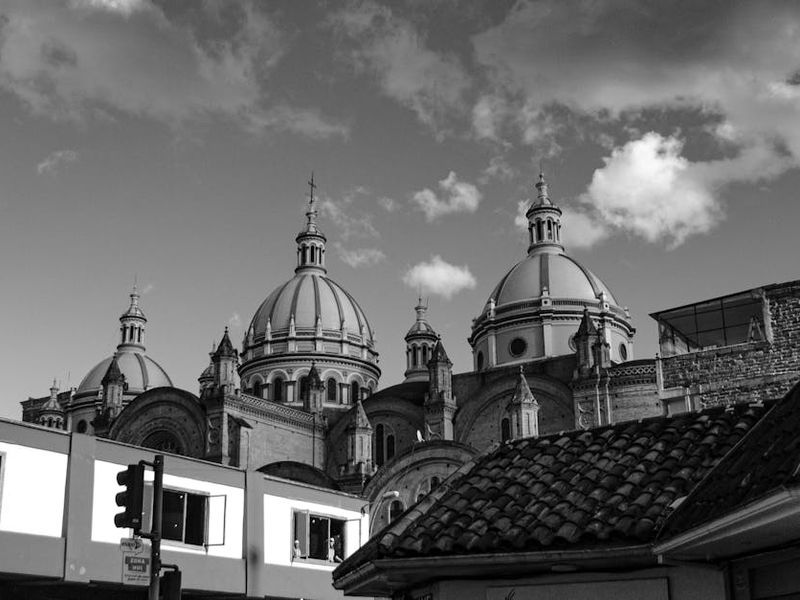
Almost every architectural exploration of Cuenca begins at Parque Calderón, the main square. Its plaza is a good orientation point: surrounding arcades, cafes and municipal buildings point to a city built for slow social life. Dominating the skyline are the two large blue-domed towers of the New Cathedral (Catedral de la Inmaculada Concepción). The cathedral is Cuenca’s most photographed structure and, for good reason, its exterior and interior merge European cathedral scale with Andean craftsmanship.
Practical tip: best time for photos
Early morning and late afternoon offer softer light for photographing the domes and the façades around the park. Midday can be harsh but is a good time for interior visits when museums and churches are most likely to be open.
Architectural Highlights within Walking Distance
Cuenca’s historic center is compact; many must-see sites are a short walk from Parque Calderón:
- The New Cathedral: Aside from admiring the blue-tiled domes, check for opportunities to climb to the upper terraces — the views over the tiled roofs and the river are worthwhile.
- The Old Cathedral (El Sagrario): Positioned near the central park, the older cathedral gives you a sense of the city’s evolution and often hosts art and history exhibitions.
- Río Tomebamba promenades: Walk the riverside terraces for a different perspective of the old town; look for carved stonework, restored balconies and the interplay of water and masonry.
- Colonial mansions and balconies: Take time to notice ornate wooden balconies, ironwork, inner courtyards (patios) and red clay roofs — each tells a story about climate, status and craft traditions.
Museums and Adaptive Reuse: Where Religious Space Meets Public Life
One of Cuenca’s strengths is the adaptive reuse of religious and colonial buildings. Former convents and large private houses have become museums, cultural centers and boutique hotels, allowing visitors to experience interiors that retain original floor plans and decorative elements.
Must-visit museum: Pumapungo
Museo Pumapungo, part of the country’s central bank museum network, sits a short walk from the river. The site blends archaeological remains, ethnographic exhibitions and well-designed gardens planted with native species — a useful stop for context on local cultures and pre-Columbian architecture that influenced later urban forms.
Neighborhoods to Explore Beyond the Main Square
The charm of Cuenca is as much in wandering as in ticking off monuments. Venture away from the central plaza to discover neighborhoods where architecture meets everyday life:
- El Barranco: A steep terrace neighborhood above the river, El Barranco features narrow streets, stairways and panoramic viewpoints. It’s where you can observe how topography shaped building forms and neighborhood patterns.
- San Sebastián and Las Conceptas areas: Small squares, convents and tightly knit streets characterize these quarters. Look for cloistered patios and churches with layered decorative programs.
Photography and viewing spots
For skyline photos, head to viewpoints along the river and to public terraces near the New Cathedral. For intimate details — carved doors, wooden balconies, tile patterns — early-morning walks on quieter streets let you get close without crowds.
Architecture Styles and What to Look For
Cuenca’s buildings are a mix of styles with common materials: adobe brick and stone, red clay roof tiles, and richly carved wood and iron. When you walk, keep an eye out for:
- Arcades and loggias: These covered pedestrian pathways around plazas handle weather and create semi-public social spaces.
- Wooden balconies (balcones): Often ornately carved and projecting over sidewalks, balconies reflect both privacy needs and carpentry skill.
- Stone foundations and decorative facades: Many houses are built on visible stone bases that weather differently than upper levels, creating a layered aesthetic.
- Baroque decoration: In churches and some civic buildings, expect decorative sculptural elements and columned porticos.
Respectful Visiting: How to Experience Sacred and Historic Sites
Many of the city’s architectural treasures are active religious sites. Observing a few basic courtesies ensures a better experience for everyone:
- Dress modestly when entering churches and cloisters; shoulders and knees covered are a good rule.
- Ask before photographing interiors or worshippers; some spaces limit flash or commercial photography.
- Keep voices low and be mindful of ongoing services or events.
Practical Tips: Timing, Tickets, and Getting Around
Planning makes a big difference when you want to absorb architecture without rushing. Here are practical points to consider:
- Best months for walking: Cuenca’s climate is mild year-round thanks to its highland setting, but the driest months are usually June through September. Shoulder months can be quieter with more variable weather.
- Altitude awareness: The city sits above 2,500 meters (about 8,200 feet). Take it easy your first day, hydrate, and avoid strenuous activity until you feel acclimatized.
- Opening hours and fees: Major churches and museums usually open in the morning and close in the afternoon; some sites may charge a small entrance or tower-climb fee. Check current opening times ahead of your visit, especially during holidays.
- Getting around: Cuenca is very walkable in the historic center. Taxis are inexpensive for longer hops, and many visitors choose to stay in a boutique hotel inside the old town to be within walking distance of most attractions.
Guided Tours vs. Self-Guided Walks
Both options have advantages. A guided walk with an architect or historian can provide deep context — pointing out structural details and conservation stories you’d likely miss. Free and paid guided walking tours are available and are especially useful if you have limited time.
Self-guided exploration rewards slow observation. Bring a good map, download an offline map of the historic center, and allocate time to sit in a plaza and watch the city’s rhythms. Audio guides or guidebooks focusing on colonial architecture can add structure to a leisurely day.
Conservation, Local Crafts and Sustainable Tourism
Cuenca’s UNESCO status brings attention and resources but also challenges: visitor footfall, modern development pressures and infrastructure needs. You can support sustainable tourism here by visiting locally run museums, buying from neighborhood artisans and choosing lodging that restores rather than replaces historic fabric.
Where to buy authentic crafts
Small cooperatives and artisan shops around the historic center offer textiles, ceramics and silverwork. When shopping, ask about materials and techniques — many artisans keep centuries-old methods alive, and purchases directly support that craft continuity.
Sample Itineraries: One Day to Three Days
Make the most of Cuenca’s architecture with a plan suited to your schedule:
- One-day walker: Start at Parque Calderón, tour the New Cathedral (including the dome if possible), wander riverside terraces, visit Museo Pumapungo, and stroll El Barranco at sunset.
- Two-day enthusiast: Add a guided walking tour focused on colonial mansions and balconies, visit a former convent-turned-museum, and spend an afternoon photographing rooftops and hidden patios.
- Three-day slow travel: Take a day trip to nearby ruins or a textile village, join a workshop on wood-carving or weaving in the morning, and use the extra time to linger in cafés and smaller museums.
Day Trips that Complement the Historic Center
Cuenca is a great base for short excursions that deepen your understanding of regional architecture and history. Local archaeological sites, indigenous craft villages and colonial churches in surrounding towns illustrate how urban ideas translated across the landscape. Consider a guided trip to nearby archaeological ruins or to a community workshop that demonstrates traditional building techniques.
Final Advice for Architecture Lovers
Cuenca rewards attention. Slow walking, patience and curiosity reveal how the city’s fabric weaves together social, climatic and material responses over centuries. Carry a sketchbook or camera, let yourself get lost on quieter streets, and ask locals about the stories behind facades and patios. With maintenance and thoughtful tourism, Cuenca’s streets will continue to be a living classroom — where every carved balcony and tiled dome is an invitation to learn.
Enjoy the blue domes, the shade of the arcades and the quiet poetry of stone and water in Cuenca’s UNESCO-listed heart. With a little planning and a lot of walking, you’ll leave with a deeper understanding of how architecture can hold a city’s memory.