
Table of Contents
Why Cuenca’s Historic Center Deserves Your Time
Cuenca’s historic center earned UNESCO status not just for a collection of pretty facades, but for a remarkably intact colonial grid, lively public squares and a layering of indigenous, colonial and republican architecture that tells Ecuador’s highland story. Nestled at about 2,560 meters (8,400 ft), this compact, walkable city blends blue-domed cathedrals, whitewashed convents, elegant mansions and quiet riverside terraces. For visitors who love architecture, history and photography, Cuenca offers a concentrated, approachable alternative to larger Andean capitals.
What UNESCO Recognized and Why It Matters
UNESCO inscribed Cuenca’s historic center in 1999 for its outstanding preservation of an Andean colonial city adapted to a new social and urban order. The value lies in the city’s layout — a Spanish grid superimposed on pre-Columbian settlement patterns — and in the continuity of use: churches still host services, plazas still function as civic centers, and many colonial houses are active homes, shops or boutique hotels. Understanding these layers enriches any tour: you’re not simply looking at buildings, you’re seeing centuries of cultural adaptation and conservation choices.
Top Architectural Highlights — Not Just the Usual Shots
Start with the essentials, then peel back layers to discover less-obvious treasures.
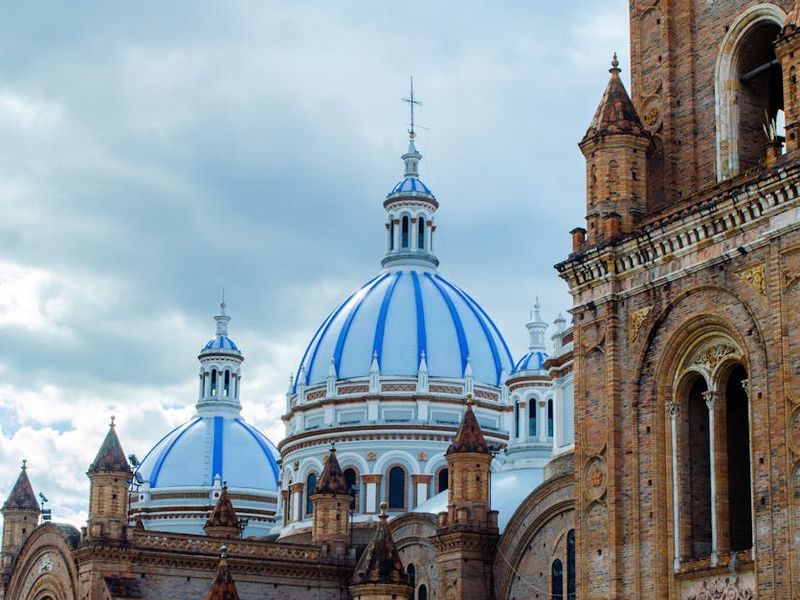
- Catedral de la Inmaculada Concepción (New Cathedral): The blue-tiled domes dominate many postcard views. Climb the towers for panoramic shots of the city grid, the Tomebamba River and surrounding hills — early morning or late afternoon light is best.
- Old Cathedral (Santa Ana): Adjacent to the new cathedral, the older cathedral has been repurposed and now contains religious art and rotating exhibitions. Its more intimate scale contrasts with the New Cathedral’s monumental presence.
- Museo Pumapungo: An essential stop to see pre-Hispanic stonework, restored Inca terraces and an ethnographic display that connects the architecture you’re seeing to deeper indigenous histories.
- Convento de las Conceptas: A former convent with serene cloisters and an impressive collection of colonial textiles, paintings and silver — a great place to appreciate interior architectural details and religious craftsmanship.
- Calle Larga and the Tomebamba riverbanks: These streets reveal elegant casonas (large houses), wrought-iron balconies and riverside bridges. A stroll here at sunset gives some of the best architectural perspectives in the city.
- San Francisco Church and Monastery: This complex showcases baroque ornamentation and a dramatic façade. Explore the adjacent plazas where daily life continues amid historic walls.
Less-Visited Architectural Gems
Beyond the main sights are pockets of architecture that reward slower exploration:
- Residential patios and small museums: Many former mansions have been converted into boutique museums, cafes and galleries. Keep an eye out for signs indicating casonas that allow entrance for a small donation.
- Industrial-era buildings: Near the outskirts of the UNESCO zone you’ll find 19th-century warehouses and early republican public buildings that reveal Cuenca’s economic shifts from colonial trade to modern industries.
- Hidden chapels and courtyard gardens: Walk the narrow lanes off the main thoroughfares to discover tiny chapels, tiled staircases, and tranquil courtyards shielded from busy streets.
Practical Walking Routes for Architecture Lovers
Cuenca’s center is highly walkable. Here are two curated routes that balance classic monuments with quieter discoveries.
One-Day Highlights Loop
- Begin at Parque Calderón (Plaza Abdon Calderón) to orient yourself with the New and Old Cathedrals.
- Walk east along Calle Larga toward the Tomebamba riverbanks, pausing for riverside photo opportunities.
- Cross one of the picturesque bridges and head to Museo Pumapungo to see archaeological terraces and an ethnographic collection.
- Return via Convento de las Conceptas and the San Francisco complex.
- Finish with a sunset climb to Turi viewpoint for sweeping vistas of the city’s tile patterns and domes.
Two-Day Deep Dive
- Day 1: Follow the one-day route at a relaxed pace, take time inside the New Cathedral and the Old Cathedral museum, and visit one or two smaller museums such as the Museo de las Conceptas.
- Day 2: Explore neighborhoods like El Barranco and San Sebastián, investigate 19th-century public buildings, and seek out renovated casonas that now house galleries or boutique hotels.
Guided Tours vs Self-Guided Exploration
Both approaches work well in Cuenca. Guided walking tours, especially those led by local municipal guides, provide historical depth, access to less-visible sites and context about restoration projects. A guide can point out architectural details you’d otherwise miss — specific masonry techniques, timber beam repairs or paint stratigraphy that reveals earlier color schemes.
Self-guided exploration gives flexibility. Use a good guidebook, offline map and the city’s interpretive plaques. Many cafes and museums offer bilingual panels, and small audio guides or smartphone apps are sometimes available for major sites. If you go solo, allow time to wander alleys and step into courtyards — that’s where Cuenca’s hidden architecture shows itself.
Best Times to Visit and How Weather Affects Architecture Photography
Cuenca’s highland climate is generally mild year-round, but there are wetter and drier seasons. The dry season (roughly June–September) makes long walks and rooftop photos more pleasant and reduces the chance of mist obscuring views. In the wet season (October–May), dramatic clouds can add mood to photos, but bring rain protection for cameras and comfortable waterproof shoes for slick cobblestones.
Light matters. Early morning captures soft golden light on colonial facades and empty plazas, while late afternoon brings warm highlights to the blue domes and deepens shadows for dramatic composition. Night photography around Parque Calderón can be rewarding when the cathedral is lit; just be mindful of personal safety and tripod restrictions in pedestrian areas.
Practical Tips: Tickets, Access, and Respect
- Entry and hours: Many churches are open daily, but museums may close on Mondays. There are often small entrance fees for museums and for climbing cathedral towers; bring local currency and check current hours before visiting.
- Photography rules: Photography of exteriors is generally fine. Inside churches and some museums, flash photography may be restricted and some spaces prohibit photos altogether. If in doubt, ask staff.
- Dress and behavior: Religious sites are active places of worship. Dress modestly and speak quietly during services. Avoid disturbing congregants or ceremonies for the sake of a photo.
- Mobility and cobblestones: The historic center has uneven paving and steps. If you have limited mobility, plan ahead and ask museums about ramps or alternate entrances.
Sustaining the Heritage: Conservation and Community
Cuenca’s historic center remains a living neighborhood, and conservation is an ongoing communal effort. Regulations control alterations to facades, rooflines and street-level shopfronts to maintain visual coherence. Local artisans and building conservators are actively involved in restoration projects — you can sometimes observe craftsmen redoing lime plaster, restoring original tile patterns or repairing carved wooden balconies.
Visitors can contribute positively by supporting locally owned cafes, museums and artisan shops, by following posted rules in protected sites, and by choosing lodging in restored casonas that follow conservation standards. Avoid buying antiques of questionable provenance — cultural heritage laws protect many artifacts.
Where to Eat and Rest Close to the Architecture
To keep your focus on architecture, choose cafes and restaurants that let you linger and gaze at façades. Many establishments around Parque Calderón offer rooftop seating with cathedral views — great for reviewing photos or planning your next stop. For authentic local flavors after a day of walking, try a plate of llapingachos (potato patties), hornado (slow-roasted pork) or a cup of fresh coffee from the highland region. Don’t miss helados de paila — a traditional hand-churned ice cream — often sold in central plazas and along main streets.
Accommodation options range from boutique hotels in 18th-century casonas to modern mid-range hotels. Staying in the historic center means early access to the streets before crowds arrive and the opportunity for evening strolls when facades are quieter and beautifully lit.
Safety and Practicalities
Cuenca is widely regarded as one of Ecuador’s safest cities for tourists, but standard precautions apply: secure valuables, avoid isolated areas at night, and agree fares in taxis if a meter is not used. Public transport and taxis are inexpensive methods to reach viewpoints like Turi or to go farther afield to artisan towns and archaeological sites.
Altitude is a consideration: take it easy on your first day, hydrate and allow your body to adjust. Most visitors acclimate quickly and benefit from walking the relatively flat historic core rather than climbing steep hills right away.
Taking the Next Step: Workshops, Conservation Tours and Volunteer Opportunities
If you want to deepen your relationship with Cuenca’s built heritage, look for hands-on experiences. There are occasional workshops on traditional plastering, tile-making and wood joinery led by local artisans. Some conservation organizations offer short-term volunteer programs where visitors can observe restoration techniques or contribute to community outreach — these arrangements typically require advance booking and sometimes a modest fee.
Final Notes: How to Make an Architectural Visit Meaningful
To get the most from Cuenca’s UNESCO architecture, balance admiration with curiosity. Ask questions about why a façade is painted a certain color, why a balcony uses specific wood types, or how a plaza’s function has changed over centuries. Sit in a square with a coffee and watch daily life weave through the heritage sites — the living city is as important as the brick and stone.
Whether you have a day or a week, let the city reveal itself slowly. Look up to domes and cornices, step into cloisters, and follow the river’s curve to discover the subtle transitions between colonial, republican and vernacular styles. Cuenca’s historic center is not a static museum but a well-lived place — and that is the core of its UNESCO significance.
Quick Checklist Before You Go
- Wear sturdy shoes for cobbles and stairs.
- Carry small change for museum entries and tower access.
- Bring a lightweight rain jacket during the wet season.
- Respect worshipers and follow interior photography rules.
- Support local guides and artisans to help preserve the city’s heritage.
With thoughtful planning and a curious eye, exploring Cuenca’s UNESCO historic center becomes an immersive lesson in architectural continuity, cultural resilience and everyday beauty — a compact yet richly layered experience for any traveler who loves the built environment.
Adam Elliot Altholtz serves as the Administrator & Patient Coordinator of the “Smilehealth Ecuador Dental Clinic“, along with his fellow Expats’ beloved ‘Dr. No Pain‘, right here in Cuenca, Ecuador, and for purposes of discussing all your Dental needs and questions, is available virtually 24/7 on all 365 days of the year, including holidays. Adam proudly responds to ALL Expat patients from at least 7:00am to 9:00pm Ecuador time, again every single day of the year (and once more even on holidays), when you write to him by email at info@smilehealthecuador.com and also by inquiry submitted on the Dental Clinic’s fully detailed website of www.smilehealthecuador.com for you to visit any time, by day or night. Plus, you can reach Adam directly by WhatsApp at +593 98 392 9606 -or by his US phone number of 1‐(941)‐227‐0114, and the Dental Clinic’s Ecuador phone number for local Expats residing in Cuenca is 07‐410‐8745. ALWAYS, you will receive your full Dental Service in English (NEVER in Spanish), per you as an Expat either living in or desiring to visit Cuenca by your Dental Vacation, plus also to enjoy all of Ecuador’s wonders that are just waiting for you to come arouse and delight your senses.