
Table of Contents
Why Cuenca’s Historic Center Deserves Your Time
Cuenca, nestled high in the Ecuadorian Andes at about 2,560 meters (8,400 ft), is a city where red-tiled roofs, carved wooden balconies and blue-domed cathedrals create a skyline that feels frozen in a gentler time. In 1999 UNESCO inscribed the historic center of Cuenca as a World Heritage Site for its outstanding preservation of colonial urban design and architecture. Today that legacy is visible in a compact, walkable core where history is alive: churches, civic buildings, convents and private homes have been conserved, adapted and repurposed into museums, shops and restaurants.
Getting Your Bearings: Key Landmarks to Start With
Begin your architectural exploration in Parque Calderón, the heart of the historic center. From here you can easily access Cuenca’s signature buildings and streets:
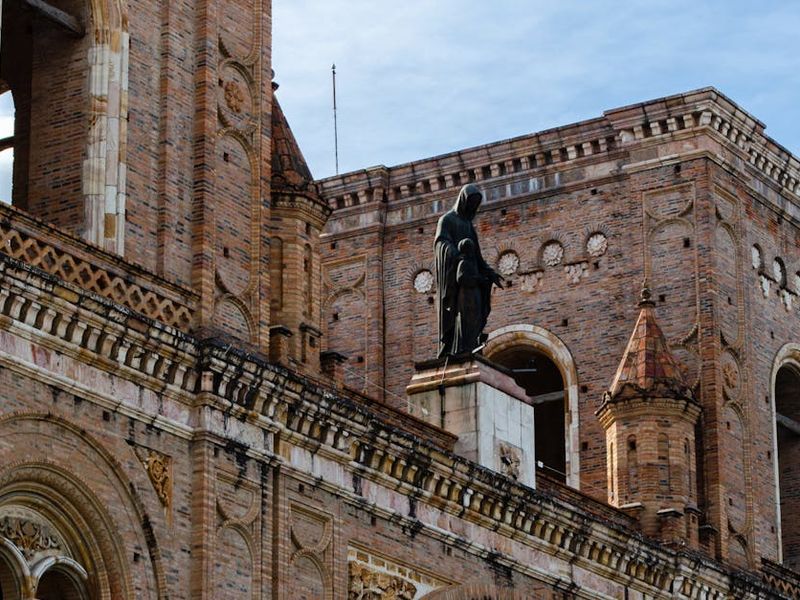
- Catedral Nueva (New Cathedral) — Recognizable for its brilliant blue-and-white glazed domes that dominate the skyline. Don’t just admire it from the plaza; consider climbing into the bell tower area for panoramic views.
- Catedral Vieja (Old Cathedral) — The former cathedral sits near the main square and today hosts exhibitions and events that reveal religious art and the city’s history.
- Tomebamba River and El Barranco — Walk the promenades along the river to see houses with wooden balconies spilling toward the water, an intimate view of Cuenca’s layered history.
- Plaza San Sebastián and Calle Larga — These streets showcase civic architecture, restored colonial homes, and lively market life.
- Museo Pumapungo — A short stroll from the center, this museum built on Inca-era terraces offers archaeological displays and a peaceful garden of ruins.
A Walking Route: A Full Architectural Morning
This curated route covers the essentials in roughly three to four hours at an easy pace.
- Start: Parque Calderón. Take in the façades surrounding the square, notice the wrought-iron balconies and colonial stonework.
- Stop 1: Catedral Nueva. Walk around the exterior first to capture the domes in the morning light, then enter the nave if services allow. Check for any tower access or museum inside.
- Stop 2: Calle Larga. Head south toward this elegant street to see restored merchant houses and craft shops. Pause at a café to watch daily life unfold through the arches.
- Stop 3: Paseo along the Tomebamba. Cross one of the historic bridges and stroll El Barranco for the view up at the city terraces and houses.
- Stop 4: Museo Pumapungo. Finish here to ground the colonial experience with pre-Columbian context and beautifully landscaped archaeological gardens.
Architecture Up Close: Styles and Details to Notice
Cuenca’s urban fabric reflects layers of time: pre-Hispanic foundations, a Spanish colonial grid, and republican-era expansions. As you walk, look for these architectural details:
- Blue domes and ceramic tiles: Glazed ceramic domes are a distinctive touch on the New Cathedral and catch the light in dramatic ways.
- Wooden balconies: Intricately carved balconies (balcones) project from façades, often painted in deep hues and trimmed with carved pilasters.
- Stone portals and lintels: Many civic and religious buildings feature carved stone surrounds with baroque or neoclassical ornament.
- Cobblestone streets and clay roofs: The texture of the streets and the repetition of clay tiles tie the city together visually.
- Adaptive reuse: Note how old convents and mansions have become museums, restaurants, and boutique hotels while retaining original staircases and interior courtyards.
Photography Tips: Capture Cuenca’s Character
If you want striking photos of Cuenca’s architecture, timing and vantage points matter:
- Golden hour: Early morning or late afternoon soft light makes the domes glow and brings out warm tones in stone and wood.
- High viewpoints: Head up to El Turi (Cerro del Turi) for panoramic shots of the city with the Andes as a backdrop; it’s also a great spot for sunset images.
- Details matter: Zoom in on wrought-iron, carved doors, clay tiles and balcony brackets for intimate architectural portraits.
- Reflections: After a light rain the cobblestones reflect façades—perfect for creative compositions.
- Respect interiors: In churches and museums be mindful of no-flash rules and restricted areas. Ask before photographing altarpieces or exhibits.
Museums and Interiors Worth Your Time
Beyond façades, several museum spaces are inside restored colonial buildings, offering both content and context:
- Museo Pumapungo: Combines archaeological collections with Inca terraces and ethnographic displays—ideal for understanding the indigenous and colonial layers beneath the city.
- Religious art museums: Many former churches and convents house collections of sacred art, silverwork and textiles that reveal craftsmanship and devotional life.
- Cultural centers and galleries: Look for local art in converted mansions along Calle Larga and the neighboring streets; these often showcase contemporary conversations with historical space.
Conservation and Responsible Tourism
Cuenca’s UNESCO status brings attention and resources, but it also creates pressure. Responsible visitors can help preserve the city’s character:
- Stick to marked paths: Avoid climbing on fragile ruins and follow signage at historic sites.
- Support local businesses: Eat in family-run restaurants, buy crafts from local artisans, and choose locally owned accommodations.
- Use licensed guides: Local guide associations offer walking tours that fund conservation work and provide in-depth, accurate histories.
- Be mindful of noise and litter: Historic interiors are sensitive; respect quiet zones and carry out any trash.
Best Times to Visit and What to Pack
Cuenca enjoys a temperate mountain climate—days are often pleasant while mornings and nights are cool. Choose the timing that suits your priorities:
- Dry season (June–September): Offers more clear days and excellent visibility for photos and hilltop views.
- Shoulder seasons (March–May and October–November): Fewer tourists and still pleasant weather, though occasional rain is possible.
- Packing essentials: Layered clothing, comfortable walking shoes (cobblestones are uneven), a lightweight rain jacket, sunscreen and a small daypack. Bring cash—many small museums and markets prefer bills.
- Altitude caution: If you’ve just arrived from the coast or sea level, take it easy the first day, hydrate and avoid heavy exertion until you acclimatize.
Practical Info: Transport, Costs and Safety
Getting around Cuenca and planning your visit is straightforward if you know a few local facts:
- Currency: Ecuador uses the US dollar, which simplifies budgeting for many international travelers. Carry small bills for entrance fees and tips.
- Getting there: Cuenca has a regional airport (Mariscal La Mar) with domestic flights from Quito and Guayaquil. Long-distance buses connect Cuenca to major Ecuadorian cities—expect several hours from the coast and a longer journey from Quito.
- Getting around: The historic center is compact and best explored on foot. Taxis are inexpensive for longer trips; agree on a fare if no meter is used. Bicycle and e-bike rentals are popular for longer explorations along the rivers.
- Safety: Cuenca is widely regarded as one of Ecuador’s safer cities, but standard precautions against pickpocketing apply—especially in crowded markets and on public transport.
Sample Itineraries for Different Interests
One-Day Architecture Immersion
Morning: Start at Parque Calderón, visit the New Cathedral and climb for views. Midday: Walk Calle Larga, have lunch in a restored patio. Afternoon: Stroll El Barranco and end at Museo Pumapungo to connect the colonial city to its pre-Hispanic roots.
Two-Day Deep Dive
Day 1: Focus on public buildings and religious sites—spend extra time inside museums of religious art. Day 2: Explore residential architecture, artisan workshops, and take a half-day excursion to El Turi and nearby viewpoints for aerial photos.
Architecture & Food Combo
Pair historic visits with culinary stops: sample local dishes in courtyard restaurants, visit markets for fresh cheeses and local sweets, and end the day at a rooftop bar overlooking the illuminated domes of the cathedral.
Final Tips for a Meaningful Visit
Slow down. Cuenca rewards visitors who linger and look up. Talk to shopkeepers, ask about restoration work, and join a small-group walking tour that focuses on architecture or social history. Your curiosity supports the many artisans, guides and conservators who keep these buildings in good repair.
Historic centers like Cuenca’s are not museum dioramas but living neighborhoods. By traveling thoughtfully—respecting interiors, supporting local businesses, and learning about the layers beneath the tiles—you’ll leave with richer memories and help ensure this architectural treasure remains vibrant for generations to come.
Ready to plan your visit? Pack comfy shoes, a camera with extra batteries, and a spirit for slow exploration. Cuenca’s streets wait with stories in stone, wood and tile.