
Table of Contents
Why Cuenca’s Historic Center Feels Like a Living Museum
Cuenca, Ecuador’s third-largest city, wears its history visibly. Designated a UNESCO World Heritage Site in 1999, the city’s colonial core is not a frozen relic but a living urban landscape where stone facades, tiled domes and leafy plazas frame daily life. This guide helps you read the layers of Cuenca’s architecture, plan routes that reveal the best views, and get the most from museums, churches and quiet courtyards.
Understanding the Architectural Mix
Cuenca’s historic center blends Spanish planning—straight streets, central plazas and prominent churches—with local building traditions and later stylistic revivals. Walk through the city and you’ll notice:
- Grid-based urban planning with major plazas at the intersections, anchored by the cathedral at Parque Calderón.
- Baroque and Neoclassical façades on churches and public buildings, often with ornate stonework and columned entrances.
- Distinctive glazed-tile domes crowning the main cathedral, visible from many vantage points.
- Traditional courtyards (patios) and arcaded commercial streets that encourage pedestrian life.
- Wrought-iron balconies, carved wooden doors and decorative tiles—small details that reward slow walking.
Start at Parque Calderón: The City’s Living Room
Most walking routes begin at Parque Calderón (also called Plaza Abdon Calderón). The park is the social heart of Cuenca: elders playing chess, students on benches, and markets spilling into adjacent streets. From here you can immediately see the cathedral’s blue-and-white domes rising above the rooftops—an iconic view to return to at least once during your stay.
Practical tip: Arrive early in the morning when the light softens the stone and the plazas are calm. Cafés bordering the park are perfect for coffee while you plan the day.
New and Old: Two Cathedrals, Two Stories
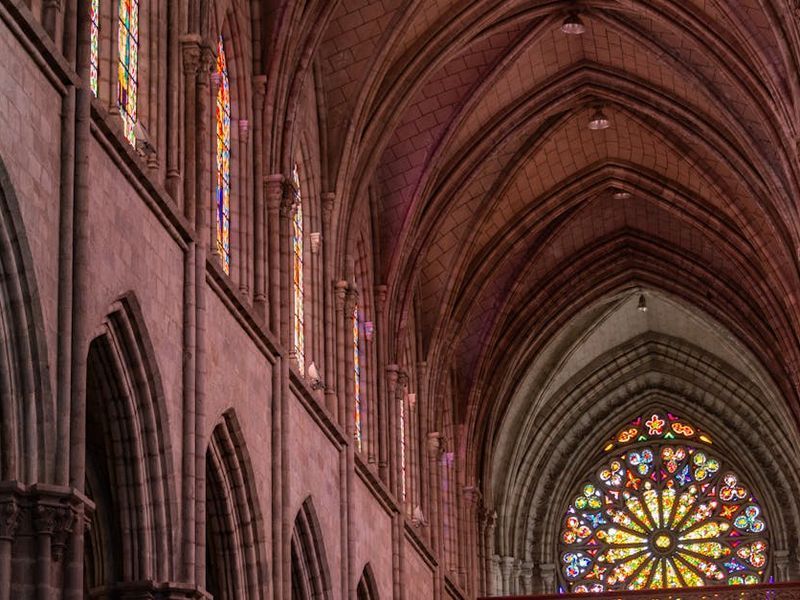
Cuenca’s cathedral complex itself tells a colonial tale. The larger church, often called the New Cathedral (Catedral de la Inmaculada Concepción), is famous for its glazed domes whose colors punctuate the skyline. Its scale reflects the city’s 19th-century confidence and international influences. Nearby, the older cathedral—sometimes referred to as the Old Cathedral or El Sagrario—displays an earlier, more restrained colonial character.
Architecture tip: Compare the façades and interiors: look for differences in ornamentation, materials and how light is used inside. The contrast helps you trace Cuenca’s stylistic evolution.
Wander the Riverfront: El Barranco and the Tomebamba
Walk down from the main plazas toward the Tomebamba River and you enter El Barranco, a neighborhood of terraces, small bridges and views across the water to the cathedral domes. The riverbanks reveal a less formal side of the city—households with hanging laundry, riverside gardens and stone retaining walls that mark centuries of urban adaptation to the Andean landscape.
Photo tip: Late afternoon light on the river produces beautiful reflections of red tiles and domes—perfect for photographers and sketchers.
Museo Pumapungo: Archaeology, Textiles and Context
Just a short walk from the river is Museo Pumapungo (run by Ecuador’s Central Bank), an essential stop for anyone wanting context. The museum sits over archaeological ruins and presents regional pre-Columbian artifacts, colonial objects and living craft traditions. The gardens contain Inca and Cañari terraces alongside reconstructed house foundations—an important reminder that Cuenca’s urban fabric predates Spanish rule.
Visitor tip: Allow at least 90 minutes. The museum has small cafés and handicraft shops where you can see traditional weavings and buy responsibly sourced souvenirs.
Calle Larga and the Artisan Loop
Calle Larga is Cuenca’s pedestrian artery—perfect for window-shopping and people-watching. Here the colonial grid becomes an accessible promenade lined with shops selling Panama hats, silver filigree jewelry and textiles. Venture a few side streets to find tiny workshops and restored colonial homes that now host galleries or boutique hotels.
Shopping tip: If you’re interested in authentic handicrafts, ask about local materials and production methods. Some artisans will happily demonstrate hat weaving or filigree work if you show genuine curiosity.
Churches, Convents and Quiet Interiors
Beyond the cathedrals, Cuenca’s churches are architectural gems. Look for carved stone portals, gilded altars and cloistered convents with peaceful courtyards. Many of these sacred spaces have been updated over the centuries—Baroque altarpieces, Neoclassical facades and even modern restorations coexist in surprising harmony.
Etiquette tip: Dress respectfully (shoulders covered, no hats) and avoid flash photography in active services. Donations are appreciated and often help maintain fragile interiors.
Architectural Details to Seek Out
To make your walk feel like an architectural scavenger hunt, search for these details:
- Ironwork balconies with potted geraniums—tiny gardens that animate façades.
- Artisan-tiled signage and house-number plaques reflecting regional pottery traditions.
- Stone portals with carved saints or floral motifs—look closely, many masks and faces are hidden in the stonework.
- Internal courtyards with fountains and cloisters—these patios moderate the highland climate.
- Rooflines and eaves—notice how tile angles and overhangs respond to rainfall and sun at 2,560 meters above sea level.
Best Walking Routes: Half-Day and Full-Day Plans
Half-day route (morning): Parque Calderón – New Cathedral – Calle Larga – Mercado and Artisan Shops – Rio Tomebamba (El Barranco) – Museo Pumapungo. This loop mixes grand monuments with markets and riverside charm.
Full-day route (all-day exploration): Begin at Parque Calderón, tour the cathedrals, visit the Museo del Banco Central exhibits, take a long lunch on Calle Larga, spend the afternoon at Museo Pumapungo and explore the terraces by the river, then head up to Mirador de Turi for sunset over the historic center.
Mirador de Turi and Rooftop Perspectives
For the best panoramic views, make the short drive or taxi ride up to Mirador de Turi. From here the city’s grid, red roofs and blue domes spread out against the Andean skyline—the perfect way to appreciate the way Cuenca’s architecture sits inside its valley.
Sunset tip: Arrive about 30 minutes before sunset to secure a spot. If you have time, linger as the city lights turn on—street lamps bring a warm glow to plazas and arcades.
Seasonal Events that Illuminate Architecture
Architecture in Cuenca comes alive during festivals and religious processions. Semana Santa (Holy Week) features elaborate processions that move past major churches, while December’s festivities fill plazas with temporary altars and lights. During these times, facades are dressed with banners and florals, offering unique views of familiar spaces.
Planning tip: If visiting during a major holiday, book accommodations and guides well in advance. Events are crowded but offer compelling cultural and architectural perspectives.
Conservation and Responsible Visiting
UNESCO status helps protect Cuenca’s historic fabric, but preservation is an ongoing challenge. If you visit restored sites, you’ll often see signs about recent works and community-led conservation projects. Supporting local museums, guided tours run by trained local guides, and purchasing from registered artisans all contribute to the city’s cultural economy.
Responsible tourism tip: Stay on designated paths in archaeological areas, do not touch fragile stonework, and ask permission before photographing people in private settings.
Practical Information: Hours, Tickets, and Mobility
Many churches and plazas are free to explore; museums typically charge modest entry fees. Timings vary—museums often open mid-morning and close mid-afternoon or early evening. Sundays are lively but some museums may have reduced hours. For mobility: the historic center is compact and best experienced on foot. Wear comfortable shoes; cobblestones and narrow streets are common.
Altitude note: Cuenca sits at roughly 2,560 meters (about 8,400 feet). If you’re arriving from low altitude, take it easy the first day, drink water, and wear sun protection—the sun is strong at this elevation.
Guided Tours vs. Self-Guided Exploration
Guided tours can enrich your visit with historical narratives and insider access—look for guides certified by local cultural institutions. A good guide will point out subtle restoration details, explain iconography, and place buildings in social context.
Self-guided travelers can still have a rich experience: bring a guidebook or a photo app, make time to sit in plazas and observe, and follow the river pathways for quieter neighborhoods. Combination is ideal: take a guided tour for the major monuments, then spend your afternoons exploring on your own.
Nearby Day Trips for Architecture Lovers
If you want to extend your architectural exploration beyond Cuenca’s core, consider short trips to nearby artisan towns where colonial houses and workshops reveal regional crafts. Markets specializing in silver, textiles and hat-making show how traditional techniques continue to shape the built environment.
Tip: Ask at your hotel or tourist office for recommended day trip operators who prioritize small groups and support local communities.
Final Tips to Appreciate Cuenca’s Architectural Story
Take your time. Architecture is about proportions, light and human scale—spend an hour in a courtyard sketching or simply watching locals interact with the space. Look up to catch cornices and balconies, and down to notice stone thresholds worn smooth by centuries of footsteps. Talk to shopkeepers and museum educators: their stories will bring facades to life.
With its blend of colonial planning, regional craft traditions and ongoing restoration work, Cuenca offers more than pretty buildings—it offers a narrative. Read it slowly and you’ll leave with a deeper sense of how architecture shapes daily life in the Andes.
Quick Checklist Before You Go
- Comfortable walking shoes and layers for changing highland weather.
- Sun protection—hat, sunglasses, and sunscreen—for high-altitude sun.
- Small cash for museum entries, tips and artisan purchases.
- Respectful clothing for visiting churches (shoulders covered).
- Camera or sketchbook, and an extra battery—architecture rewards repeat visits at different light.
Enjoy exploring Cuenca—where every street corner is a chapter in a long, beautiful architectural story.
Adam Elliot Altholtz serves as the Administrator & Patient Coordinator of the “Smilehealth Ecuador Dental Clinic“, along with his fellow Expats’ beloved ‘Dr. No Pain‘, right here in Cuenca, Ecuador, and for purposes of discussing all your Dental needs and questions, is available virtually 24/7 on all 365 days of the year, including holidays. Adam proudly responds to ALL Expat patients from at least 7:00am to 9:00pm Ecuador time, again every single day of the year (and once more even on holidays), when you write to him by email at info@smilehealthecuador.com and also by inquiry submitted on the Dental Clinic’s fully detailed website of www.smilehealthecuador.com for you to visit any time, by day or night. Plus, you can reach Adam directly by WhatsApp at +593 98 392 9606 -or by his US phone number of 1‐(941)‐227‐0114, and the Dental Clinic’s Ecuador phone number for local Expats residing in Cuenca is 07‐410‐8745. ALWAYS, you will receive your full Dental Service in English (NEVER in Spanish), per you as an Expat either living in or desiring to visit Cuenca by your Dental Vacation, plus also to enjoy all of Ecuador’s wonders that are just waiting for you to come arouse and delight your senses.