
Table of Contents
Why Cuenca’s Historic Center Deserves a Dedicated Visit
Cuenca’s Centro Histórico—officially listed as a UNESCO World Heritage Site in 1999—is one of the most complete and well-preserved Spanish colonial towns in South America. Instead of a single monument, the designation recognizes a living urban fabric: narrow cobbled streets, plazas framed by arcades, churches with monumental cupolas, and layers of building styles that span Spanish colonial, republican, and local mestizo traditions. For travelers interested in architecture, history, and everyday life, the center offers an unusually intimate way to see how different traditions and eras overlap on one small map.
Starting Point: Parque Calderón and the Blue Domes
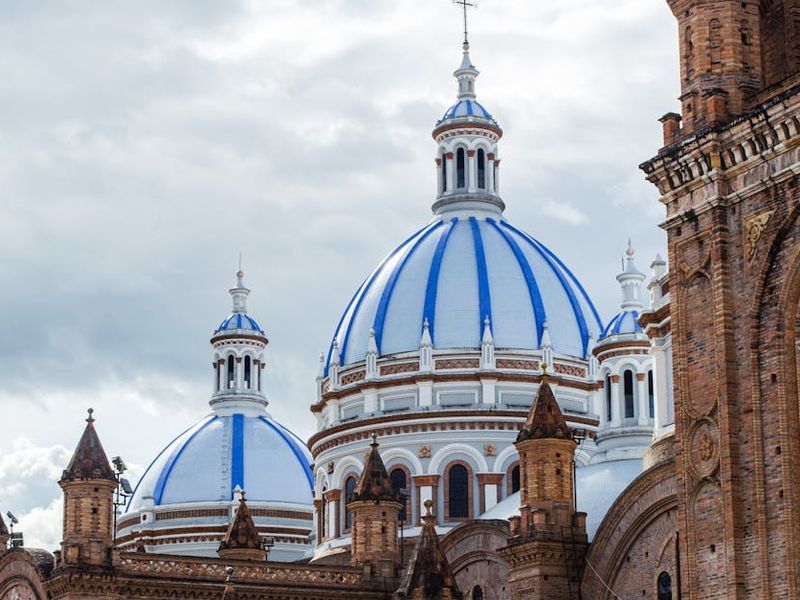
Most walking tours begin at Parque Calderón, the large central square with gardens, benches, and the statue of independence hero Abdón Calderón. From here you’ll immediately notice the New Cathedral—Catedral de la Inmaculada Concepción—whose pair of brilliant blue glazed domes dominate the skyline. The domes are an early 20th-century addition and a visual anchor for the historic center. The park is surrounded by arcaded buildings, cafes, and government offices—an ideal place to orient yourself and plan your route.
Practical tip
Arrive in the morning if you want to see the domes in soft light and avoid midday crowds. The park also hosts local artisans on some days—perfect for an early browse through Panama hats and handicrafts.
Churches and Monasteries: A Cross-Section of Styles
Cuenca’s religious architecture offers a compact tour through centuries of design. The New Cathedral’s sandstone façade and huge interior nave contrast with smaller, older churches tucked into the grid. Don’t miss a few highlights:
- New Cathedral (Catedral Nueva) – Famous for its blue domes and large scale; note the 19th–20th-century construction, neo-Gothic influences inside, and richly decorated chapels.
- Old Cathedral (Catedral Vieja / El Sagrario) – Located near the central square, this smaller 16th–17th-century church was gradually converted from the city’s main cathedral into a museum and cultural space; it preserves colonial altarpieces and baroque details.
- Iglesias and Convents – San Francisco, La Merced, Santo Domingo, and the Convento de las Conceptas are all within easy walking distance. Each shows different decorative schemes—baroque altarpieces, gilding, carved choir stalls, and cloistered patios.
Practical tip
Respect dress codes in active churches: shoulders covered and no shorts in some places. Donations are usually welcome and help with preservation costs. Flash photography may be restricted.
The Urban Grid, Rivers, and Stone Bridges
Cuenca was founded on a Spanish grid plan, but the way the city adapts that plan to the contours of the Tomebamba River is one of the reasons UNESCO recognized the historic center. The city’s main streets run parallel and perpendicular to the rivers, creating a compact series of blocks with internal courtyards. Walk along the riverbanks to see houses with wooden balconies and colorful facades reflected in the water—this is especially evocative in the El Barranco neighborhood.
El Barranco and Riverside Views
El Barranco is a narrow district along the Tomebamba where older mansions cling to the riverbank. From here you’ll see multilayered facades, stone foundations, and wooden balconies with turned balusters. The view across the river to Calle Larga and the church spires is one of the classic Cuenca photographs.
Patios, Balconies, and Hidden Details
One of the joys of exploring Cuenca is noticing small architectural elements that reveal the city’s social history. Look for carved stone lintels above doorways, family coat-of-arms plaques, wooden balconies with intricate turned columns, and internal patios with fountains. Many old homes have been converted into hostels, galleries, or cafés—so you can often slip into a courtyard to experience the cool, shaded center of a colonial house.
Practical tip
If a door is open and a courtyard is visible, it’s usually fine to enter for a quick look—just ask first. Many historic houses now operate as boutique hotels or restaurants and welcome curious visitors.
Museums and Archaeology: Pumapungo and Beyond
For a deeper historical context, make time for the Museo Pumapungo. Maintained by the National Cultural Institute, it combines ethnographic exhibits with archaeological terraces and Inca ruins directly adjacent to the colonial center. The museum’s displays on indigenous cultures, textile traditions, and the Inca occupation of the region help explain the pre-colonial foundation beneath the Spanish town.
Other cultural stops
- Museo de la Ciudad – Good overview of local history and urban development.
- Smaller religious-art museums – Several churches host small collections of colonial sculpture, gilded altars, and liturgical textiles.
Walking Routes: Half-Day and Full-Day Options
Depending on your pace, a focused half-day can cover the essentials; a full day lets you explore interiors and museums. Here are two sample itineraries:
- Half-day (morning): Start at Parque Calderón → New Cathedral (exterior and plaza) → Calle Larga (shops and architecture) → El Barranco viewpoint → cross to Museo Pumapungo for a quick visit.
- Full day: Parque Calderón → New & Old Cathedrals → Convento de las Conceptas → Museo Pumapungo (lunch nearby) → walk along Tomebamba → browse artisan stalls on Calle Larga → climb to Turi viewpoint for sunset.
Practical tip
Allow extra time for impromptu stops: a small gallery, a courtyard café, or a local market stall can easily double the length of your walk.
Turi and Panoramic Views
For a bird’s-eye perspective of the historic center, take a short taxi or local bus up to Turi, a hilltop neighborhood and mirador a few minutes outside the old town. From here you can photograph the blue domes, the sweep of red-tiled roofs, and the rivers that define the city’s layout. Turi is also a popular place to watch the sunset and see artisans selling woven goods and souvenirs.
Material, Color, and Craft: What to Look For
Spend time identifying the materials and decorative choices that repeat across Cuenca’s buildings. Common features include:
- Toquilla straw goods: Although not architectural, Panama hats are a local craft and pair well with a stroll through historic streets.
- Glazed tile domes: The New Cathedral’s blue domes are iconic; glazed ceramics appear throughout the city on roofs and decorative details.
- Stone and stucco facades: Many buildings combine local volcanic stone foundations with lime-based stucco.
- Wooden balconies and carved doors: The balconies often feature turned wooden balusters and carved cornices—these are a direct link to both Spanish carpentry and local artisan traditions.
Seasonal Considerations and Best Times to Visit
Cuenca’s climate is mild year-round, thanks to its elevation (about 2,560 meters / 8,400 feet). There are wet and dry seasons: June to September tends to be drier and sunnier, making it especially appealing for photography and longer walks. However, Cuenca’s light and clouds can make dramatic skies at any time of year, so pack layers and a waterproof jacket just in case.
Practical tip
Morning light is best for photographing facades and river reflections. Late afternoon to sunset from Turi or El Barranco gives warm light on the city’s domes and spires.
Accessibility, Safety, and Practical Advice
Cuenca’s historic center is compact and walkable, but cobblestones and stairs require good shoes and moderate fitness. Keep these pointers in mind:
- Wear comfortable, grippy shoes: cobbles can be slippery when wet.
- Watch your step: there are level changes, stone thresholds, and narrow sidewalks.
- Altitude: allow 24–48 hours to acclimatize if you’ve flown in from sea level. Take it easy the first day.
- Petty theft: the city is generally safe, but treat it like any tourist center—keep valuables secure and be aware in crowded spots.
- Guides and tours: a knowledgeable local guide can point out details you’ll otherwise miss—inscriptions, family emblems, subtle stylistic shifts, and concealed courtyards.
Responsible Tourism and Supporting Conservation
Cuenca’s UNESCO status comes with responsibilities. Preservation is ongoing and funded in part by visitors. You can support conservation while enjoying the city by:
- Paying entrance fees to museums and guided sites, which often go directly into maintenance.
- Hiring licensed local guides and choosing small, locally owned restaurants and hotels.
- Purchasing crafts directly from artisans—look for quality in Panama hats (tight, even weave) and locally woven textiles.
- Observing rules in historic buildings: no touching fragile artworks, no climbing on archaeological features, and following photography policies.
Final Thoughts: How to Make the Most of Your Architectural Walk
Cuenca rewards slow travel. Give yourself time to move beyond postcard views and explore the alleys and arcades where daily life unfolds. Sit in a café on Calle Larga, listen to church bells from the central plaza, and compare doorways from different centuries as you stroll. The real pleasure of Cuenca’s UNESCO World Heritage architecture is how it continues to be a functioning city: homes, shops, schools, and markets have adapted historic buildings for modern life. That continuity—layer upon layer of history used and loved—is what makes the city such a rich experience for visitors who come with curiosity and respect.
Quick checklist before you go
- Comfortable shoes, light rain jacket, and layers for cool evenings.
- Camera with extra battery; consider a wide-angle lens for domes and plazas.
- Local currency for small donations, museum fees, and artisan purchases.
- A printed or offline map—cell service is fine, but you’ll appreciate a paper map for wandering.
- Plan for guided visits if you want in-depth historical or architectural commentary.
Whether you have a few hours or several days, Cuenca’s historic center unfolds like a layered storybook—every street reveals a new chapter. Walk slowly, look closely, and let the city’s craftsmanship, light, and living history guide your experience.