
Table of Contents
Quick overview: Quito to Cuenca — distance, time and the big choices
Quito and Cuenca are two of Ecuador’s crown jewels: Quito’s highland bustle and Cuenca’s colonial charm attract visitors year-round. The choice of how to travel between them depends on your priorities. By road it’s a dramatic Andean route of roughly 450–480 km (about 280–300 miles) and takes most drivers around 7–9 hours of moving time. Flights between Quito and Cuenca are short — under an hour in the air — but add airport time for a total door-to-door of 2–4 hours. Buses are the budget traveler’s staple, generally lasting 8–10 hours depending on whether you take an express or a local-service line.
Why your choice matters
Each option has trade-offs. Flying is fast but more expensive and less scenic. Buses are wallet-friendly and offer overnight options that save a night’s accommodation but involve long stretches of sitting. Driving gives you freedom to stop, explore off-the-beaten-path towns and viewpoints, and carry more luggage — but mountain roads demand respect, and you’ll pay tolls, fuel and parking.
Flying: fast, convenient, and sensible for tight schedules
Flying between Mariscal Sucre International Airport (UIO) in Quito and Mariscal La Mar (CUE) in Cuenca is the fastest option. Several carriers operate frequent daily flights; schedules fluctuate seasonally, so check in advance. The actual flight time is usually 45–60 minutes.
Practical tips for flying
- Book early for the best fares — domestic seats can sell out on holiday weekends and around local festivals.
- Factor in airport time: UIO is located outside the Quito valley (Tababela), so travel from the city center can be 30–60 minutes depending on traffic; check your transfer time carefully.
- Small airports: Cuenca’s airport sits outside the city, and taxis or shuttles take 20–40 minutes to reach the historic center depending on traffic.
- Carry a light jacket—airports and planes can be cool at high altitude.
Arrival in Cuenca by air
On arrival at Mariscal La Mar you’ll find taxis and private shuttles. If you pre-book a transfer through your hotel or a reputable shuttle service, pick-up is smooth. If you’re taking a taxi from the airport, agree on a fare before you get in or use the official airport taxi desk to avoid surprises.
Bus: budget-friendly, comfortable options, and overnight travel
Buses are a popular way to travel—especially for budget travelers and those seeking a more grounded perspective of the Andes. There are two general types of services: executive/‘cama’ buses with reclining seats and sometimes toilets, and standard coaches with more frequent stops. Overnight runs can be comfortable and let you sleep through the journey, arriving refreshed in the morning.
Where to catch buses and how to book
- In Quito the main long-distance buses depart from the southern terminal (Quitumbe) and other interprovincial terminals. Buy tickets at the terminal counters, or use online booking platforms or the bus company’s website if available.
- In Cuenca most buses arrive at the main interprovincial terminal on the city outskirts; from there you can take a local bus or taxi into the historic center (Parque Calderón).
- Seat reservations are recommended during peak travel times; if you prefer a window for the scenery, reserve early.
Practical bus travel tips
- Bring layers: mountain weather changes and bus cabins can be cold.
- Carry snacks, water and motion-sickness remedies if you’re sensitive to winding mountain roads.
- Store valuables in your carry-on; while buses are generally safe, it’s wise to be cautious when boarding and disembarking.
- If you take an overnight bus, consider a small travel pillow and eye mask for better sleep.
Driving: scenic freedom but bring mountain-road experience
Driving from Quito to Cuenca gives you the greatest flexibility. The route winds across the highlands and through small towns, offering opportunities to discover viewpoints, rail attractions and archaeological sites. Most drivers complete the trip in one long day, but the best travelers break it into two or more days to avoid fatigue and to enjoy stops.
Common route and driving conditions
The main road typically follows the Pan-American corridor through the central highlands, passing or nearby cities such as Ambato, Riobamba and Alausí before descending toward Cuenca. Roads are generally paved and well-marked on major stretches, but highland weather—fog, rain and occasional landslides—can affect conditions.
Driving tips and logistics
- Plan fuel stops—major towns have reliable stations. Keep some local currency for tolls and smaller towns.
- Check your rental agreement if you’re using a hired car: Ecuador restricts cross-border travel and sometimes requires additional insurance for highland routes.
- Don’t drive at night if possible. Mountain stretches have narrow lanes, unpredictable trucks and reduced visibility.
- Bring a printed map or download offline maps—mobile reception can be spotty in valleys and mountain passes.
- Watch for livestock on rural roads, and heed speed limits in towns where police controls are common.
Cost and time — a practical comparison
General ranges to expect (these fluctuate with season, exchange rates and promotions):
- Flight: fastest in the air (about 45–60 minutes). Door-to-door time 2–4 hours with transfers and security. Cost varies widely; often the most expensive per trip but competitive if booked in advance.
- Bus: 8–10 hours typical. Cost-friendly, especially for executive or overnight buses. Great value if you’re on a budget.
- Car drive: 7–9 hours of driving time if you go straight; total cost depends on fuel, tolls, parking and rental fees. Best value for groups or travelers who want stops and flexibility.
Scenic stopovers and detours between Quito and Cuenca
One of the advantages of not flying is the ability to stop and explore. Worthwhile stops include:
- Riobamba — a good base for exploring the Chimborazo area and experiencing small-town Andean life.
- Alausi — home to the famous ‘Devil’s Nose’ railway segment; even if you don’t ride the train, the town has great mountain views.
- Ingapirca — Ecuador’s most important Inca-era archaeological site, roughly an hour or so from Cuenca; a worthwhile cultural detour.
- Cajas National Park — just outside Cuenca, this is a high-altitude park of lakes and páramo landscapes perfect for hiking and acclimatization.
Arriving in Cuenca: first steps and neighborhood tips
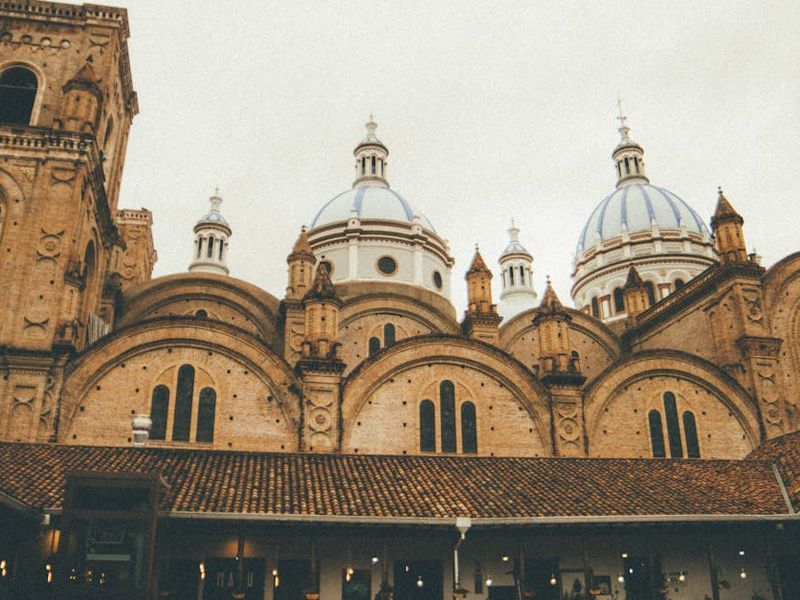
Cuenca’s historic center, with its blue-domed cathedral and cobbled streets, is compact and walkable. When you arrive — whether by air, bus or car — here are some practical things to know:
- Taxis: In Cuenca taxis are easy to find; use official taxis or arrange hotel pick-up if you’re arriving late.
- Where to stay: The Old Town (El Centro) and the neighborhood around Parque Calderón are best for first-time visitors. For quieter, residential life, look at neighborhoods like San Sebastián or El Vergel.
- Altitude: Cuenca sits at around 2,500–2,600 meters (8,200–8,600 ft). Many visitors find it easier than Quito, but hydrate and take it easy your first day.
Safety, health and practical preparedness
Across Ecuador’s main travel corridor, common-sense safety practices are sufficient. Avoid lavishing attention on valuables in crowded places, and keep copies of important documents. Regarding health, pack any necessary medications and a basic first-aid kit. If you’re sensitive to altitude, plan for a slower start in Quito, and expect Cuenca to be milder but still high.
Decision guide: which option should you choose?
- Choose flying if: you’re short on time, traveling light, or prefer to avoid long road journeys.
- Choose the bus if: budget matters, you want overnight travel to save on accommodation, or you enjoy watching the landscape unfold.
- Choose to drive if: you value independence, are driving with companions, want to visit multiple stops or national parks, and are comfortable with mountain driving.
Final checklist before you go
Whatever method you pick, use this quick checklist to make your journey smoother:
- Check schedules and book big-ticket items early (flights, executive bus seats, special train excursions).
- Download offline maps and keep important phone numbers (hotel, taxi, emergency) saved.
- Bring layers, sun protection and refillable water; mountain weather is changeable and sun strong.
- If driving, confirm your vehicle’s condition, fuel range, and insurance coverage for mountain roads.
- Have small bills and coins handy for tolls, taxis and market purchases; many smaller vendors prefer cash.
Enjoying Cuenca once you arrive
Once you reach Cuenca, reward yourself with a stroll around Parque Calderón, a visit to the New Cathedral with its iconic blue domes, and a riverside walk along the Tomebamba. If you have an extra day, head to Cajas National Park for hiking or visit the nearby Ingapirca ruins for a glimpse into Andean prehistory. Cuenca’s relaxed pace, artisan markets and cafés make it a wonderful place to unwind after the journey.
Choosing how to travel from Quito to Cuenca is as much about your travel style as it is about your schedule. Whether you fly above the Andes, ride a comfortable overnight coach, or take the wheel and explore side roads, each route offers its own rewards. Plan with a bit of flexibility, respect the mountain environment, and you’ll start your time in Cuenca relaxed and ready to explore.
Adam Elliot Altholtz serves as the Administrator & Patient Coordinator of the “Smilehealth Ecuador Dental Clinic“, along with his fellow Expats’ beloved ‘Dr. No Pain‘, right here in Cuenca, Ecuador, and for purposes of discussing all your Dental needs and questions, is available virtually 24/7 on all 365 days of the year, including holidays. Adam proudly responds to ALL Expat patients from at least 7:00am to 9:00pm Ecuador time, again every single day of the year (and once more even on holidays), when you write to him by email at info@smilehealthecuador.com and also by inquiry submitted on the Dental Clinic’s fully detailed website of www.smilehealthecuador.com for you to visit any time, by day or night. Plus, you can reach Adam directly by WhatsApp at +593 98 392 9606 -or by his US phone number of 1‐(941)‐227‐0114, and the Dental Clinic’s Ecuador phone number for local Expats residing in Cuenca is 07‐410‐8745. ALWAYS, you will receive your full Dental Service in English (NEVER in Spanish), per you as an Expat either living in or desiring to visit Cuenca by your Dental Vacation, plus also to enjoy all of Ecuador’s wonders that are just waiting for you to come arouse and delight your senses.