
Table of Contents
Why Cuenca’s Historic Center is Special
Nestled high in the southern Andes, Cuenca’s historic center is a living museum of colonial urbanism, ornate church facades and quiet river promenades. Recognized by UNESCO for its outstanding mixture of Spanish colonial planning and local building traditions, the city preserves a continuous architectural story that spans centuries. Walking through the city feels like stepping through layers of history: baroque stonework, republican-era mansions, and the distinct blue domes that anchor the skyline.
Key Architectural Highlights You Can’t Miss
Cuenca’s architectural charm is concentrated in the Centro Histórico, but several landmarks deserve special attention:
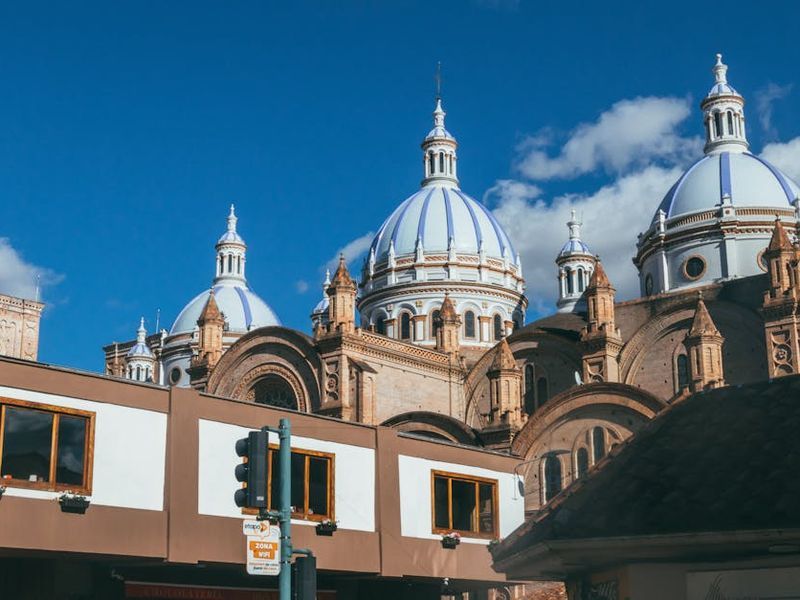
- The New Cathedral (Catedral de la Inmaculada Concepción) — Often called the blue-domed cathedral, its three brilliant domes dominate the skyline of the central plaza and are a photographer’s favorite, especially in morning light.
- The Old Cathedral (Catedral Vieja) — Situated near the main plaza, the colonial-era cathedral reflects the layered religious and civic history of the city. Its quieter interior contrasts with the grandeur of the newer cathedral.
- Parque Calderón and Plaza Central — The social heart of Cuenca, this plaza is ringed by elegant churches, arcades, cafes and historic mansions with carved stone facades and wooden balconies.
- Tomebamba Riverwalks — Lined with gardens and stone bridges, the rivers that run through the city offer peaceful vantage points for viewing colonial roofs and terraces.
- Museo Pumapungo — Set beside archeological remains, this museum blends indigenous history with colonial interpretation and is surrounded by recreated Andean agricultural terraces.
- Mirador de Turi — For panoramic views of the city’s roofscape, the Turi viewpoint is unrivaled; it’s the perfect spot for sunset photos capturing the blue domes and red-tile roofs.
Architectural Styles and Details to Observe
Cuenca’s buildings combine Spanish colonial geometry with regional materials and craftsmanship. Keep an eye out for:
- Wooden balconies — Intricately carved, often projecting over narrow streets; they are a hallmark of Andean colonial houses and reveal social life of the past.
- Stone portals and carved facades — Look for floral and geometric motifs in carved sillar and volcanic stone around doorways and windows.
- Red clay tile roofs — The continuity of roof color creates the classic Cuenca panorama that ties historic neighborhoods together visually.
- Blue glazed domes — The cathedral’s domes are covered in glazed tiles that catch the light and are visible from many parts of the city.
- Public arcades and courtyards — Many historic homes were designed around inner courtyards (patios) that provided light and privacy.
How to Plan Your Walking Routes
Cuenca is best experienced on foot. A carefully planned route will let you absorb the atmosphere while avoiding backtracking. Here are three suggested itineraries depending on how much time you have.
Half-Day: Essential Loop
- Start at Parque Calderón to see the cathedral complex.
- Wander down to the Tomebamba riverbank—stop at scenic bridges and gardens.
- Visit an artisan shop with traditional Panama hat weavers.
- Finish with lunch at a café near the central plaza.
Full Day: Deep Dive into Historic Neighborhoods
- Morning: Museo Pumapungo and nearby archaeological terraces.
- Midday: Explore Barrio El Vado and the cobbled streets south of the river.
- Afternoon: Walk to the Old Cathedral, then climb to Mirador de Turi for sunset.
Two Days: Architecture + Day Trips
- Day 1: Follow the full-day route and include a guided interior look at a restored colonial mansion if available.
- Day 2: Day trip to Ingapirca ruins and artisan towns, or Cajas National Park for contrasting landscapes.
Photography Tips: Get the Best Angles
For memorable images of Cuenca’s architecture, timing and vantage points matter:
- Shoot the cathedral domes early in the morning for soft light and fewer tourists.
- Sunset from Mirador de Turi captures the city’s silhouette—bring a tripod if you like low-light shots.
- Reflections in the Tomebamba River after light rain can create dramatic compositions with the city’s facades mirrored in water.
- Details like balconies, door knockers, and stone carvings photograph best with a short lens or a macro setting.
Practical Travel Tips for Visiting Historic Sites
Visiting Cuenca’s UNESCO district is straightforward, but a few local realities help the experience go smoothly:
- Altitude: Cuenca sits around 2,500 meters (8,200 feet). Take your first day easy, stay hydrated and avoid strenuous hikes until you feel acclimatized.
- Walking gear: Sturdy shoes are essential—many streets are cobblestoned and can be uneven, especially in rainy seasons.
- Entrance fees and photography: Some churches and museums request a small entrance fee or a modest donation. Ask before photographing interiors—flash may be restricted.
- Currency and payments: Ecuador uses the US dollar. Small merchants sometimes prefer cash, while many restaurants accept cards.
- Safety: Cuenca is generally safe for visitors; normal urban precautions apply—watch your belongings in crowded areas and use registered taxis at night.
Local Crafts, Workshops and Living Traditions
One of the great pleasures of Cuenca’s historic zone is encountering artisans who continue traditional crafts. You’ll find hat weavers producing the famous toquilla (often marketed as “Panama” hats), silversmiths, textile weavers and leatherworkers. Many workshops welcome visitors and explain the techniques used for embroidery, beadwork and filigree jewelry. Buying directly from ateliers not only supports local families but also gives you stories to connect with the objects you bring home.
Day Trips That Complement the Architecture
To broaden your understanding of the region’s cultural and natural context, add one of these half- or full-day excursions:
- Ingapirca Ruins: About an hour’s drive from Cuenca, this pre-Columbian and Inca site highlights stone construction techniques and provides contrast to Spanish colonial styles.
- Cajas National Park: A dramatic highland landscape of glacial lagoons and puna grasslands—ideal for nature lovers and photographers.
- Gualaceo and Chordeleg: Traditional craft towns known for textile weaving and fine silverwork—perfect for finding authentic souvenirs and seeing artisans at work.
Conservation, Tourism Impact and How You Can Help
UNESCO recognition brings attention and visitors, which can be both a blessing and a challenge. Heritage regulations help protect façades, rooflines and street patterns, but rising tourism requires ongoing management. As a responsible visitor you can help by:
- Respecting signage and barriers at restoration sites and archaeological areas.
- Avoiding littering and using designated waste bins—small actions matter in compact historic districts.
- Choosing locally owned hotels, restaurants and guides to support community-based tourism.
- Learning a few phrases in Spanish—showing cultural respect often leads to more meaningful interactions.
Best Seasons to Visit and What to Expect
Cuenca’s climate is spring-like year-round, but weather patterns do affect plans. The drier months (roughly June to September) tend to be best for walking and photography, while the rainy season (October to May) brings lush green hills and fewer tourists. Even in the rainy season, mornings are often clear—carry a light rain jacket and quick-dry layers. Festivals and local holidays can add color and activity to your visit but also increase demand for accommodations, so book ahead if you’re traveling during major events.
Getting There and Around
Cuenca is accessible by air and by road. The city’s airport handles domestic flights and some regional connections—transfers into the historic center by taxi take roughly 20–40 minutes depending on traffic. Long-distance buses link Cuenca to Quito, Guayaquil and other major cities with comfortable, frequent services. Inside the city, most historic attractions are a manageable walk from the central plaza. Registered taxis and ride-share apps are useful for longer distances or late-night trips.
Final Tips for an Enriching Visit
To make the most of Cuenca’s architectural treasures, slow down and let the city reveal itself at a human pace. Spend time in plazas, sip coffee on arcades, and accept invitations to enter courtyards and smaller churches when offered. Balance your sightseeing with visits to museums and artisan workshops to connect the visual experience with the stories of the people who built and maintain these places.
Cuenca’s UNESCO-listed center is not a static postcard; it’s a neighborhood full of life, evolving yet rooted in centuries of craftsmanship. With careful observation, a respectful attitude and an appetite for wandering, you’ll leave with a deep appreciation for how history, culture and daily life converge in this Andean city.
Enjoy your visit—bring comfortable shoes, a sense of curiosity, and a camera for those blue domes!