
Table of Contents
Why Cuenca’s Historic Center Matters
Cuenca’s historic center, officially the Historic Centre of Santa Ana de los Ríos de Cuenca, was inscribed on the UNESCO World Heritage List in 1999 for its exceptional colonial urban fabric and harmonious blend of Andean and Spanish influences. Unlike a single building trophy, this designation recognizes the whole cityscape: the grid plan, plazas, churches, civic buildings, riverside terraces and living neighborhoods that together tell the story of centuries of cultural exchange.
For travelers interested in architecture, art history, or urban design, Cuenca is a rare opportunity to read layers of history as you walk: pre-Hispanic foundations, 16th–18th century churches and convents, 19th–20th century republican civic buildings, and sensitive contemporary adaptations. This guide will help you navigate the highlights, plan efficient routes, and enjoy the city respectfully and safely.
Architectural Styles to Look For
Cuenca is rich in stylistic variety. Familiarize yourself with these common features before you start photographing and exploring:
- Spanish grid (traza española): The city center follows a clear rectangular street grid with plazas at the intersections—especially the central Plaza Calderón—reflecting colonial urban planning.
- Baroque and Neoclassical churches: Look for elaborate gilded retablos, carved wooden choir stalls, and facades that combine local stonework with imported architectural ideas.
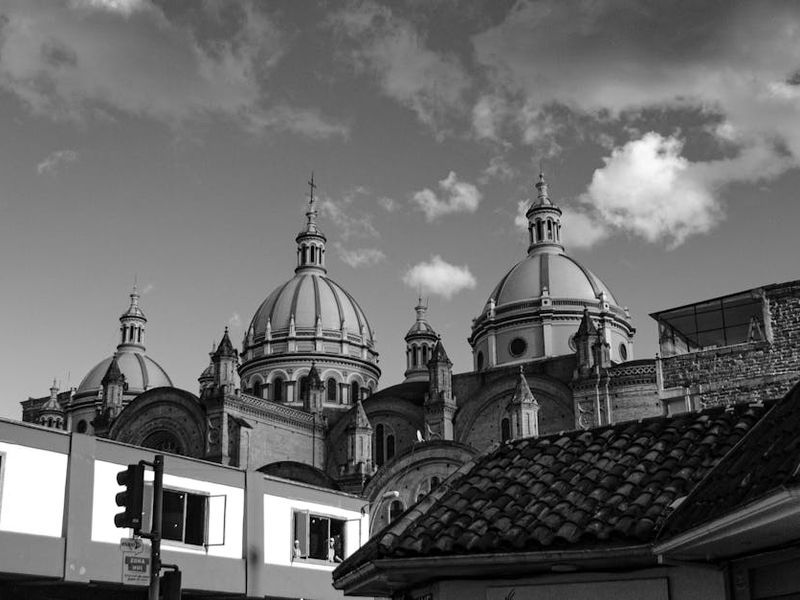
- Glazed domes and tiles: The blue domes of the New Cathedral are iconic, but smaller chapels and civic buildings also use colorful tiles and glazed ceramics for roofs and decoration.
- Wooden balconies and carved doors: Many houses feature finely carved cedar balconies and heavy doors with ironwork—details reflecting local craft traditions.
- Inca and pre-Inca terraces: Archaeological remains woven into later colonial structures, especially visible near Museo Pumapungo, show the deep temporal layers beneath the city.
Top Architectural Sites — What to See and Why
Plaza Calderón and the Twin Cathedrals
The heart of Cuenca is Plaza Calderón (Parque Calderón). Start here to orient yourself: the plaza is flanked by the New Cathedral (Catedral de la Inmaculada Concepción) with its unmistakable blue glazed domes and the smaller but elegantly decorated Iglesia del Sagrario (the Old Cathedral). Enter the cathedrals to see richly painted ceilings and high altars; photography rules vary, so look for signs and ask if unsure. The view from the cathedral forecourt is one of the best urban panoramas in the city.
Museo Pumapungo and Inca Terraces
Museo Pumapungo (run by the Banco Central del Ecuador) sits just a few blocks south of the main square and is a must for understanding Cuenca’s layered past. The museum’s ethnographic and archaeological displays are excellent, and its grounds contain visible Inca terraces and ruins integrated into a beautiful garden. The contrast of Inca stonework against colonial masonry is a vivid lesson in continuity and change.
El Barranco and the Tomebamba Riverbanks
Walk down toward the Tomebamba River to experience the city’s dramatic topography and riverside terraces. El Barranco (the steep riverbank district) was historically where elite houses were built with views over the water. Today the riverbanks are lined with restored colonial and republican buildings, small parks and walking paths—ideal for late afternoon light and quieter photos away from the central plaza.
Calle Larga and Artisan Corridors
Calle Larga is Cuenca’s cultural spine—an avenue full of galleries, craft shops, and beautifully restored houses. This is the place to buy a genuine toquilla straw (Panama) hat from a dedicated craft cooperative or watch artisans work on jewelry and textiles. Pay attention to the façades: many contain carved lintels, small niches and original tiles.
Museo de las Conceptas and Religious Complexes
The former convent of Las Conceptas is an exceptional example of colonial monastic architecture, with cloisters, cell-block rooms, and a fine collection of religious art. Visiting convents and monasteries gives insight into daily religious life and the role of female religious orders in shaping the city’s social and architectural fabric.
Suggested Walks and Itineraries
Half-Day: Classic Center Walk (2–3 hours)
- Start at Plaza Calderón early (8–9am) before crowds and markets.
- Enter the New Cathedral and walk around the plaza to photograph facades.
- Head down Calle Larga, pop into artisan shops and galleries.
- Finish at Museo Pumapungo to see the terraces and archaeological collections.
This compact loop keeps distances short and offers a concentrated dose of iconic architecture.
Full Day: In-Depth Historical Route (6–8 hours)
- Begin at Plaza Calderón and visit both cathedrals.
- Tour Museo de las Conceptas and a nearby museum of colonial art.
- Walk down to El Barranco and along the Tomebamba River; stop for lunch in a riverside café.
- Spend the afternoon at Museo Pumapungo and its garden ruins.
- Climb (or taxi) up to Mirador de Turi for sunset views of the city and domes.
This itinerary balances indoor museum time with outdoor exploration and gives you a view from above to understand the city block pattern.
Three Days or More: Neighborhood Immersion
With more time, explore the southern and eastern barrios for less-touristed colonial houses, visit artisans’ workshops in La Merced and San Sebastián, and take day trips to nearby Cajas National Park to understand the landscape that shaped Cuenca’s development. Consider a guided theme tour focusing on religious architecture, residential balconies, or adaptive reuse projects where old houses now serve as cafés and boutique hotels.
Practical Tips for Architecture Travelers
Best Time to Visit
Cuenca’s weather is springlike year-round, but the driest months are June through September—ideal for walking and clear skyline views. Afternoon showers are more common from March to May, so pack a light rain jacket if you travel then.
Altitude and Comfort
Cuenca sits at about 2,560 meters (≈8,400 feet). Most visitors adapt quickly but expect mild shortness of breath on stairs and steep alleys. Take it easy your first day, drink plenty of water, and wear broken-in walking shoes—the central streets are cobblestone and often uneven.
Opening Hours and Entry Fees
Most churches are open during daylight hours and free to enter though donations are appreciated. Museums such as Museo Pumapungo and Museo de las Conceptas charge modest admission (typically a few US dollars—prices change, so check current rates). Many small galleries close mid-afternoon; plan museum visits for the morning or early afternoon.
Photography and Respectful Visiting
Flash photography and tripods are sometimes restricted inside churches and museums. Always ask before photographing people working inside craft shops or in religious settings. Dress modestly when entering churches—shoulders and knees covered is respectful and sometimes required.
Getting Around
Cuenca’s center is highly walkable. For longer trips use red taxis or buses; taxi fares within the city are affordable (often measured in dollars per short ride). If you rely on rideshare apps, availability can vary—ask your hotel for recommended drivers. Note that many streets have steps and steep slopes, so factor that into walking routes.
Supporting Conservation and Local Communities
Cuenca’s UNESCO status comes with responsibilities. Here are practical ways to be a respectful visitor:
- Support local artisans by buying directly from cooperatives and workshops rather than mass-produced souvenirs.
- Choose guided tours run by local guides—booking a walking tour helps sustain neighborhood economies and provides expert context for what you see.
- Observe no-touch rules in museums and historic interiors. Oils from hands and unregulated photography can accelerate deterioration.
- When dining near historic sites, patronize family-run eateries; this helps keep neighborhoods lively and occupied, which is key to preservation.
Insider Tips and Lesser-Known Details
Look for subtle clues of reuse: many grand colonial homes have been sensitively converted into restaurants, boutique hotels and cultural centers. These adaptive reuse projects are a living solution to preservation because they keep buildings maintained and used.
If you love fine details, spend time examining balcony brackets and door knockers—local cedar woodworkers have developed distinctive carving patterns over generations. Early morning or late afternoon light brings out the texture of stone façades and the rich colors of tiled roofs, which makes for excellent photography.
For a panoramic perspective, visit Mirador de Turi in the late afternoon. The overlook provides a sweeping view of the blue cathedral domes, terracotta roofs and the curving rivers that define Cuenca’s topography. It’s a top spot for sunset silhouettes and to grasp the city’s layout from a distance.
Safety, Money and Practicalities
Cuenca is generally safe for travelers but petty theft can happen in crowded areas. Keep valuables secure, carry a copy of your passport, and use hotel safes for extra documents or large amounts of cash. The currency in Ecuador is the U.S. dollar, and many places accept cards—however small vendors and markets often prefer cash, so keep some small bills on hand.
Most public bathrooms in the historic center require a small fee (around $0.25–$0.50), and cafés will let you use facilities if you purchase something. Tipping for guides and tour drivers is appreciated; restaurants often include service, but check the bill.
Final Notes: How to Make the Most of Your Visit
Visiting Cuenca’s UNESCO historic center is about more than ticking off monuments. Slow down and let the architecture tell you its story: notice how a church portal echoes Inca stonework below it, how a balcony frames a street scene, and how everyday life continues inside buildings that centuries ago housed colonial elites. Plan a mix of guided and self-guided time, support local businesses, and leave room for serendipity—some of the best discoveries are quiet courtyards, an unexpected chapel, or a workshop where a toquilla hat is being woven by hand.
Whether you’re an architecture student, a photographer, or a curious traveler, Cuenca rewards attention. Its UNESCO badge highlights outstanding preservation, but the real value is in walking its streets and seeing how history, craft and modern life come together—one carved lintel, one painted dome, one riverside terrace at a time.