
Table of Contents
Why walk Cuenca’s Historic Centro?
Cuenca’s centro histórico is compact, photogenic and layered with centuries of history. Strolling is the best way to discover its tile-domed cathedral, riverside barrios, bustling markets and hidden convent courtyards. This guide lays out a comfortable walking route, practical tips, and offbeat stops so you can enjoy the city like a curious local.
Quick practicals before you start
Cuenca sits at about 2,560 meters (8,400 ft), so bring layers — mornings can be cool, afternoons mild and evenings chilly. The city uses the U.S. dollar, most shops and restaurants accept cards but smaller stalls in markets often prefer cash. Comfortable shoes are essential: centro’s streets are mostly cobblestone and some alleys have steep steps. Finally, be mindful of pickpockets in crowded places but know the centro is generally safe during daytime hours.
Suggested walking route (3–6 hours)
Start early for markets; leave time to linger in cafés and museums. This route is circular so you can add or skip stops as you like.
- Parque Calderón (Plaza Grande) — the heart of the centro
- New Cathedral (Catedral Nueva) and old church façades
- Calle Larga — boutiques, coffee and street life
- Museo del Banco Central and Museo Pumapungo — archaeology & textiles
- Mercado 10 de Agosto or Mercado Central — lunch and local flavors
- Riberas del Tomebamba and Puente Roto — riverfront stroll
- Convento de las Conceptas (museum) and small artisan shops
- Optional: taxi up to Mirador de Turi for sunset
Start at Parque Calderón — the perfect launching point
Parque Calderón (also called Parque Abdón Calderón) is Cuenca’s main square, an excellent place to orient yourself. From here you’ll see the New Cathedral’s blue domes rising above the rooftops — the sight is the city’s signature. Spend 20–30 minutes wandering the park, watching locals, and snapping photos of street musicians, vendors and pigeons circling the statue in the center.
What to look for
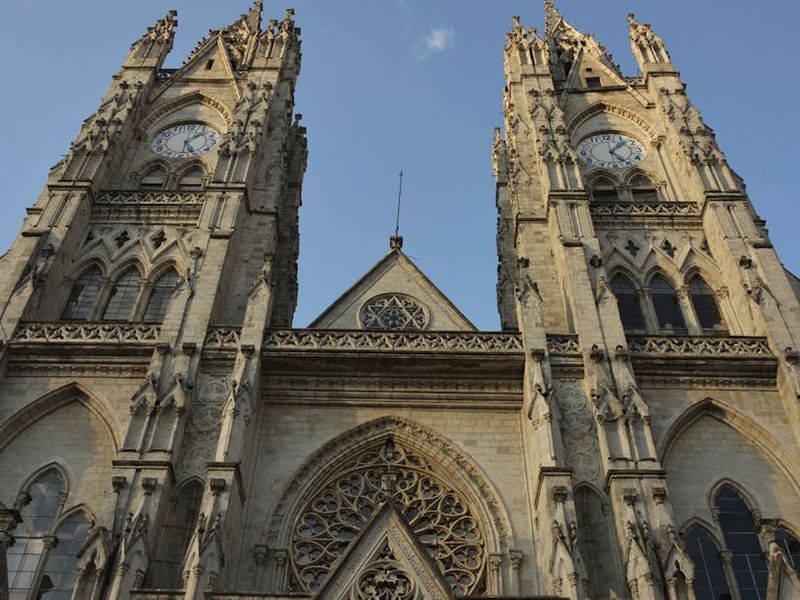
Look up at the cathedral’s façade details and note the mix of baroque and neoclassical influences. Nearby you’ll find municipal buildings with ornate balconies — ideal for close-up architectural photos. Many cafés bordering the plaza have rooftop terraces; they’re great for a first coffee with a view.
Explore the Cathedral and nearby churches
The New Cathedral (Catedral de la Inmaculada Concepción) with its bright blue domes is unmistakable. Inside, you’ll find dramatic altarpieces and a calm interior — many visitors enjoy lighting a candle or attending a short mass. Don’t miss some of the smaller churches around Parque Calderón; the Iglesia del Sagrario and a few colonial chapels have beautiful altars and quieter atmospheres.
Practical tip
Dress respectfully if you plan to enter religious sites. Many churches accept a small donation; opening hours usually begin around 9:00 a.m. Keep in mind services can limit photography.
Walk Calle Larga — boutiques, cafés and people-watching
A short stroll from the plaza will bring you to Calle Larga, a lively pedestrian street lined with shops, galleries and cafés. Take time to pop into artisanal stores for Panama hats (toquilla straw hats actually made in Ecuador), hand-woven textiles, tagua (vegetable ivory) jewelry and locally crafted leather goods. This area is ideal for mid-morning coffee and watching local life unfold.
Coffee and snacks
Look for specialty coffee shops serving locally sourced beans from Ecuador’s highlands. Try a warm bollo (cheese bread) or hojaldre for a light snack — perfect with coffee. Rooftop terraces here also offer excellent angles for photographing the cathedral domes.
Museum time: Banco Central and Pumapungo
For cultural depth, plan a visit to two of Cuenca’s top museums. Museo del Banco Central features archaeological finds from the region — pottery, gold artifacts and explanations of indigenous cultures. Museo Pumapungo, slightly south of the centro, combines indoor exhibits with an archaeological park, reconstructed indigenous houses and lush gardens.
How much time to allow
Banco Central can take 60–90 minutes if you read exhibits carefully; Pumapungo deserves at least 90 minutes to two hours, especially if you want to explore its outdoor sites and the textile exhibits. Both museums have modest entrance fees and decent signage; expect closes in mid to late afternoon (roughly 4–5pm), so check times in advance.
Lunch at a mercado — an honest taste of Cuenca
One of the best ways to taste local life is by eating at a mercado. Mercado 10 de Agosto and the central market (Mercado Central) are vibrant options. Here you’ll find home-cooked style stalls serving soups, roasted pork (hornado), mote (hominy), and cuy (guinea pig) for the adventurous. Many stalls also serve vegetarian soups and fresh fruit juices if you prefer lighter fare.
Ordering tips
Menus may be handwritten or displayed above the counter. Pointing or asking for “una porción de …” is fine. Expect prices considerably lower than restaurants; cash is often preferred. Sit at communal tables to meet locals and get recommendations on must-try plates.
Riverside stroll along the Tomebamba and Puente Roto
After lunch head to the Riberas del Tomebamba, the riverside promenades that trace the Tomebamba River as it winds past the centro. These walkways are lined with manicured gardens, stone bridges and colonial walls. A favorite photo subject is the Puente Roto (“Broken Bridge”), the romantic remains of an older crossing where old stones create sculptural shapes against the water.
Hidden corners and street-level charm
When you walk the riverbanks, look for small artisan stalls and cafés tucked into old mills and riverhouses. These spots are quieter than the main plazas but rich with character: colorful laundry hanging from balconies, local kids skipping stones, and reflections of the blue-domed skyline in the water at certain angles — perfect for golden-hour photography.
Convent courtyards and quieter museums
As you return toward the center, seek out cloistered convents and smaller museums, such as the Convento de las Conceptas (a museum housed in a former convent). These spaces often have preserved cloisters, religious art and period furniture plus tranquil gardens — ideal for a slower, reflective hour.
Why these quieter stops matter
They reveal daily life within colonial institutions and offer contrast to the busier plazas. These museums often have local guides who can share oral histories and anecdotes you won’t find in guidebooks.
Sunset options: rooftop bars or Turi viewpoint
If your legs are tired, it’s an easy taxi ride up to Mirador de Turi, a hilltop viewpoint overlooking Cuenca — an excellent spot for panoramic sunset photos and to see how the centro fits into the valley. Alternatively, find a rooftop bar or café around Parque Calderón or Calle Larga to sip a drink while the blue domes glow in the evening light.
Logistics and cost
A taxi to Turi typically takes 10–20 minutes and is inexpensive; ask the driver to wait or give you a phone number if you want to return quickly. Rooftop drinks in the centro cost more than markets but offer unbeatable views.
Safety, etiquette and accessibility notes
Cuenca’s centro is pedestrian-friendly but not fully wheelchair accessible — cobblestones and steps can be challenging. Many museums and larger eateries have ramps, but some historic buildings do not. Practice standard urban safety: keep an eye on valuables in crowded markets, use ATMs during the day and prefer licensed taxis or ride-hailing apps after dark. Tipping of around 10% is customary in restaurants when service isn’t included.
Tips to make the most of your walking tour
- Start early to catch markets and quieter streets before tour groups arrive.
- Bring a refillable water bottle and sunscreen; you’ll be at altitude and sunburn can happen fast.
- Carry small bills for market purchases and museum entrances.
- If you want to shop for Panama hats, look for quality: tight, even weaving and a certificate of origin if possible.
- Learn a few Spanish phrases — shopkeepers and museum staff appreciate the effort.
- Allow extra time: part of the joy of Cuenca is lingering at a café or discovering a tucked-away courtyard.
Seasonal and timing considerations
Cuenca enjoys mild weather year-round but has a drier season (June–September) that’s ideal for photography and walking. Rain can appear any time, so a compact umbrella is useful. Weekdays are often less crowded at museums and markets, while weekends see more families and expanded street vendors.
Extend your walk: nearby neighborhoods worth a detour
If you have extra time, cross the river and explore barrios like El Barranco, where artisan workshops and riverside cafés multiply. Walking farther will reveal city parks, modern galleries and local nightlife in small bars where musicians perform live. Each neighborhood has its own rhythm — a short taxi ride can open up a whole new side of Cuenca.
Final thought: slow down and savor
Cuenca’s centro rewards those who move at a walking pace. Between cathedral bells, market shouts and riverside birdsong there is a layered, human story to absorb. Whether you spend a focused three hours or a full day, take time to sit in a plaza, try a local dish and let the city’s textures and colors sink in. That’s the essence of a great walking tour of Cuenca’s historic center.
Enjoy your walk — and don’t forget your camera and a sense of curiosity.