
Table of Contents
Why Cuenca’s Historic Center Matters
Cuenca’s historic center—inscribed on the UNESCO World Heritage List in 1999 as the “Historic Centre of Santa Ana de los Ríos de Cuenca”—is more than a collection of pretty facades. It’s a living city where Spanish colonial urban planning, Andean building techniques and modern conservation converge. The compact core of plazas, churches, stone bridges and courtyard houses offers a concentrated lesson in centuries of cultural exchange and adaptive reuse.
How to Read Cuenca’s Architecture
When you walk the old town, look beyond individual monuments. Cuenca’s character comes from patterns: the grid layout radiating from Parque Calderón, red-tile roofs stepping down toward the Tomebamba River, and the repeating elements of carved wooden doors, wrought-iron balconies and internal patios. These features reflect Spanish colonial design modified by local materials—volcanic stone, clay tile and native hardwoods—and Andean craftsmanship.
Key Styles You’ll See
- Colonial urbanism: regular blocks and plazas focused on civic and religious life.
- Andean Baroque and colonial baroque details: ornate stonework and decorative portals.
- Neoclassical touches on later public buildings—symmetry, pediments and columned facades.
- Vernacular adaptations: thick adobe or stone walls, inner patios, and steep roofs to handle mountain rains.
Must-See Architectural Highlights
For a first-time visitor, a short walking route can capture the essence of Cuenca’s UNESCO site without feeling rushed. Start at the city’s heart, Parque Calderón, and plan to explore both sides of the Tomebamba River.
Parque Calderón and the New Cathedral (Catedral de la Inmaculada Concepción)
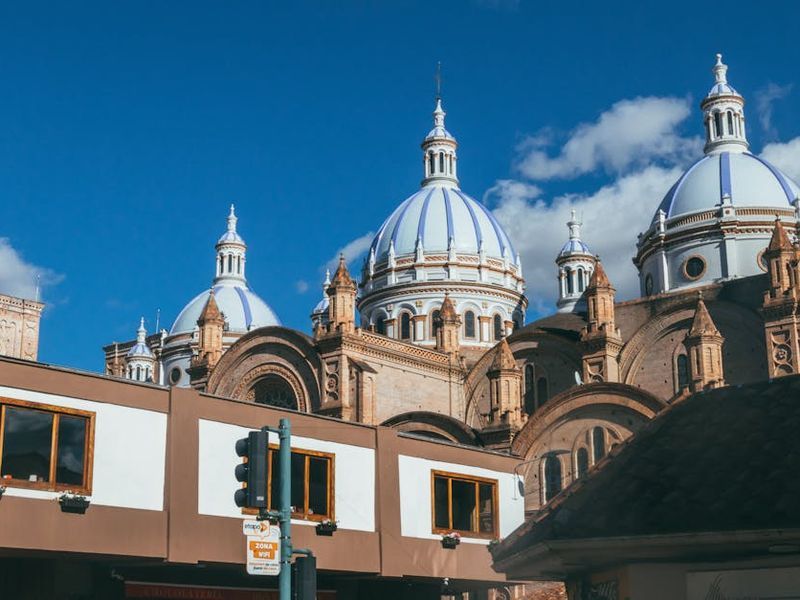
Parque Calderón is Cuenca’s lively central plaza and the best orientation point. The skyline is dominated by the New Cathedral with its unmistakable blue-and-white domes. The cathedral’s scale and color make it the city’s most photographed landmark. If you can, time a visit for morning or late afternoon light—those domes glow in warm tones against the Andean sky.
The Old Cathedral (Catedral Vieja / Iglesia del Sagrario)
Just steps away from the New Cathedral is the older cathedral, which now serves new cultural functions. Its simpler facade and interior give insight into the city’s earlier ecclesiastical architecture. Many of these religious buildings contain small museums and impressive relics—check opening hours before you go.
Tomebamba Riverfront and Stone Bridges
The Tomebamba River slices through the historic center and provides scenic promenades framed by colonial houses and terraced gardens. Walk the riverside paths to spot several historic stone bridges—perfect for photography and for seeing how the city’s layout was shaped by waterways. This riverside zone is also where you’ll find small cafes and artisan shops tucked under archways and in river-facing houses.
Museo Pumapungo and Archaeological Parks
Museo Pumapungo (run by the Banco Central del Ecuador) is a must for visitors who want cultural context. The museum’s ethnographic and archaeological collections, together with reconstructed Inca terraces and ruins, remind you that Cuenca’s European architecture sits atop a long Andean history. The green, terraced grounds are a peaceful counterpoint to the busy plazas.
Convents, Cloisters and Converted Houses
Cuenca’s convents and old mansions—some now museums or boutique hotels—offer a close-up look at interior courtyards, wooden galleries and cloistered gardens. Places like the convents and smaller chapels can reveal fine stone carving and traditional woodwork. Pay attention to door knockers and carved lintels—many are centuries old.
Suggested Walking Itineraries
Below are two practical routes depending on how much time you have: a focused one-hour circuit and a fuller half-day route that includes museums and viewpoints.
One-Hour Essentials Loop
- Start at Parque Calderón for orientation and photos.
- Visit the New Cathedral exterior and cross the plaza to the Old Cathedral.
- Walk down to the riverfront and follow the Tomebamba for a short riverside stroll.
- Return via pedestrian streets lined with artisan shops to sample local chocolate or coffee.
Half-Day: Heritage and Views
- Begin at Parque Calderón and tour both cathedrals.
- Head south to Museo Pumapungo and explore the archaeological terraces.
- Cross the river to wander the El Barranco area and its restored homes.
- Finish up at a viewpoint—El Mirador de Turi provides a sweeping panorama of the city and its domes at sunset.
Practical Tips for Visiting and Photographing
Cuenca is very walkable, but cobblestones and steps are common. Comfortable shoes are essential. Here are practical details to make your visit smoother.
Best Times to Visit
- Morning: quieter streets, soft light on facades and empty cafés opening for breakfast.
- Late afternoon / golden hour: the cathedral domes and stone facades acquire warm tones—ideal for photography.
- Weekdays: generally less crowded than weekends when locals visit the center.
Photography and Views
- Across-the-river shots: step to the riverbanks opposite the cathedral for reflective and compositional shots of the domes.
- Rooftop terraces and hotels: many nearby hotels and cafés have terraces—ask to buy a coffee for rooftop access.
- Details: focus on door knockers, balcony ironwork and courtyard plants—these small elements tell big stories.
Access and Mobility
The historic core is compact but not entirely accessible. Narrow doorways, steps, and uneven cobbles can make mobility-challenged travel more difficult. If you need accessible routes, ask at the tourist office for recommended pathways and which museums have ramps or elevators.
Guides, Tours and Self-Guided Options
There are several ways to learn the history behind the stones. Certified municipal guides offer in-depth walking tours focused on architecture, urban history, or religious art. For independent travelers, downloadable audio guides and printed walking maps are widely available at tourist information points.
When to Hire a Guide
- If you want historical context about specific buildings, their builders and restoration efforts.
- To access lesser-known courtyards and private heritage homes not typically open to the public.
- For a thematic tour—religious art, colonial civil architecture or conservation practice.
Conservation and Responsible Tourism
Cuenca’s UNESCO status brings attention and responsibility. You’ll notice ongoing conservation work—masonry repairs, re-roofing with traditional tiles, and careful restoration of wooden balconies. Respecting these efforts helps keep the site authentic:
- Stick to designated paths and do not climb on monuments.
- Avoid touching painted surfaces and delicate stone carving.
- Support local conservation by choosing guided tours that contribute to preservation funds, or by visiting museums that invest in restoration projects.
Where to Eat and Where to Stay in the Historic Core
The historic center is dotted with family-run restaurants, bakeries and cafés serving Ecuadorian classics—try mote sucio, cuy (guinea pig) at specialty restaurants, and the ubiquitous fresh fruit juices and chocolate. Many boutique hotels operate inside restored colonial buildings, offering an immersive stay with interior patios, antique furnishings and rooftop terraces that put you steps from the main sights.
Booking Tips
- Look for hotels labeled as “casona” or “hostería” for heritage buildings converted into lodging.
- Reserve terraces and rooftop tables in advance for sunset photos during high season (June–August, and around local festivals).
Festivals and When the City Feels Most Alive
Architectural heritage becomes theatrical during Cuenca’s civic and religious celebrations. Processions bring churches’ interiors to life, plazas host live music, and temporary displays illuminate facades at night. If your travel dates are flexible, aligning your visit with a festival will add color and music to your architectural experience—just expect larger crowds around plazas and main streets.
Combining Architecture with Nearby Attractions
Cuenca makes a great base for combining heritage architecture with natural and archaeological excursions. Short drives away you’ll find Andean landscapes, artisan markets in nearby towns, and ruins that predate the colonial era—perfect for understanding layers of history that feed into the city’s built environment. El Mirador de Turi offers bird’s-eye context for how the city nestles into its valley.
Final Practical Checklist
- Bring comfortable walking shoes and a light rain jacket—mountain weather can change quickly.
- Carry small local currency for museum entry fees and market purchases.
- Ask permission before photographing inside churches or private courtyards; some sites limit photography.
- Use a local guide or audio guide if you want deeper architectural insight—many stories are not visible from the street.
- Support local businesses: visit artisan shops, eat at family restaurants and stay in heritage guesthouses to keep conservation sustainable.
Cuenca’s UNESCO historic center rewards slow exploration. Whether you linger over an old wooden doorstep, cross a stone bridge over the Tomebamba, or climb to a terrace at sunset, the city’s architecture reveals itself in layers—social, religious and practical. Walk with curiosity, respect the conservation work, and you’ll leave with a deeper appreciation for how an Andean city became one of Ecuador’s most beautiful, well-preserved urban landscapes.