
Table of Contents
Why Cuenca’s Historic Center Earned UNESCO Status
Cuenca’s historic center—officially the Historic Centre of Santa Ana de los Ríos de Cuenca—was inscribed on the UNESCO World Heritage list in 1999. The designation recognizes a remarkably intact colonial core, where Spanish urban planning, religious architecture, and local building traditions blended with Andean influences. What you see today are layered eras: compact colonial streets and plazas, grand 19th-century mansions built by emerging local elites, and riverside landscapes that shaped the city’s expansion.
Start at Parque Calderón: The City’s Living Room
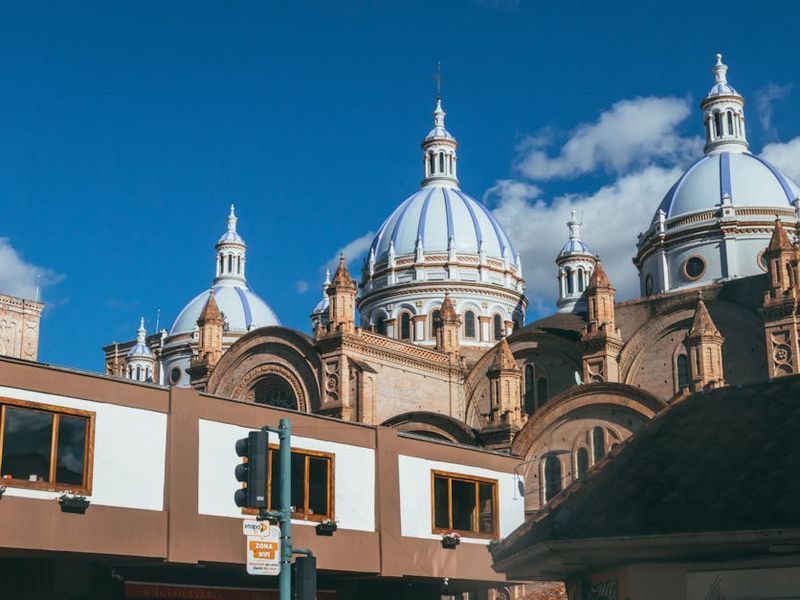
Begin your architectural stroll at Parque Calderón, Cuenca’s central square. From here you can immediately appreciate the way the city arranges public space—broad tile walkways punctuated by trees, benches, and small vendors. Dominating the square are the blue-domed towers of the New Cathedral (Catedral de la Inmaculada Concepción), a striking reference point for orientation and photography.
The park itself is a useful microcosm of Cuenca’s architectural variety: arcaded portales that once housed merchants, government buildings with neoclassical facades, and church entrances that lead into layered interiors. Spend a few minutes here to get your bearings—there are plaques and small kiosks where local guides often meet visitors.
Key Landmarks and What Makes Them Special
La Catedral Nueva (New Cathedral)
Its distinctive azure domes are one of Cuenca’s most photographed motifs. The cathedral was completed in the early 20th century and mixes Gothic and Romanesque elements adapted to local materials and tastes. Walk around to admire the exterior details, then step inside (modest entrance fee often applies) to see stained glass and altar work. If you can, visit during daylight to catch the dramatic light through the windows.
Old Cathedral and Religious Art Museums
Close to the main square you’ll find older ecclesiastical buildings that now often serve as museums or cultural centers. These spaces are rich in carved wood altarpieces, colonial-era paintings, and retablos—excellent for anyone wanting a deep dive into religious art and the skill of local artisans. Note: many small museums close on Mondays, so plan accordingly.
Pumapungo Museum and Inca Ruins
Located a short walk south of the historic core, Museo Pumapungo is a must. It combines ethnographic exhibits with an archaeological park where you can see Inca terrace remains and stonework integrated into the modern museum grounds. The outdoor sections are fascinating and give context for the pre-Columbian foundations beneath Cuenca’s colonial streets. There’s a modest admission fee and bilingual signage in many sections.
Río Tomebamba and the Riverside Walks (El Barranco)
The Tomebamba River slices through the city and frames many of the historic neighborhoods. The riverside paths are restorative—lined by manicured gardens, historic facades, and the remnants of old stone bridges. Walk along El Barranco to appreciate how the river has been both a defensive feature and civic amenity for centuries. The juxtaposition of river, terraces, and colonial houses is among the reasons UNESCO recognized the site.
The Signature Elements: Balconies, Portales, and Red Tile Roofs
One of the most charming traits of Cuenca’s streets is the wooden balcony. Many colonial houses feature intricately carved balconies that project over narrow streets—a Spanish architectural import evolved locally into highly decorative, climate-adapted features. Other recurring elements include covered arcades (portales) at street level and the ubiquitous red clay tile roofs that give the skyline warmth and cohesion. As you walk, look for subtle local variations: gated courtyards, high stone foundations adapted for the hilly terrain, and decorative ironwork on windows and balconies.
Suggested Walking Routes and Timed Itineraries
Half-Day: Essential Highlights
- Start at Parque Calderón and visit the New Cathedral.
- Walk Calle Larga for artisan shops and cafés—stop for a coffee.
- Cross to the Tomebamba river and stroll El Barranco toward the Puente Roto (Broken Bridge) area for riverside views.
- Finish at Museo Pumapungo for a contextual understanding of the city’s pre-colonial past.
Full Day: Architecture and Museums
- Morning: Parque Calderón and the New Cathedral.
- Late morning: Visit a small museum of religious art or Las Conceptas convent museum to see cloistered spaces and altarpieces.
- Afternoon: Lunch in a colonial-era house turned restaurant, then walk the riverside and terraces.
- Late afternoon: Pumapungo for the archaeological park; sunset shots of the domes from a riverside viewpoint.
Practical Tips for Sightseeing and Photography
Wear comfortable shoes—cobblestones and uneven sidewalks are everywhere. Sunscreen and a hat are useful at high altitude (Cuenca sits around 2,560 meters / 8,400 feet). Check museum opening hours in advance; most small museums close one weekday (commonly Monday). Keep a small amount of cash for entrance fees, tips, and vendors—while cards are widely accepted, many smaller sites prefer cash.
Photography: exterior shots are usually welcome, but inside churches and museums you may encounter restrictions or flash bans. Always ask before photographing people in markets or religious services. For skyline photos that capture the cathedral domes and tile roofs, head to viewpoints along the river or to rooftop cafés around Parque Calderón at golden hour.
Guided Tours vs. Self-Guided Exploration
Both options have advantages. Guided architectural tours—especially those led by local historians or architects—offer storytelling context: who financed which buildings, the mix of styles, and the technical preservation work. These tours often include lesser-known courtyards and private colonnades. Self-guided walks give you flexibility to linger, shop, and photograph at leisure. If you prefer a middle ground, consider an introductory guided tour (2–3 hours) then spend the rest of your time exploring independently.
Conservation and Respectful Visiting
Cuenca’s UNESCO status brings both attention and responsibility. Restoration projects are ongoing, and new construction in the historic center is tightly regulated to preserve sightlines and materials. As a visitor, you can help by staying on designated paths, avoiding leaning or climbing on fragile stonework, and following signage in protected sites. Churches may host religious services—dress and behave respectfully and keep noise to a minimum. Small donations support maintenance of local museums and conservation efforts.
Where to Eat and Rest Between Architectural Stops
The historic center is full of inviting cafés and restaurants set in restored buildings. Look for patios and rooftop terraces for views of the domes. Try local favorites like hornado (roast pork), mote (hominy), and fresh trout from nearby rivers, often prepared with Andean flavors. Many establishments offer contemporary takes on Ecuadorian cuisine inside spaces that preserve original beams, arches, and courtyard layouts—an architectural and culinary delight combined.
Accessibility and Family-Friendly Options
Some central streets are relatively flat and suitable for strollers, but be prepared for occasional steps and cobblestone segments. Museums such as Pumapungo have outdoor exhibits and extensive grounds that are pleasant for children; interactive displays at ethnographic museums can help younger visitors understand the city’s layered history. If mobility is a concern, contact museums ahead to ask about ramps and elevators—some historic buildings have limited accessibility due to preservation constraints.
Seasonal Considerations and Best Times to Visit
Cuenca’s climate is moderate year-round, but the dry season (June–September) generally offers clearer skies for photography and walking. Shoulder seasons—April–May and October—can be quieter and still fairly dry. Rain showers can come quickly at any time, so carry a compact umbrella or light rain jacket. Mornings are typically cooler; layers are recommended.
Practicalities: Getting There and Around
Cuenca is accessible via daily flights from Quito and Guayaquil, and long-distance buses connect it to major cities if you prefer overland travel. The city center is compact and best explored on foot. Taxis are affordable for longer hops—agree on a fare or ask the driver to use the meter. Currency is U.S. dollars, and many shops accept cards, but small vendors and historic-site fees may be cash-only.
Responsible Souvenirs and Supporting Local Craftspeople
When buying artisan goods, seek products that celebrate local traditions—textiles, ceramics, and small-scale woodwork. Ask vendors about materials and how items were made. Many small workshops operate in and around the historic center; purchasing directly from artisans helps support conservation of craft techniques that are part of Cuenca’s cultural heritage.
Putting It All Together: A Two-Day Architecture-Focused Plan
Day 1: Get an orientation at Parque Calderón, tour the New Cathedral, wander Calle Larga and the artisan markets, and finish with sunset photos from a riverside viewpoint. Day 2: Visit Pumapungo’s archaeological park and museum, explore the old convent museums and religious-art collections, and take a guided architectural tour that includes private patios or restored mansions (often arranged in advance).
Final Thoughts: Why Cuenca Rewards Slow Looking
Cuenca’s historic center is not a single monument but a living urban tapestry. The pleasures are cumulative: the carved wooden balconies you notice on your first street, the way a small facade reveals richer details on closer inspection, the quiet courtyard where sunlight softens centuries of stone. UNESCO recognition helps protect this character, but the best way to honor it is with patient observation—bring comfortable shoes, a curious eye, and time to savor the layers.
Whether you’re an architecture buff, a casual traveler, or someone seeking an elegant, walkable city to explore, Cuenca’s UNESCO historic center offers discoveries at every corner. Plan thoughtfully, stay respectful, and you’ll leave with a deeper appreciation for how history, craft, and daily life shaped one of Ecuador’s most beautiful cities.