
Table of Contents
Why Cuenca’s Historic Center Matters
Cuenca’s historic center, declared a UNESCO World Heritage Site, is more than a collection of pretty facades. It is an urban tapestry where Spanish colonial planning, Andean building traditions and 19th-century republican architecture meet along rivers, plazas and narrow alleys. For travelers who love architecture, history and authentic urban life, Cuenca offers a compact, walkable study in how communities adapt and preserve a built environment across centuries.
Quick Practical Facts Before You Go
Cuenca sits at roughly 2,560 meters (about 8,400 feet). The climate is temperate year-round but thin air can make the first day slower; sip water and take it easy on stairs. Ecuador uses the U.S. dollar, Spanish is the primary language, and many businesses in the historic center cater to English speakers. The best weather window for touring on foot is the drier season (roughly June–September), but mornings and evenings are pleasant any time of year.
Must-See Architectural Highlights
There are signature sites you won’t want to miss:
- Catedral Nueva (Cathedral of the Immaculate Conception) – Instantly recognizable for its large blue-green tiled domes, the cathedral dominates the main square and is a great starting point for exploring the historic core. Look closely at the dome tiles up close and the mixture of neo-Gothic and neoclassical details on the facades.
- Parque Calderón – The central plaza is surrounded by stately government buildings, churches and cafés. Plaza life is a perfect place for people-watching and studying the urban grid established during the colonial period.
- Housefronts and Wooden Balconies – Walk slow on the side streets to admire wooden balconied homes, ornate wrought-ironwork, and clay-tile roofs. Balconies are a signature element of Cuenca’s streetscape and often date to the colonial or early republican eras.
- Museo Pumapungo – Built next to pre-Hispanic ruins, this museum combines archaeological remains, ethnographic collections and landscaped grounds where the riverside setting reveals layers of urban development.
- Casa del Alabado – Housed in a restored colonial mansion, this museum presents pre-Columbian art in an intimate setting, offering context for the indigenous influences on later building motifs.
Self-Guided Walking Routes
You can cover the essentials in a half-day, but a full day lets you linger in museums and enjoy riverside walks. Here are two simple routes:
Half-Day Intro: Plaza to Rivers
- Begin at Parque Calderón and circle the Catedral Nueva.
- Follow the pedestrian Calle Larga toward the river, popping into artisan shops and coffeehouses.
- Descend to the Tomebamba riverbank for gardens, renovated bridges and views of the red-tile roofs.
- Finish at Museo Pumapungo, where exhibits and small archaeological vestiges reward the walk.
Full-Day Deep Dive: Churches, Courtyards and Museums
- Start early at Casa del Alabado to avoid crowds.
- Explore the Old Churches—many have cloisters or small museums attached.
- Lunch in a local market or a courtyard restaurant to try regional dishes such as llapingachos or hornado.
- Afternoon visit to Museo Pumapungo and then a stroll to the artisan quarter—save time for Chordeleg or Gualaceo if you want jewelry and woven goods.
- End at the Turi viewpoint for sunset panoramas of the city and its domes.
Inside the Buildings: What to Look For
When you’re inside a church, house museum or civic building, look for details that reveal a building’s chronology and cultural influences:
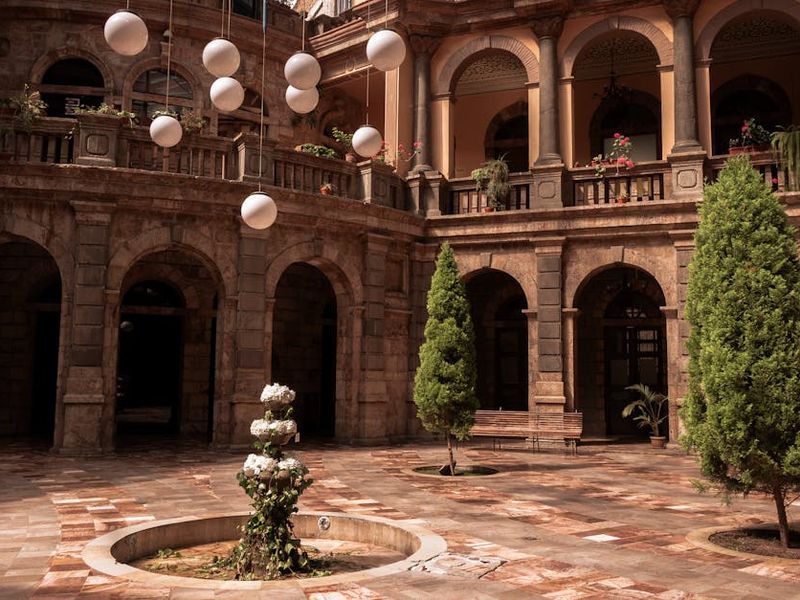
- Cloistered courtyards: The interior patios are often the heart of colonial homes—note tile patterns, central fountains and layered archways.
- Stonework and foundations: Many buildings retain indigenous stonework in lower-level foundations with later adobe or brick upper stories.
- Wood carving: Balconies, door lintels and ceiling beams often display fine carpentry—try to spot patterns that mix European motifs with local flora and fauna.
- Altarpieces and adornment: Baroque gilding and carved altars in churches can be remarkably well-preserved—ask for explanation notes or a guide to understand symbolism.
Museums and Cultural Stops with Architectural Insight
Visiting museums in historic buildings gives dual rewards: the exhibits plus the architecture itself. Highlights include Casa del Alabado (pre-Columbian art in a colonial house), Museo Pumapungo (archaeology and ethnography next to ruins), and smaller house-museums that showcase domestic interiors and civic history. Expect small entrance fees—usually modest—and the chance to join short guided tours that focus on building history.
Photographing Cuenca’s Architecture: Tips and Etiquette
Photographers will find Cuenca a rich subject. Practical tips to get better images:
- Early morning and late afternoon provide the warmest light on the cathedral domes and reduce crowds in plazas.
- Use the riverbank promenades to capture rooflines and domes framed by trees—look for reflections after a light rain.
- Respect interiors: many churches and museums limit tripod use or flash photography; always check signage and ask staff for permission.
- Seek elevated viewpoints like Turi for city panoramas; bring a zoom lens to compress details and capture ornate facades from afar.
Conservation, Restoration and UNESCO Protection
Cuenca’s World Heritage status reflects not just individual monuments but an ensemble—streets, waterways and the relationship between buildings and public space. Preservation practices include regulated facades, careful restoration of wooden elements and guidelines for new construction in the historic core. If you’re interested in conservation, stop by the municipal tourism office or look for small interpretive panels near restoration projects—many explain the techniques and materials craftsmen use to repair tile roofs, stone foundations and carved balconies.
Off the Beaten Path: Lesser-Known Architectural Delights
Beyond the main square, walkers can find surprising gems:
- Quiet side streets with unrestored colonial houses—these show authentic living conditions and often have lush back patios.
- Small chapels and neighborhood churches with local artisans’ altarpieces.
- Transformer houses and workshops where family-run carpentry and metal-working businesses maintain traditional craft techniques used to repair balconies, railings and doors.
Day Trips That Complement the Historic Center
Cuenca is a hub for nearby cultural and natural attractions that enrich an architectural visit:
- Chordeleg: A short bus ride away, this town is famous for silver filigree jewelry and small workshops—perfect for seeing artisans at work and purchasing handmade pieces.
- Gualaceo: Known for colorful markets and textile traditions, Gualaceo’s plazas and market architecture provide a view of regional trading patterns that shaped Cuenca’s prosperity.
- Cajas National Park: For nature lovers, the park’s glacial lakes and páramo landscapes are a dramatic contrast to the city; many visitors do a half-day or full-day hike to clear the head and rejuvenate after museum-going.
Accessibility, Safety and Local Etiquette
Cuenca’s cobblestone streets and historic stairs can be challenging for wheelchairs and mobility issues—plan routes carefully and ask hotels about accessibility. The city is considered one of Ecuador’s safer destinations, but standard urban precautions apply: watch personal belongings in crowded markets, and avoid poorly-lit side streets at night. In churches and sacred sites, dress respectfully (covering shoulders and avoiding very short shorts) and keep voices low during services or private prayers.
Where to Eat and Rest Near the Monuments
Staying inside or near the historic center means easy access to morning plazas, evening lights and restaurants. Look for courtyard restaurants that let you dine surrounded by colonial walls. For a quick, local bite, try a market stall for hearty soups or dishes such as llapingachos (potato cakes) and mote (hominy) with pork. For coffee and conversation, dozens of cafés along pedestrian streets serve locally grown beans and offer a comfortable perch for sketching building details or planning the next stop.
Guided Tours vs. Exploring Solo
Guided tours can enrich your experience—especially if you want in-depth architectural history, access to less-known interiors, or connections to restoration projects. Official guides from the municipal tourism office or certified local operators are a reliable choice. Self-guided exploration gives freedom and the chance to linger; pick up a map at the tourist office and use timed visits to museums to avoid closures. A hybrid approach—an initial guided orientation followed by independent wandering—often works best.
Final Tips for Appreciating Cuenca’s Architecture
Take time to look up—balconies, cornices and rooflines tell as much of the story as church portals. Listen for the sounds of the city: church bells, market calls and river water all contribute to the historic ambiance. If you love small details, bring a notebook or camera dedicated to pattern studies—tile colors, ironwork motifs and carved wood will keep your attention for days. And finally, allow a slow afternoon: some of Cuenca’s most memorable architectural experiences happen in a quiet courtyard over a long cup of coffee or in the soft glow of the cathedral dome at twilight.
With its compact scale, protected streetscape and welcoming cultural institutions, Cuenca invites visitors to be both curious and unhurried. Whether you’re an architecture buff, a photographer, or a traveler seeking a sense of place, the city’s UNESCO-designated core rewards slow, thoughtful exploration.