
Table of Contents
Why Cuenca’s Historic Centre Deserves Your Time
Cuenca’s historic centre—officially inscribed on the UNESCO World Heritage list in 1999—feels like a living museum. Its grid of cobbled streets, clay-tiled roofs, soaring church domes and shady plazas preserves colonial urban planning while bearing clear marks of Andean and indigenous traditions. If you love architecture, culture and slow travel, Cuenca’s blend of baroque facades, austere convent cloisters and intimate residential courtyards offers layers to unpack across a few days of relaxed exploration.
Quick orientation: layout, climate and practicalities
The historic centre—often called the Centro Histórico or Santa Ana de los Cuatro Ríos—lays out in a tidy Spanish grid with a large central plaza (Parque Calderón) and the Cathedral as its visual anchor. Two small rivers, the Tomebamba and the Yanuncay, thread through the old town and provide scenic riverbanks and stone bridges you’ll want to stroll along.
Cuenca sits high in the Andes at about 2,560 meters (8,400 feet), giving it a mild, spring-like climate year-round. Pack layers and a light rain jacket: mornings can be cool, afternoons mild, and showers are possible even in the dry season. The city uses the US dollar, and most places in the historic centre accept cards, though small museums and markets often prefer cash.
Must-see architectural highlights
Below are the signature buildings and sites to prioritize. Each one tells part of the story of Cuenca’s architecture—mixing Spanish colonial planning with indigenous materials and crafts.
Catedral de la Inmaculada Concepción (the New Cathedral)
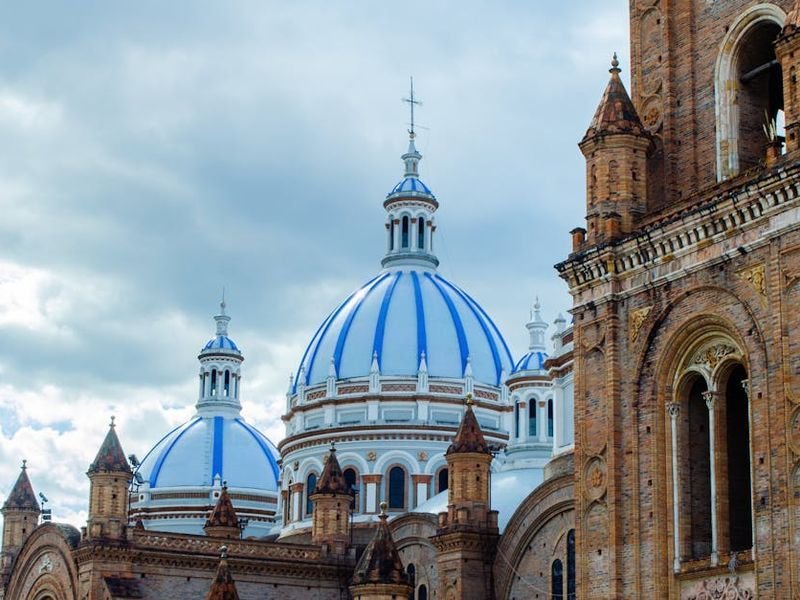
Instantly recognizable for its four blue-tiled domes, the New Cathedral dominates the skyline above Parque Calderón. Walk around the plaza to view the cathedral from several angles—its bright domes are especially photogenic at sunrise and during the golden hour. Inside, note the large nave, the stained glass and the juxtaposition of European cathedral scale set within a compact Andean city.
Iglesia del Sagrario and historic convents
Across the plaza from the New Cathedral you’ll find several older churches and convents. The Sagrario (the old cathedral) and convent complexes like Las Conceptas display carved wooden altars, gilded retablos and peaceful cloisters with inner gardens. These interiors are often illuminated by soft light from high windows and provide a quiet counterpoint to the bustling streets outside.
Rivers, bridges and the Tomebamba promenade
The Tomebamba River runs parallel to several of the city’s main arteries. The riverbanks are lined with stone terraces, and small bridges create intimate viewpoints. Walk the Paseo del Río for a less hurried perspective of the city’s rooftops, and pay attention to the preservation of original stonework and the way houses tuck their balconies over the water.
Municipal palaces, arcades and residential blocks
Cuenca’s urban fabric—the arcaded streets, wooden balconies and tile roofs—reflects Spanish colonial design modified for Andean materials. Look for carved doors, ironwork balconies and internal patios with fountains. Many civic buildings and former merchant houses now serve as cultural centers, cafes and artisan shops, showcasing restored frescos and tilework.
A practical walking itinerary (one full day)
Rather than rush, plan a paced day that mixes iconic buildings with tucked-away discoveries:
- Morning: Start at Parque Calderón to take in the cathedral complex. Capture the blue domes at soft morning light, then wander Calle Larga toward the Tomebamba riverbanks.
- Mid-morning: Visit Museo Pumapungo (the Banco Central museum and ruins) for a concise introduction to the pre-Columbian and colonial layers beneath Cuenca’s streets. The onsite Inca terraces and ethnographic displays set local architecture in historical context.
- Lunch: Eat at a local mercado—Mercado 10 de Agosto (or similar)—to sample soups and fresh juices inside an example of the city’s functional architecture.
- Afternoon: Explore Las Conceptas and other convent museums; cross to the river promenade and follow it toward El Barranco for views of riverside houses and artisan shops.
- Late afternoon: Walk or take a short taxi up to the Turi viewpoint for sunset vistas over the red-tiled roofs and the surrounding Andes—a great way to see how the grid and rivers fit together from above.
- Evening: Return to the centro for dinner at a restored colonial house turned restaurant—many have beautiful courtyards worth lingering in.
Where to photograph and what to watch for
Photographers should look beyond the obvious cathedral shots. Some of the most compelling frames combine textures—peeling plaster, carved doors, a laundry line with tiled domes in the background. Early morning and late afternoon give the warmest light. When photographing interiors of churches and convents, always ask permission and avoid flash; some sacred spaces prohibit photography entirely to protect artworks.
Interpretive experiences: museums, tours and local guides
Self-guided strolling is rewarding, but a knowledgeable local guide can decode architectural details—the symbolism carved into a portal, the phases of expansion for a church, or why a certain stone technique was used. Consider booking a guided walking tour (many run in English and Spanish) or schedule a specialist tour covering religious art and conservation.
Museo Pumapungo offers archaeological displays and reconstructed and preserved Inca terraces that make visible the indigenous roots of many construction methods. Small museum-entry fees help fund conservation work, so they’re both informative and impactful to local preservation efforts.
Conservation stories: how Cuenca preserves its fabric
Cuenca’s UNESCO listing has helped channel attention and resources into protecting façades, restoring interiors and maintaining public spaces. Look for restoration plaques on buildings explaining recent conservation efforts. Local NGOs and municipal programs often work with skilled artisans—carpenters, stonemasons and tile-makers—to use traditional methods rather than modern shortcuts.
Your best contribution as a visitor is to support businesses that use local craftsmen: buy a handwoven textile from a cooperative, dine in restaurants that renovate using local materials, or join workshops teaching Panama hat-weaving or local carpentry. Responsible tourism preserves not only the stone and wood, but also the skills that maintain them.
Nearby day trips to add historical context
Extend your architectural story with short excursions:
- Pumapungo and the Museum Complex: If you haven’t already, a deeper visit to Pumapungo reveals pre-Hispanic urban planning and terraces—an architectural predecessor to the colonial grid.
- Ingapirca: About two hours away, this is Ecuador’s largest known Inca site. The stonework and sun temple there show Inca masonry that influenced later building techniques in the region.
- Chordeleg and Gualaceo: These artisan towns are perfect for seeing traditional metalwork and textiles. Many Cuenca shops source ceramics, jewelry and weaving from these nearby workshops.
- El Cajas National Park: While primarily natural, the stone farmhouses and highland settlements around Cajas offer a glimpse into vernacular Andean architecture adapted to a cold, wet environment.
Respect and etiquette when visiting sacred sites
Many of Cuenca’s most beautiful spaces are active religious sites. Dress modestly for church visits (shoulders covered, no short shorts), lower your voice inside chapels, and follow posted rules about photography. If a mass or ceremony is taking place, observe respectfully from the back rather than trying to get close shots. This respect helps ensure continued access for visitors and worshippers alike.
Accessibility and mobility tips
Cobblestones and occasional steep streets mean that comfortable shoes are essential. The historic core is highly walkable, and most major sites are close enough to explore on foot, but taxis are inexpensive and plentiful for those who prefer fewer steps. If you have limited mobility, plan ahead: some churches have steps; others may offer alternative entry routes. Call ahead to museums for information about ramps or elevators.
When to go: seasons and events
Cuenca’s climate is forgiving year-round, but the dry season (roughly June to September) tends to bring clearer skies and more reliable conditions for photography and walking tours. Cultural life peaks during religious festivals and national holidays—Semana Santa (Holy Week) offers elaborate processions and beautifully adorned churches, but it can be crowded and some businesses close. If you prefer calmer streets, visit in the shoulder seasons with fewer international visitors.
Practical tips and safety reminders
• Carry small bills and coins for museums, markets and taxis. Many artisan stalls are cash-only.
• Keep a light daypack and water—altitude can make days feel longer than expected.
• Be cautious of pickpocketing in crowded plazas; use a zipped bag and keep valuables secure.
• Ask before entering private courtyards or photographing residents—many homeowners welcome respectful curiosity but appreciate being asked first.
• Try to shop from certified artisan cooperatives or family-run workshops to ensure your purchases support local craftspeople and conservation indirectly.
How to read the buildings: quick architecture vocabulary
Recognizing a few common terms will deepen your appreciation:
- Patio (courtyard): Central open-air space around which houses are organized. Look for tile floors, fountains and arcades.
- Retablo: Ornate altar screen often gilded and carved in churches.
- Arcade: A covered passage or series of arches—common on commercial streets.
- Balconaje: Wooden or iron balconies projecting over the street—excellent for people-watching and decorative ironwork.
- Quarry stone and adobe: Local materials visible in foundations and older walls; compare masonry styles from pre-colonial to colonial eras.
Wrapping up: making your visit meaningful
Cuenca’s UNESCO historic centre rewards slow observation. Sit in a plaza with a coffee and watch the layers of the city pass—schoolchildren in uniform, vendors setting up, the light changing on a domed roof. Pair iconic cathedral photos with quiet courtyard discoveries and conversations with local artisans. By moving with curiosity, supporting authentic local businesses and learning why buildings look the way they do, you’ll leave with more than pictures: you’ll leave with context, and that deepens any travel experience.
Whether you’re an architecture aficionado, a culture-focused traveler or someone who loves a beautifully preserved city to simply get lost in, Cuenca’s historic centre is a compact, gentle place to explore centuries of design, craft and community life.