
Table of Contents
Overview: Quito to Cuenca — what to expect
Quito and Cuenca sit along Ecuador’s Andean spine, separated by roughly 470 kilometers of dramatic highland scenery, mountain towns and winding roads. Your choice of transport — plane, long‑distance bus or driving — will depend on how much time you have, your budget, and how comfortable you are with mountain roads. This guide walks you through realistic costs, travel times, and practical tips for each option, plus arrival advice for the first hours in Cuenca.
By plane: fastest door-to-door option
How it works
Domestic flights between Quito (UIO) and Cuenca (CUE) are the quickest way to travel — the airtime is roughly 45–60 minutes. When you include travel to and from airports, check-in and security, most travelers can expect about 3–4 hours total door-to-door if everything runs smoothly.
Pros and cons
- Pros: Speed, comfort and less tiredness; good for short stays or tight itineraries.
- Cons: More expensive than bus travel, schedule changes in bad weather, limited luggage allowances.
Practical tips for flying
- Book early if you’re traveling during holiday periods (Christmas, Semana Santa, local festivales) — fares rise and flights sell out quickly.
- Domestic flights follow strict carry‑on and checked baggage policies. Check your airline’s luggage rules ahead of time.
- Allow extra time at Quito’s Mariscal Sucre International Airport: traffic to the airport or weather can delay arrival. If you need to be on time for a connection, add an extra cushion.
- Cuenca’s airport sits close to the city — a taxi is typically a short 15–25 minute ride. Many hotels will arrange pickups at a small fee.
By bus: affordable and scenic
Typical route and travel time
Buses travel a roughly similar north–south corridor down the Panamericana through the Sierra. Expect an average travel time of 8–10 hours, depending on the route, number of stops and traffic. Night buses are common and convenient for saving a hotel night and arriving in Cuenca early the next morning.
Types of buses and what to expect
Interprovincial buses vary from standard seats to more comfortable, reclining executive seats. There are also overnight services marketed for sleeping passengers. Amenities can include air conditioning, onboard toilets, and sometimes Wi‑Fi, though connectivity in the highlands can be spotty.
Where buses depart and arrive
- In Quito, most long‑distance services leave from the south bus terminal (Terminal Terrestre Quitumbe) or organized terminals closer to town. Give yourself time for transfer and traffic.
- In Cuenca, buses arrive at the city’s Terminal Terrestre, located outside the historic center. Taxis and local buses make the short trip into the centro histórico.
Practical bus travel tips
- Buy tickets in advance during peak travel times. Many carriers offer online booking; otherwise purchase at the terminal a day or two ahead.
- For comfort, choose a daytime service with reclining seats or the “Ejecutivo” option. For budget travel, standard seats are fine but expect more stops and less legroom.
- Bring earplugs, a neck pillow and a light blanket for overnight trips; rest stops can be short and food options variable.
- Keep valuables in sight and store luggage with locks. Use the bus company’s checked baggage when possible and note the receipt number.
By car: flexible and scenic, but plan carefully
Driving distance and time
The direct driving distance is around 470–520 kilometers, and typical driving time ranges from 7.5 to 10 hours depending on the route you take and how many stops you make. The route winds through highland valleys and mountain passes and includes two‑lane segments with slow trucks and occasional roadworks.
Why drive?
Driving gives you the most flexibility — stop for photography, visit towns off the main route, or explore attractions such as Alausí, Riobamba or the entrance to Parque Nacional Cajas near Cuenca. If you’re traveling with multiple people, a moderately priced rental can become cost‑effective compared to multiple plane tickets.
Safety, road conditions and driving tips
- Drive during daylight whenever possible. Mountain roads are narrow and visibility decreases after dark, and roadside lighting is limited outside major towns.
- Watch for trucks and slow traffic on uphill stretches. Passing requires patience and clear sightlines.
- In the rainy season (roughly December–May), be alert for landslides and slick pavement; check local weather forecasts and road advisories before you leave.
- Use GPS but also carry an offline map. Cellular coverage can be intermittent in remote stretches.
Car rental practicalities
- Book your rental car in advance and inspect it carefully at pickup for pre‑existing damage. Take photos and ensure the paperwork documents the condition.
- Check whether your rental includes unlimited mileage, roadside assistance and a second driver if needed.
- Fuel stations are frequent along the main route but can be sparse on smaller detours; top up when you can.
- Parking in Cuenca’s historic center is limited; many hotels provide secure parking or can advise nearby garages.
Comparing time, cost and comfort
Which option is best depends on priorities:
- Fastest: Plane — minimal in‑air time and convenient for short trips.
- Cheapest: Bus — significantly lower fares, especially if you book basic seating and travel overnight.
- Most flexible & scenic: Car — stop where you want and explore side trips like Parque Nacional El Cajas.
For many travelers, the best compromise is to fly if time is limited, take the bus if budget constrained, and drive if you’re eager to explore at your own pace and comfortable with mountain driving.
Arrival in Cuenca: first hours and must‑know practicalities
From the airport
Cuenca’s airport is compact and close to the city. Taxis wait near arrivals and hotel shuttles are common. Expect a short taxi ride to the centro histórico and a fare that will often be in the low double‑digit local currency range; confirm the fare or use a fare meter when possible.
From the bus terminal
Cuenca’s Terminal Terrestre sits outside the historic center: it’s easy to reach by taxi or local bus. If you arrive late at night, take an official taxi stand or a confirmed hotel transfer for peace of mind. Once in the historic center — the old town is compact, walkable, and rich with colonial architecture, parks and cafés.
Quick orientation in Cuenca
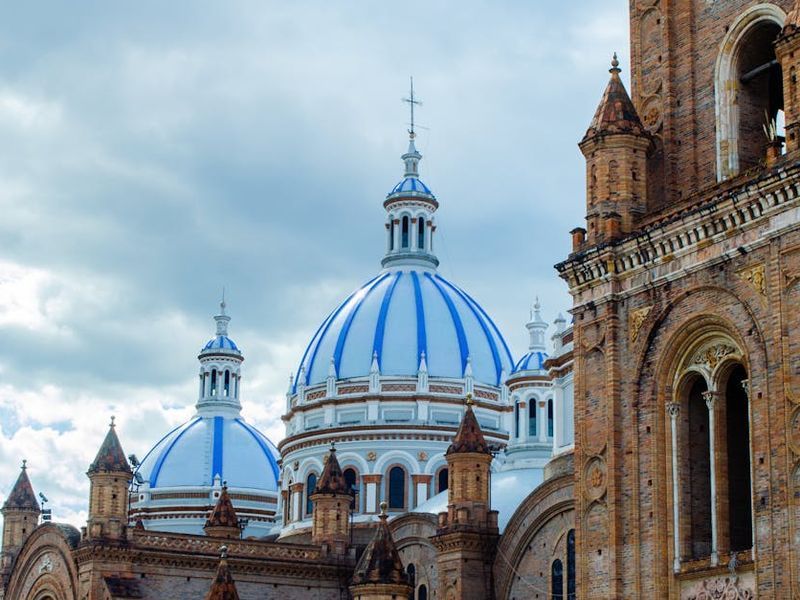
- Cuenca’s core neighborhoods include the casco histórico (historic center) with the iconic blue‑domed Catedral de la Inmaculada, the riverside area around the Tomebamba, and the charming neighborhood of San Sebastián.
- ATM and currency access are plentiful; many places accept cards but carry small bills for markets and taxis.
- Altitude shift from Quito to Cuenca is modest (both are highland cities), so most travelers won’t need special acclimatization, but take it easy the first day if you’re sensitive to altitude.
Sample itineraries depending on your priorities
Limited time (48–72 hours)
Fly: early morning flight to Cuenca, explore the historic center, take a walking tour of the cathedral, artisan markets, and riverside plazas. Reserve the return flight for late in the second or third day.
Budget traveler
Take an overnight bus to save on accommodations and arrive early to maximize sightseeing. Stay in a centrally located guesthouse and explore on foot; use local buses for trips outside the center.
Slow travel & photo road trip
Rent a car and stop along the way — consider Riobamba for Chimborazo views or Alausí for the famous Devil’s Nose rail section (if you want a train ride, check current schedules). Close to Cuenca, plan a half‑day to hike in Parque Nacional El Cajas, known for glacial lakes and highland ecosystems.
Sustainability and a few extra considerations
If you’re trying to minimize carbon footprint, bus travel is generally the lowest‑impact option among the three. Flying is the most carbon‑intensive; consider a direct flight rather than connecting to reduce emissions. Driving with a full load of passengers can be a reasonable compromise if you prefer road travel.
Final checklist before you go
- Confirm bookings and baggage rules if you fly.
- Have local currency handy for small purchases and taxis.
- Pack layers — highland weather changes quickly and nights are cool year‑round in Cuenca.
- Bring a printed or downloadable copy of hotel and arrival details for easy reference.
- Check public holidays and festival dates — these can affect transport schedules and availability.
Conclusion: choose based on time, budget and curiosity
Traveling from Quito to Cuenca offers a nice range of choices. If speed is essential, fly; if you want to save money and don’t mind a longer ride, the bus is a comfortable option; and if you’re seeking an adventure with side trips and total flexibility, driving is ideal. No matter which mode you choose, the road between these two Andean gems is filled with dramatic landscapes and cultural stops — plan for at least one unexpected detour and you’ll likely be rewarded with a memorable Ecuadorian experience.